


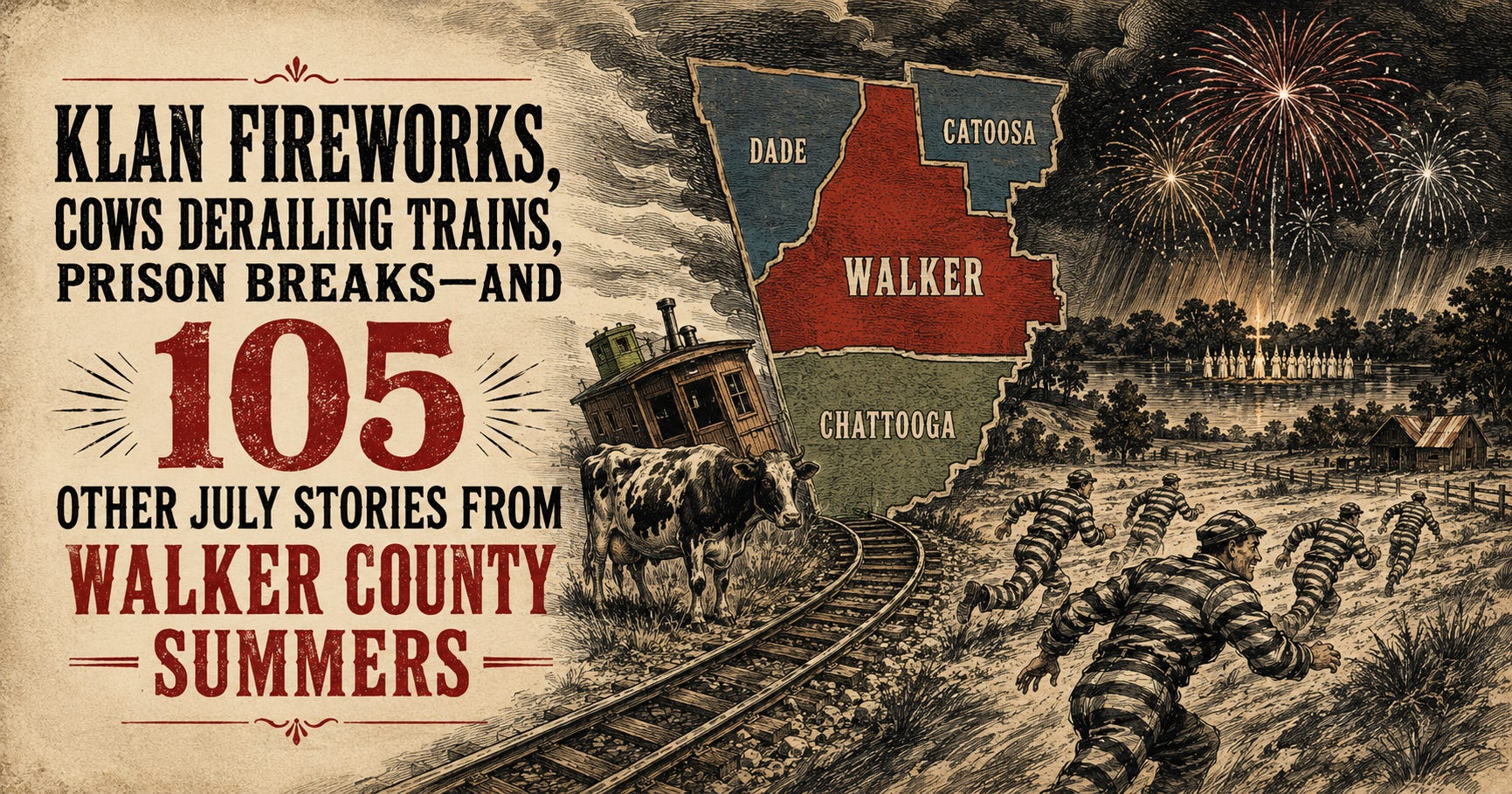
Any longtime readers are familiar with my love of old newspapers. So, a massive recent expansion of the Georgia Historic Newspapers digital archive of the Walker County Messenger thanks to the efforts of Cherokee Regional Library System and supporters provided me with a lot of new reading material. But it also makes a lot of interesting projects possible. Like this article. This was sourced and compiled largely via Claude Code AI. Instead of manually searching only a handful of familiar dates, I could inventory 398 surviving July issues across 93 years, index 4,125 pages, use automation to retrieve and search OCR, surface promising articles, columns, events, and then return to the scanned pages to verify what was actually printed.
This is my first attempt at doing something like this. If it is well received or something like it is desired, I hope to build a similar automated workflow to generate a top stories article for each month—one that searches widely, checks carefully, and brings the best local stories and history back into circulation.
What follows is not a ranking. The numbers are a guidepost through 108 July discoveries. Some entries are funny. Others involve violence, racism, war, or offensive beliefs that belong to their period and deserve honest context. Every item includes a direct link to the archived page.
1 | 1925 | Barbecue, Fireworks, and a Klan Grand Dragon at Rea’s Lake
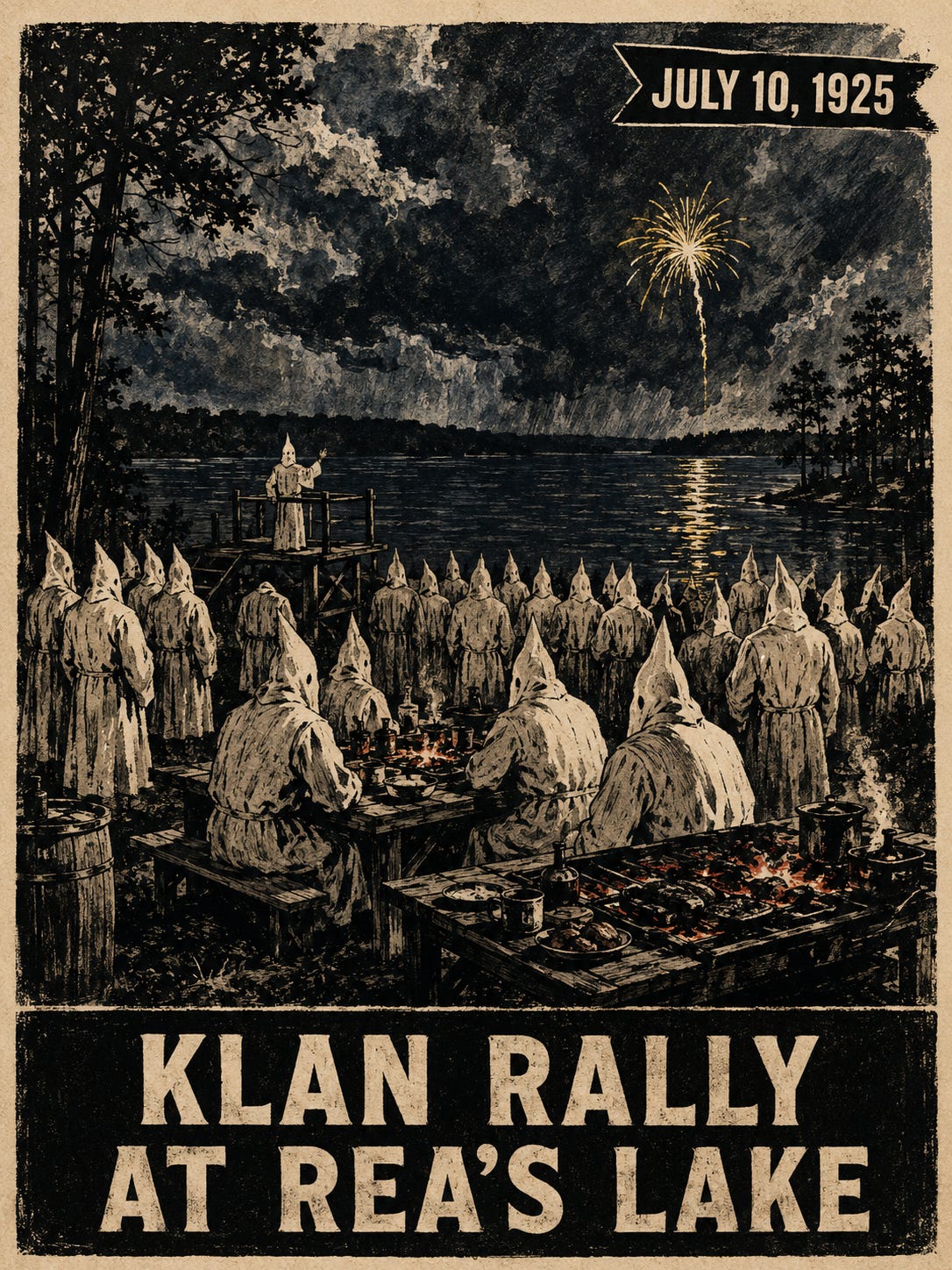
The Ku Klux Klan staged a celebration at Rea’s Lake, and threatening weather did not keep the crowd away. Klansmen were served barbecue, organizers set off what the account called “Klan fireworks,” and Atlanta’s Nathan Bedford Forrest delivered an address on the order’s principles. The speaker was the grandson and namesake of the Confederate general associated with the first Klan. The gathering is a stark reminder that the second Klan was not operating only in secrecy: it could advertise a festive local event, draw a crowd, and wrap an ideology of white supremacy in the familiar trappings of a summer community outing.
2 | 1945 | The Navy Pilot Who Took the Long Way Home—Over Home
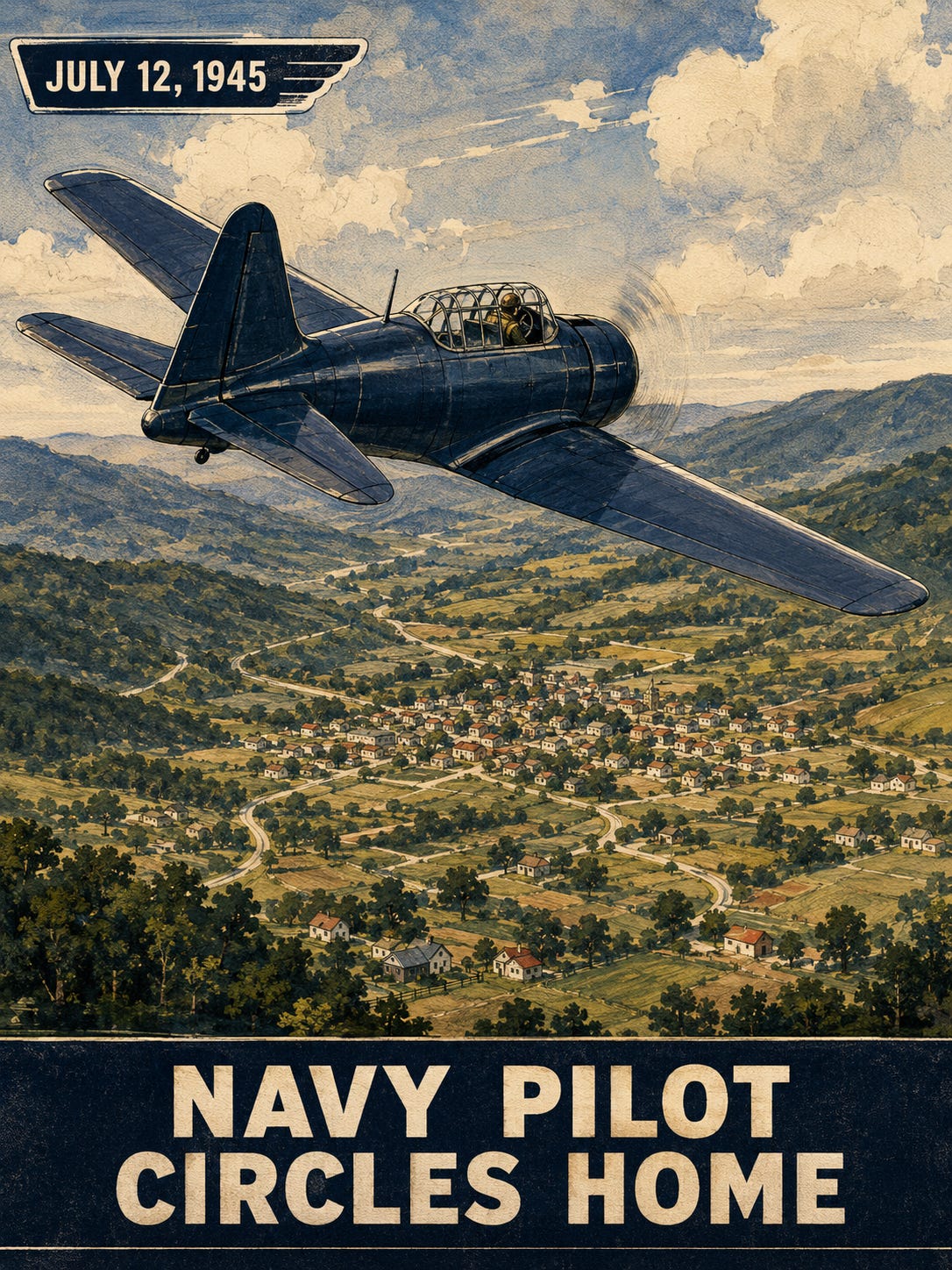
Ensign W. B. Weaver was stationed in Milton, Florida, teaching Navy men to fly when he sent a note back home with a delightful confession: a couple of weeks earlier, he had flown over LaFayette and circled up around Rock Springs. “North Georgia looks swell from any angle,” he wrote. The war was still underway in July 1945, but this small dispatch carried a different kind of charge—the thrill of a hometown son seeing familiar ridges from a military cockpit, and of neighbors on the ground perhaps looking up without knowing exactly who was passing overhead.
3 | 1949 | Fifty Years, $20,000, and One Bank Still Standing
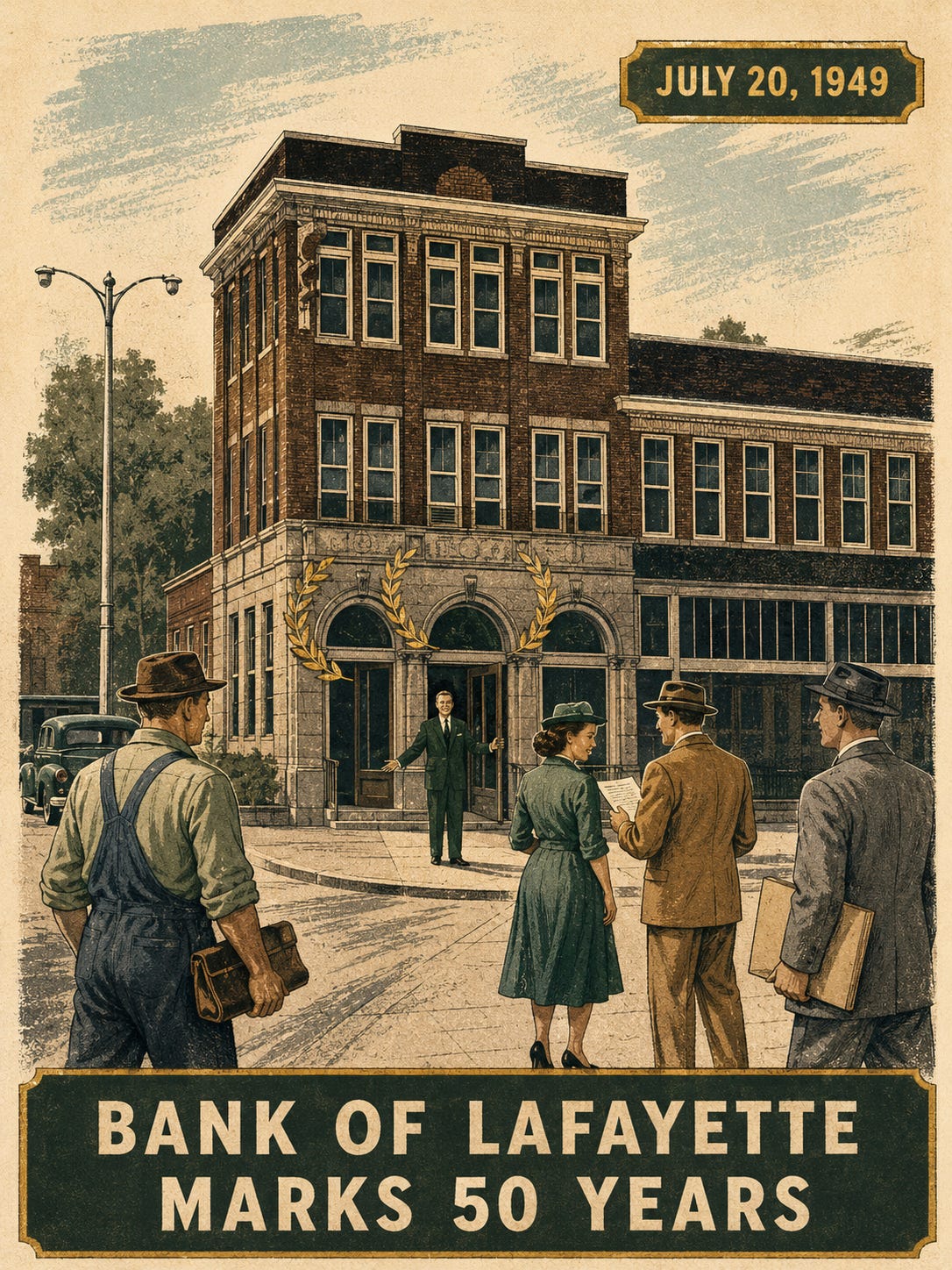
The Bank of LaFayette celebrated its golden anniversary with a full-page history. It had opened on July 18, 1899, backed by $20,000 in paid-in capital and a group of local farmers and businessmen willing to gamble that the county needed—and could sustain—its own institution. Fifty years later, the anniversary was presented as countywide cause for pride. The story was bigger than a birthday: those five decades had carried the bank through financial panics, a depression, two world wars, and enormous changes in the way local people earned, borrowed, saved, and built.
4 | 1890 | Ten Blast Holes, One Dead Fuse, Three Men Killed
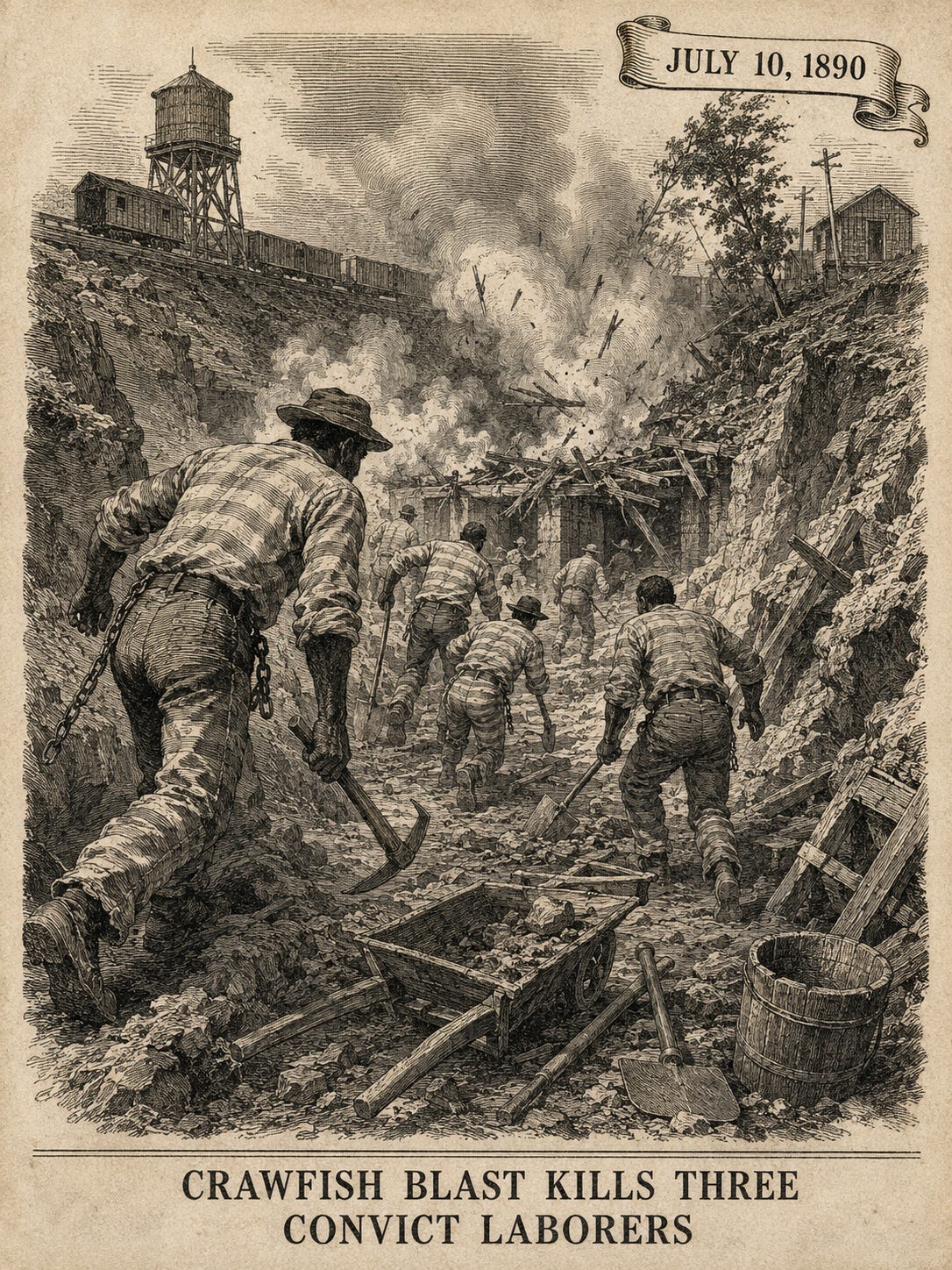
Convict laborers were excavating a hotel basement west of the railroad at Crawfish Spring when one of ten black-powder charges failed to fire. The crew waited as long as 45 minutes, pulled the burned fuse, poured water into the hole, and began mattocking away the dirt. Then the charge exploded. Two men close to the blast were killed instantly and reportedly hurled through the treetops; a third, farther away, was fatally struck by falling rock. The horrifying sequence preserves both an industrial disaster and the human cost of the convict-labor system that supplied the workers.
5 | 1961 | Segregation, Reduced to Rows and Columns
A county school table counted 8,516 white pupils taught by 326 teachers and 666 Black pupils taught by 29 teachers—a total average daily attendance of 9,182 with 355 teachers. Hill appeared with 403 pupils and 18 teachers; Wallaceville with 263 pupils and 11. Nothing in the table needed to shout. Its neat official figures showed the dual school system functioning exactly as designed, with children and teachers separated by race. Printed before desegregation, it turns an enormous injustice into something chillingly bureaucratic: a local institution measuring and publishing segregation as ordinary administration.
6 | 1910 | LaFayette Orders Light, Water, and the Future—Delivery in 90 Days
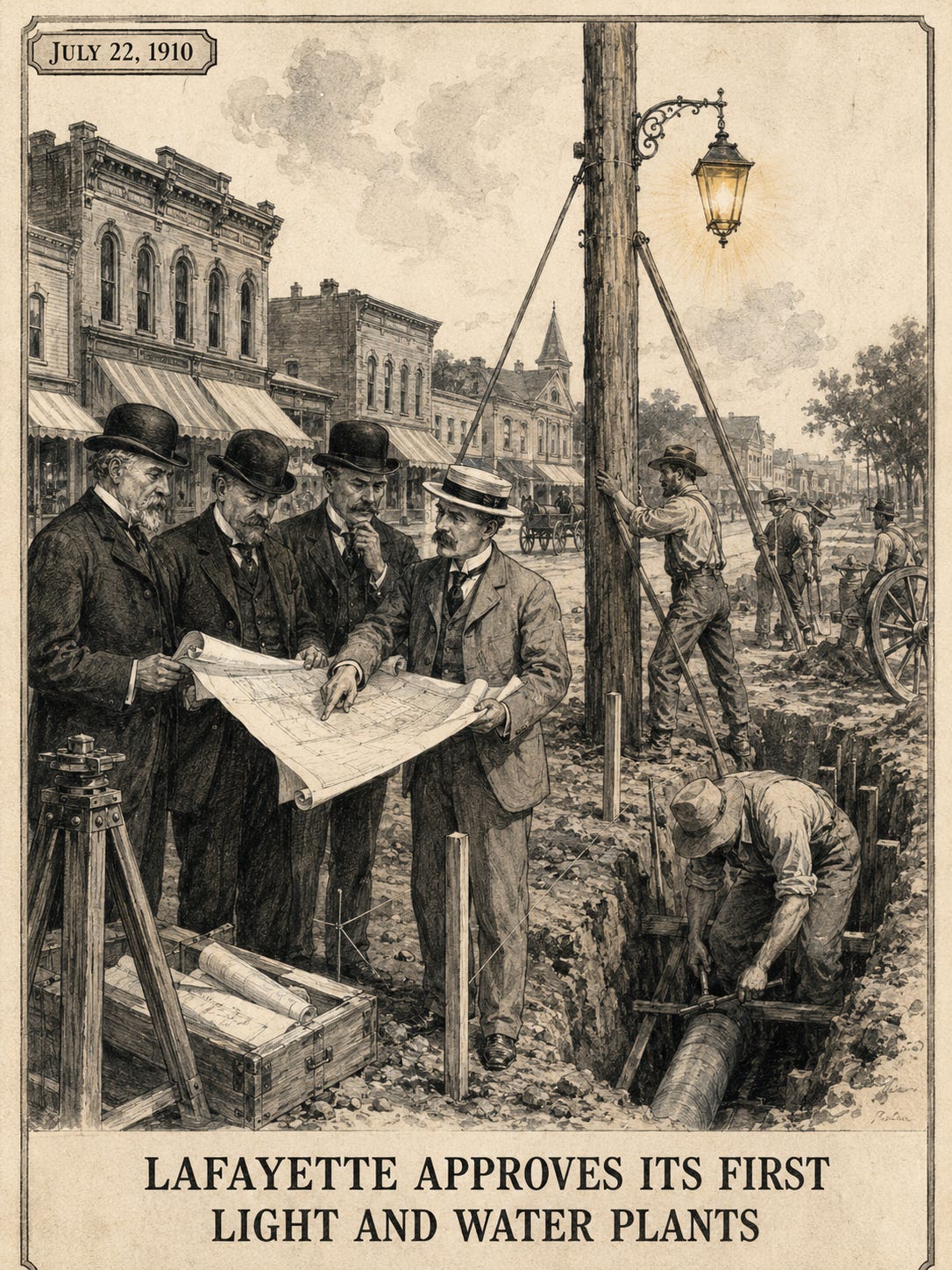
The city council awarded J. B. McCrary & Company of Atlanta a $35,500 contract to build LaFayette’s first municipal electric-light and waterworks plants. The timetable was almost comically confident: 90 days. If all went to plan, residents would have streetlights, household electric service, running water, and better fire protection by November 1. In one council decision, darkness, dry taps, and bucket-brigade vulnerability were supposed to give way to the modern city. The contract captures infrastructure at its most exciting—the moment before a basic convenience became ordinary enough to disappear into the walls.
7 | 1935 | Three Hundred Young Men Arrive at Dougherty Gap
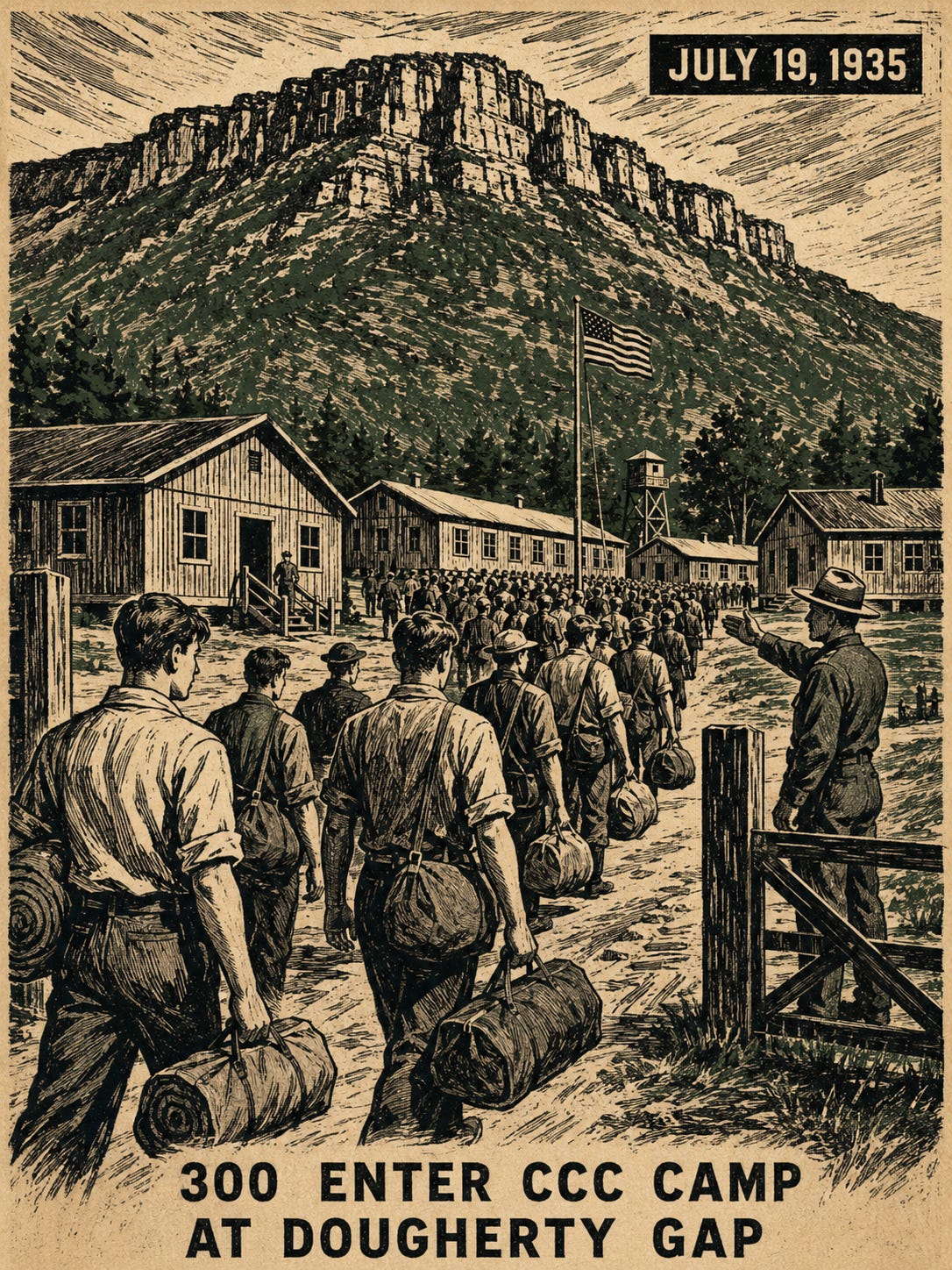
A new Civilian Conservation Corps camp at Dougherty Gap, at the foot of Lookout Mountain, filled to capacity when roughly 300 young men arrived in a single Friday. Behind that compact announcement was a huge New Deal machine: unemployed men, military-style camps, conservation work, wages sent home, and public improvements built during the Depression. For Walker County, the camp meant hundreds of new residents and a concentrated burst of labor at a mountain gateway. For the men stepping off the trucks, it meant work, food, discipline, and the possibility of sending money back to families who badly needed it.
8 | 1971 | Wallaceville Lands on the Consolidation List
An official state facilities study recommended sweeping changes to Walker County schools, including the closure of historically Black Wallaceville and the transfer of its pupils to Pond Springs Junior High. The plan also proposed mergers or closures affecting Gillen, Fairyland, Armuchee Valley, Naomi, West LaFayette, Linwood, Cedar Grove, and Pond Springs, plus new junior highs for the LaFayette and Rossville areas. Presented as a countywide modernization program, the recommendations also carried the complicated legacy of desegregation: buildings, identities, and community histories were being reorganized at once.
Read the opening page and the continuation.
9 | 1921 | Forty Hours of Deliberation for a Sheriff’s Murder
James Douglass stood trial for killing Walker County Sheriff A. G. Catron, a case tied in related coverage to a bootlegging and liquor-delivery arrangement the sheriff had confronted. After about 40 hours of deliberation, the jury returned a first-degree murder conviction without a recommendation for mercy. Judge Wright’s sentence was then read into the record. The case brought together Prohibition-era liquor traffic, the killing of the county’s chief law officer, and a jury that took nearly two days to settle on the harshest available verdict.
10 | 1962 | A Closed Mill, 1,500 Workers, and $150,000 in Back Pay
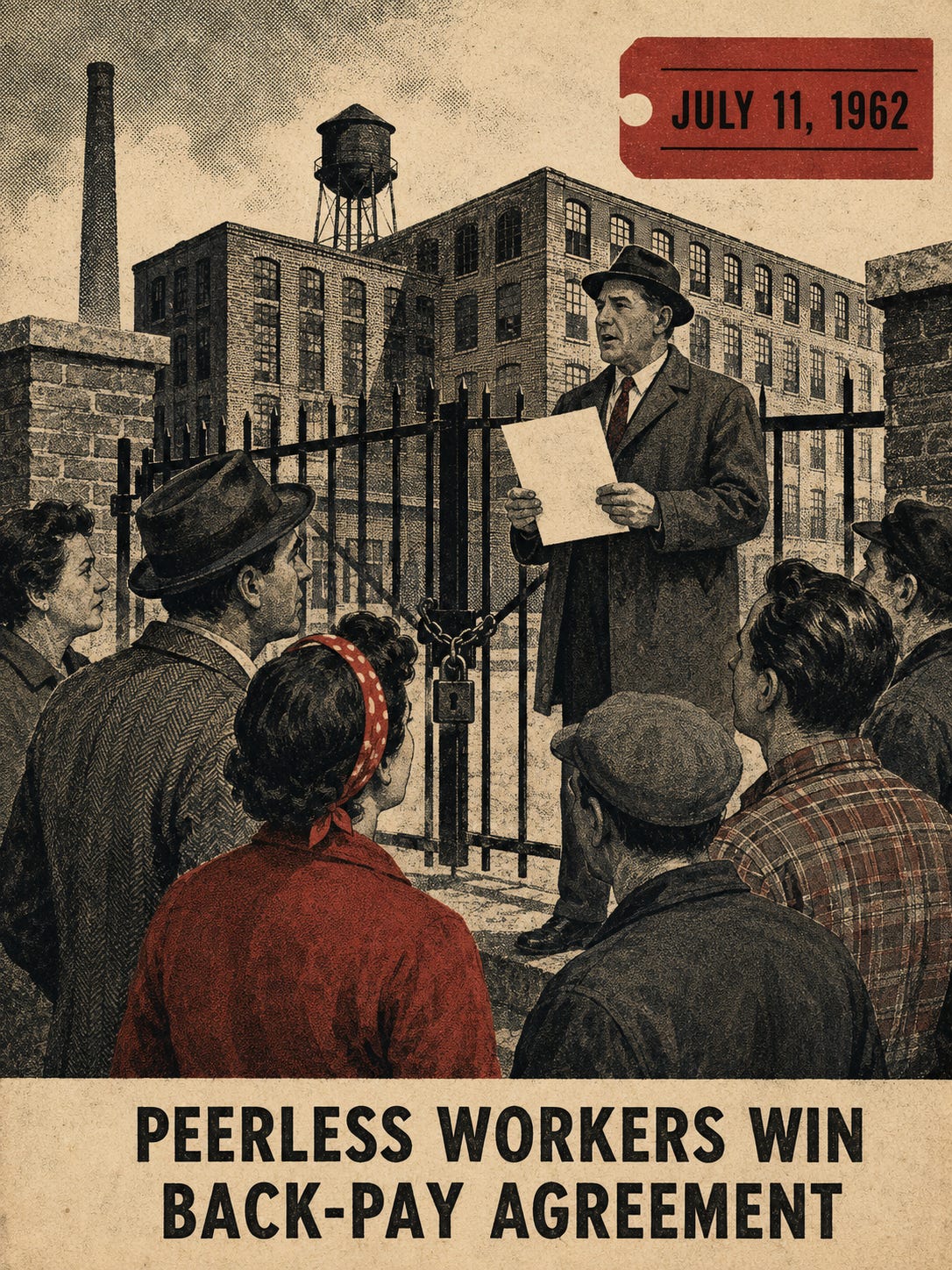
Burlington Industries had closed Rossville’s Peerless Woolen Mills rather than bargain with the Allied Industrial Workers after the union won a 1961 representation election. Litigation before the National Labor Relations Board ended with an agreement to pay about $150,000 in back wages to roughly 1,500 former employees. Meanwhile, the enormous 1.3-million-square-foot mill complex was sold for redevelopment. The settlement did not reopen the plant, but it forced a financial reckoning over how the closure happened—and put a dollar figure on a labor fight that had shaken Rossville.
11 | 1902 | “No Lynching”—Followed by a Troubling Asterisk
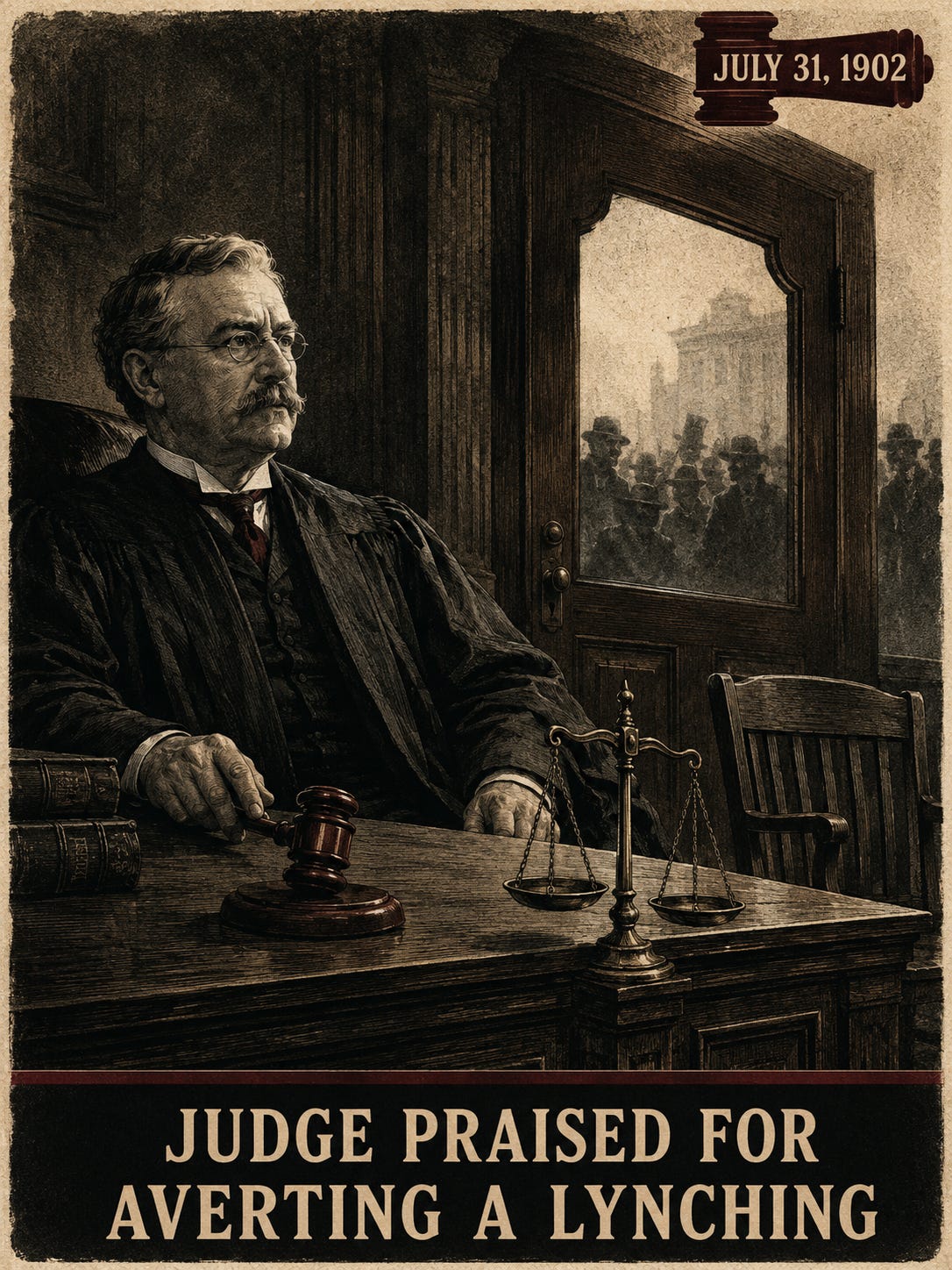
A High Point correspondent writing as “Obscurity” praised Judge Henry for sparing Walker County the “stigma of a lynching” during the Phipps case. That sounds like a clean stand against mob violence until the rest of the passage arrives: the writer also used dehumanizing racist language and demanded the accused man’s capture and execution. The column exposes a difficult combination—opposition to an unlawful mob, but not a broader rejection of racial hatred or extreme punishment. Local public opinion could condemn one injustice while remaining saturated with another.
12 | 1941 | Before Pearl Harbor, Walker County Prepared for Invasion
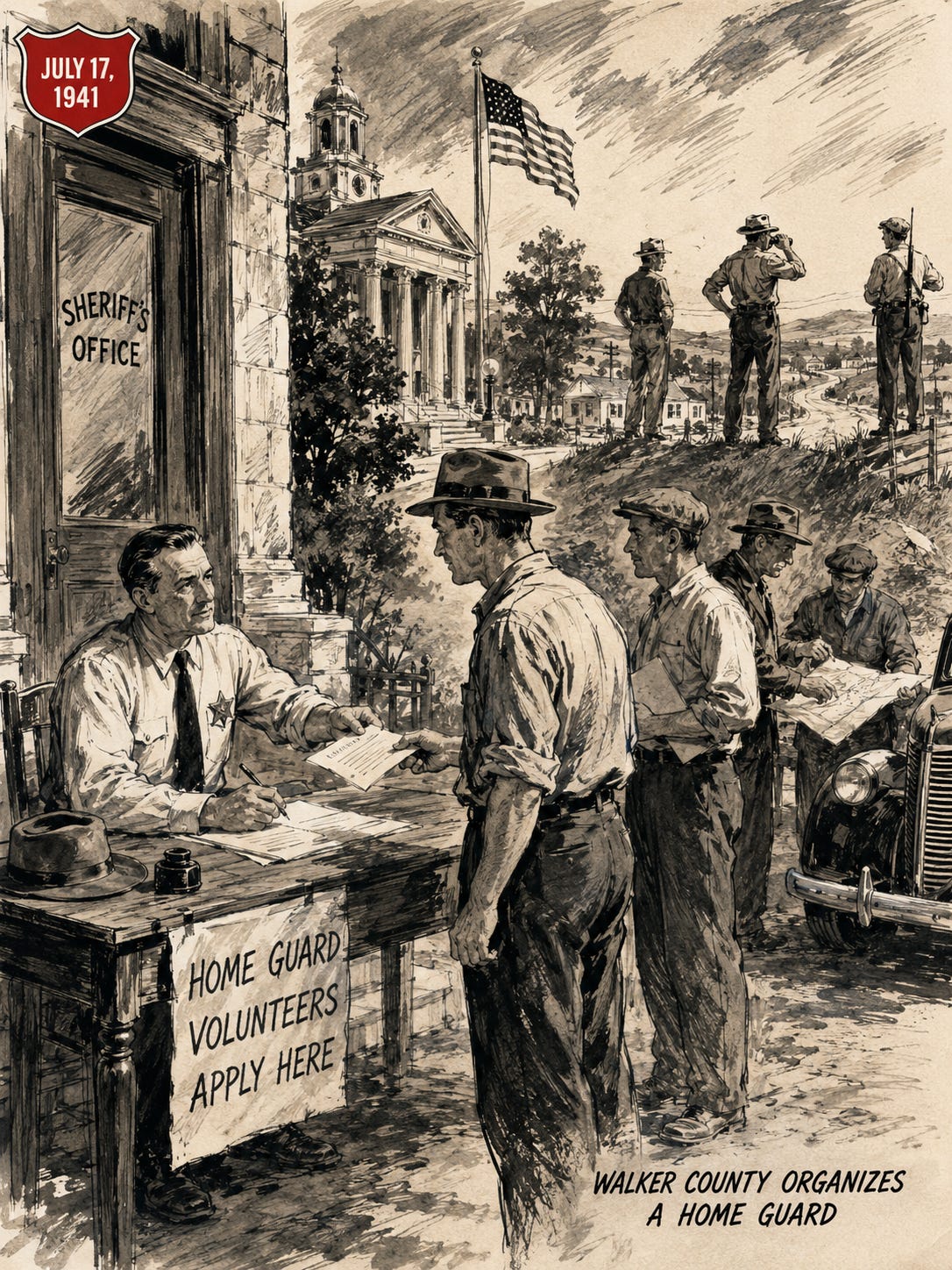
Months before the United States entered World War II, Walker County organized a Home Guard company under Sheriff Creed Shelby. George P. Shaw became lieutenant, and volunteers were assigned a grim list of possible duties: watching for enemy “subversive activities,” controlling riots and lawlessness, and responding to a future local invasion. A July 2 mass meeting drew 14 applications, with more accepted at the sheriff’s office. The plans show how the national emergency was already reaching courthouse offices and volunteer rosters long before Pearl Harbor made the danger feel immediate to nearly everyone.
13 | 1954 | The County Put More Than $2 Million Into Its Backpack
Walker County outlined more than 445,000 and a 20-classroom Osburn Elementary—with cafeteria and auditorium—estimated at $296,804. Read as a whole, the program is postwar growth in blueprint form: more children, larger communities, greater expectations, and a public system trying to build fast enough to meet all three.
14 | 1895 | Mollie Houston Walked to the Store and Never Came Home
Mollie E. Houston, a young widow about 27 years old, left her home near Gordon Springs carrying butter and berries for a store roughly two miles away. A little more than a mile into the lonely trail, she was attacked and killed; the account said her skull had been crushed with a heavy stone. Forty cents remained clutched in her hand, making robbery an uncertain explanation. The community launched an intense search, but the most haunting detail is the ordinary beginning: a short errand through familiar country that became a murder mystery.
15 | 1895 | A Manhunt Caught Three Men—and the Witness Cleared Them
Weeks after Mollie Houston’s killing, J. S. Walker spotted three Black travelers near Cedar Grove and decided they matched men wanted in both the Houston case and an assault on Miss Thompson. He armed himself, cut them off on the Crow Trail, recruited help, and delivered them to jail. Then the surviving assault victim was brought in and said they were not her attackers. The episode records both the speed with which suspicion could become armed detention and the crucial moment when direct testimony undermined the assumed link between three convenient suspects and the crimes under investigation.
16 | 1907 | A Confession, a Masked Mob, and Ten Hours on a Bridge
Doc Posey, who had recently lived around LaFayette, was jailed in Dalton after reportedly confessing to sexually assaulting his seven-year-old stepdaughter. Before dawn, about 20 masked men seized him from the jail and hanged him from a railroad bridge. His body remained there for roughly ten hours. The alleged crime was appalling; so was the mob’s decision to replace legal process with spectacle and killing. The account preserves the brutal logic of lynching culture: confession became permission, masks became authority, and public display became part of the punishment.
17 | 1957 | Three Civic Projects—and a City Still Built in Two
LaFayette had three development projects to celebrate: a new Little League diamond, a newly dedicated $100,000 health center, and a large city-funded recreation center about a mile west of town. Yet the last project was explicitly for Black residents, a reminder that public investment still followed the color line. The recreation center was nearing completion and awaiting dedication while the baseball field had already hosted its first games. Growth was real, and so was segregation; they occupied the same upbeat civic update without appearing contradictory to its original audience.
18 | 1946 | The Campaign Ad That Said Black Votes Meant Outside Control
A political advertisement defended Georgia’s all-white Democratic primary and county-unit system by warning white voters that Black citizens would vote as a bloc under outside direction. It cited a heavily Black Atlanta ward whose vote allegedly decided a congressional contest and emphasized counties where Black residents outnumbered white residents. The source is campaign advocacy, not neutral analysis, but that is exactly why it matters: it shows disfranchisement being sold not as an embarrassment, but as a protective political program. The fear was stated plainly, and racial exclusion was the proposed cure.
19 | 1914 | A Senate Candidate Put Disfranchisement on His Résumé
A paid advertisement listed reasons to support U.S. Senate candidate Thomas W. Hardwick. Number four boasted that he was the “father” of Black disfranchisement in Georgia, crediting him with starting the fight in the 1890s and helping win it in the next decade. Modern campaigns often hide their ugliest accomplishments behind euphemism. This one treated voter suppression as a credential. The numbered sales pitch makes the politics unmistakable: denying Black Georgians political power was presented as a reason to promote Hardwick to the United States Senate.
20 | 1926 | Rossville Voted 366-45 to Stop Living Without Sewers
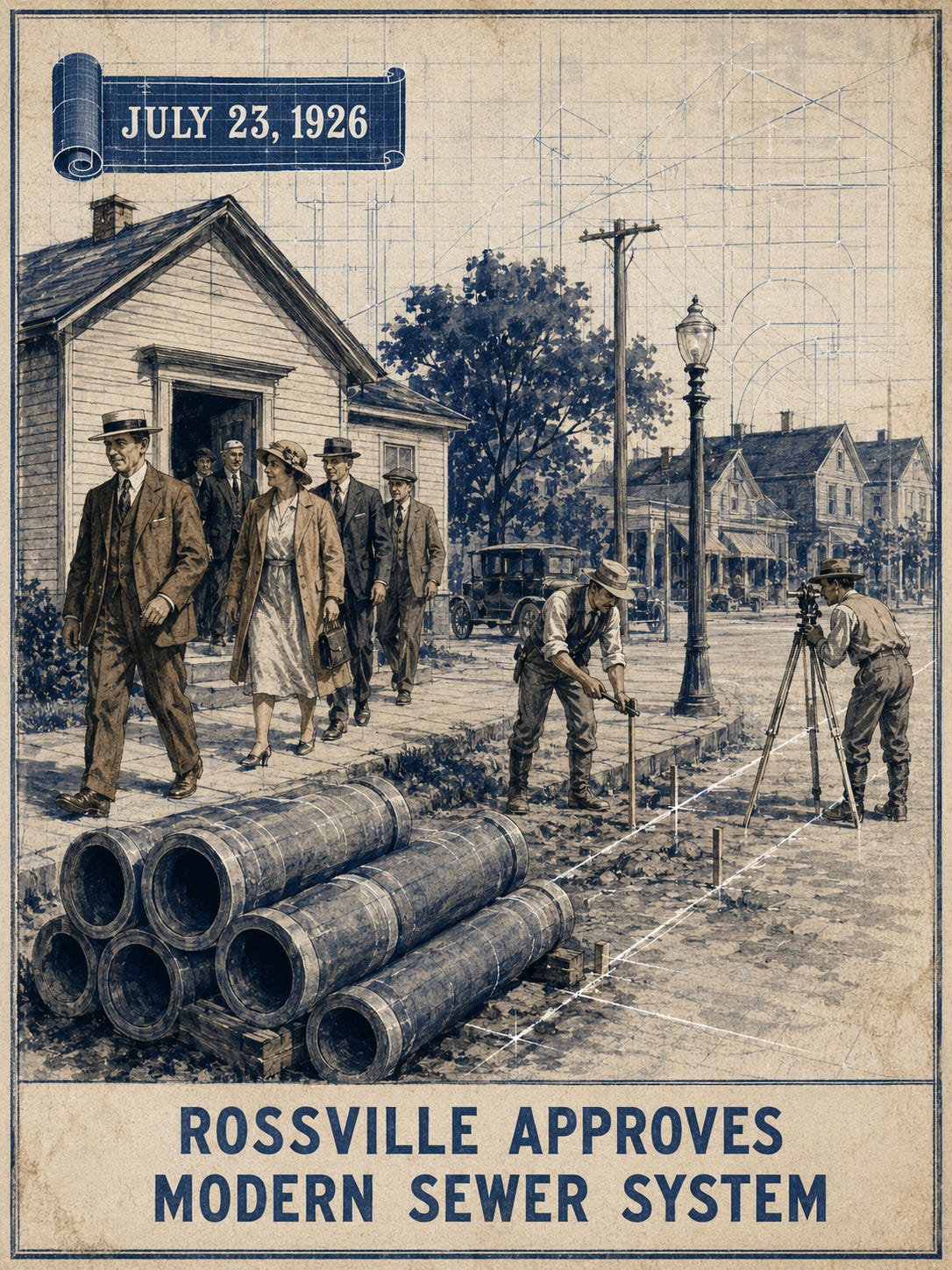
Rossville voters approved an $80,000 bond issue for a modern sewerage system by the lopsided count of 366 to 45. The chamber of commerce, civic organizations, mayor, and council had all pushed the measure. Sewer bonds are not romantic, but few public projects change daily life more profoundly: better sanitation, safer growth, fewer contaminated wells and ditches, and a city able to support more homes and businesses. The vote was a local declaration that modern infrastructure was worth a large shared debt—and that nearly nine out of ten voters agreed.
21 | 1951 | Three Counties Went Shopping for a $2 Million Hospital
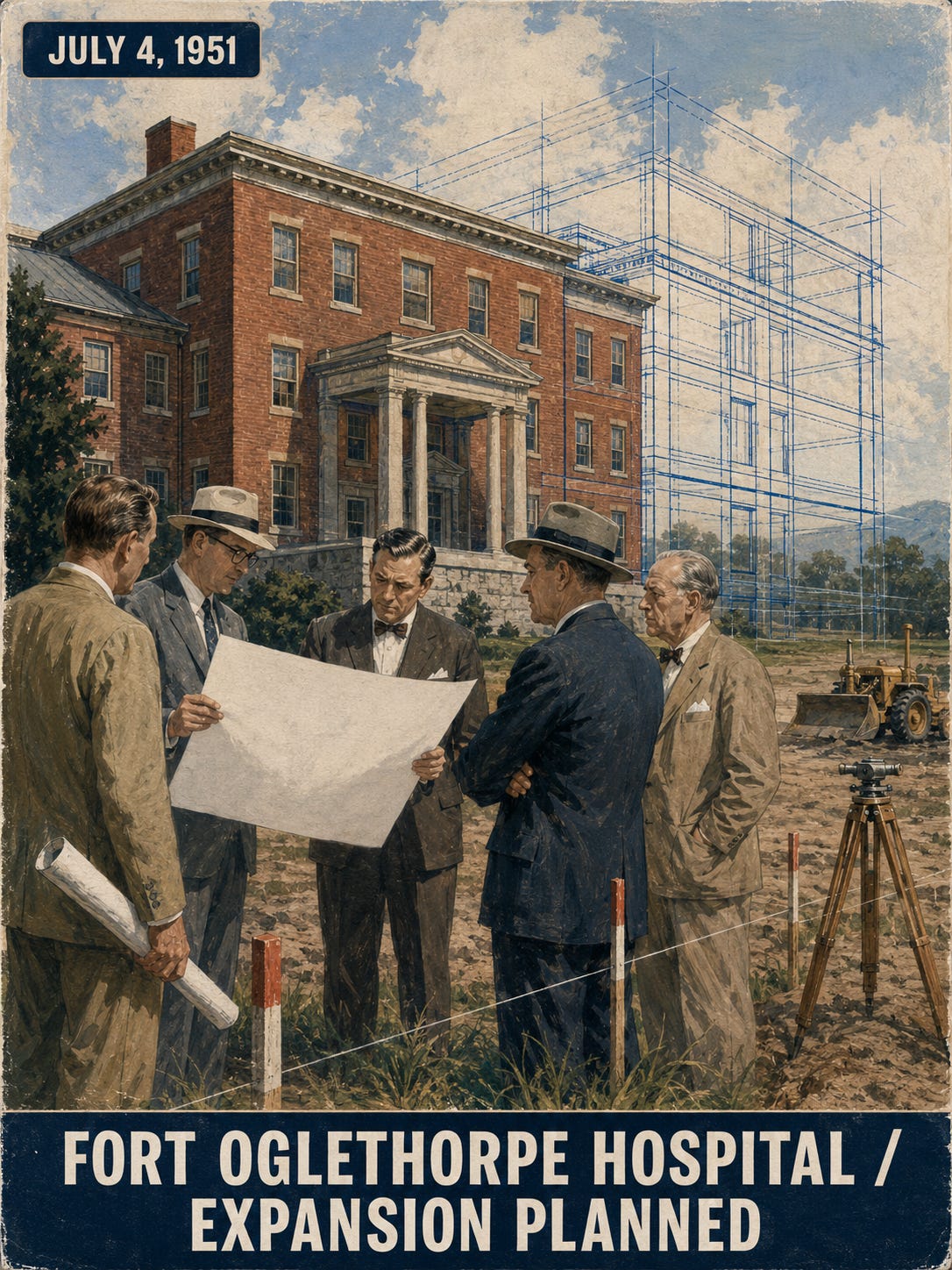
The Tri-County Hospital Authority opened construction bids for a major Fort Oglethorpe project. Plans called for renovating the existing hospital and adding a new three-story building, with bids due July 31. When complete, Walker, Dade, and Catoosa counties would jointly own a hospital and related property valued at about $2 million. The project represented regional cooperation at its most concrete: three county governments pooling responsibility for a medical center too ambitious—and too necessary—to think of as belonging to only one courthouse or city.
22 | 1967 | The Old Peerless Site Burned—and Rossville Nearly Went With It
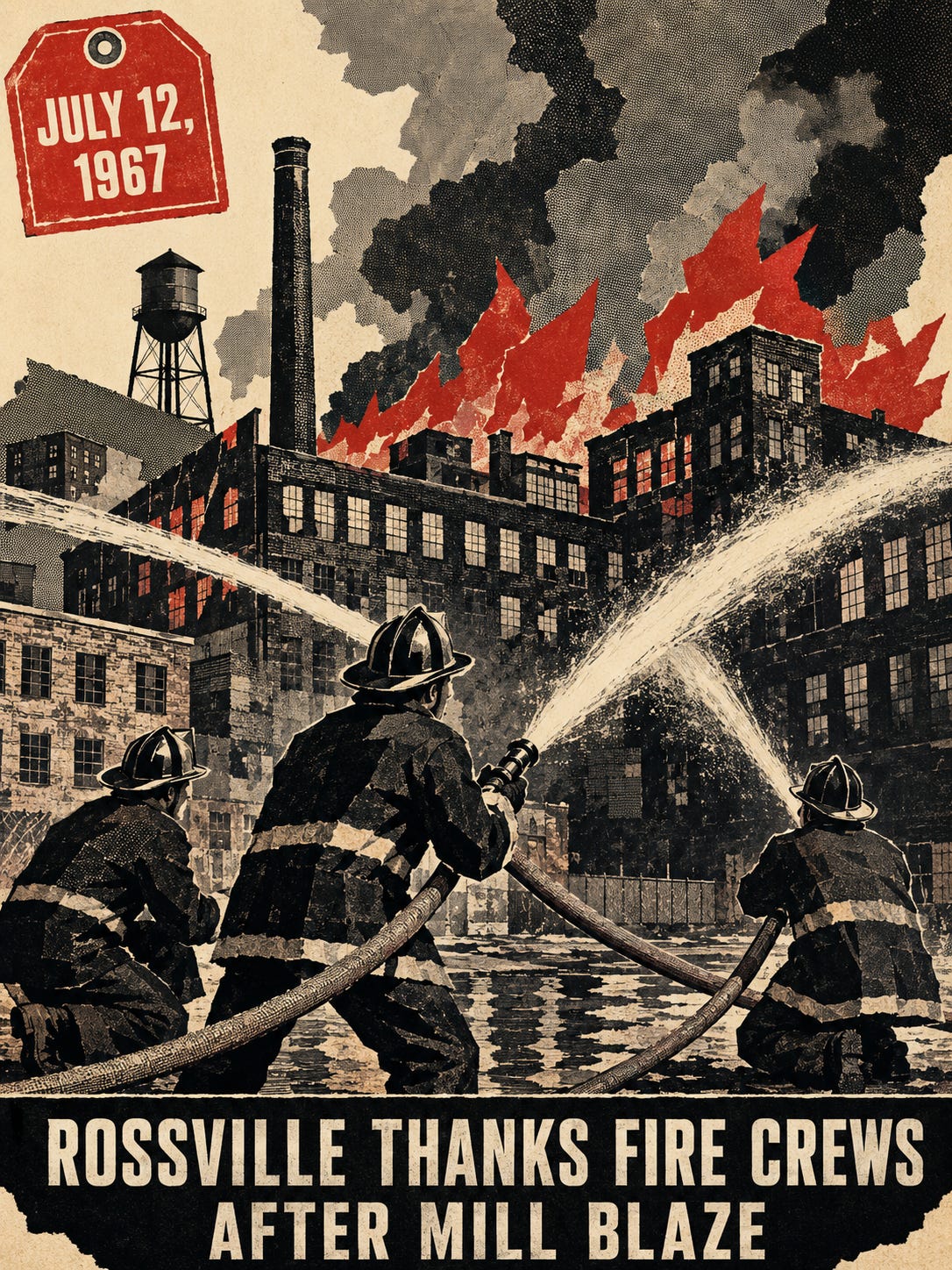
A June fire tore through multiple plants at the Rossville Development Center, the vast industrial complex created from the former Peerless Woolen Mills. Flames threatened to spread into northwest Rossville, drawing a response large enough that the city council later passed a formal resolution thanking the firefighters. The blaze was not merely a building fire. It struck a site already carrying the weight of a mill closure, a labor battle, and a redevelopment gamble. Firefighters saved the danger from becoming a neighborhood catastrophe, even as businesses inside the old complex were destroyed.
23 | 1883 | Rebuilding the Courthouse, One Sawed Board at a Time
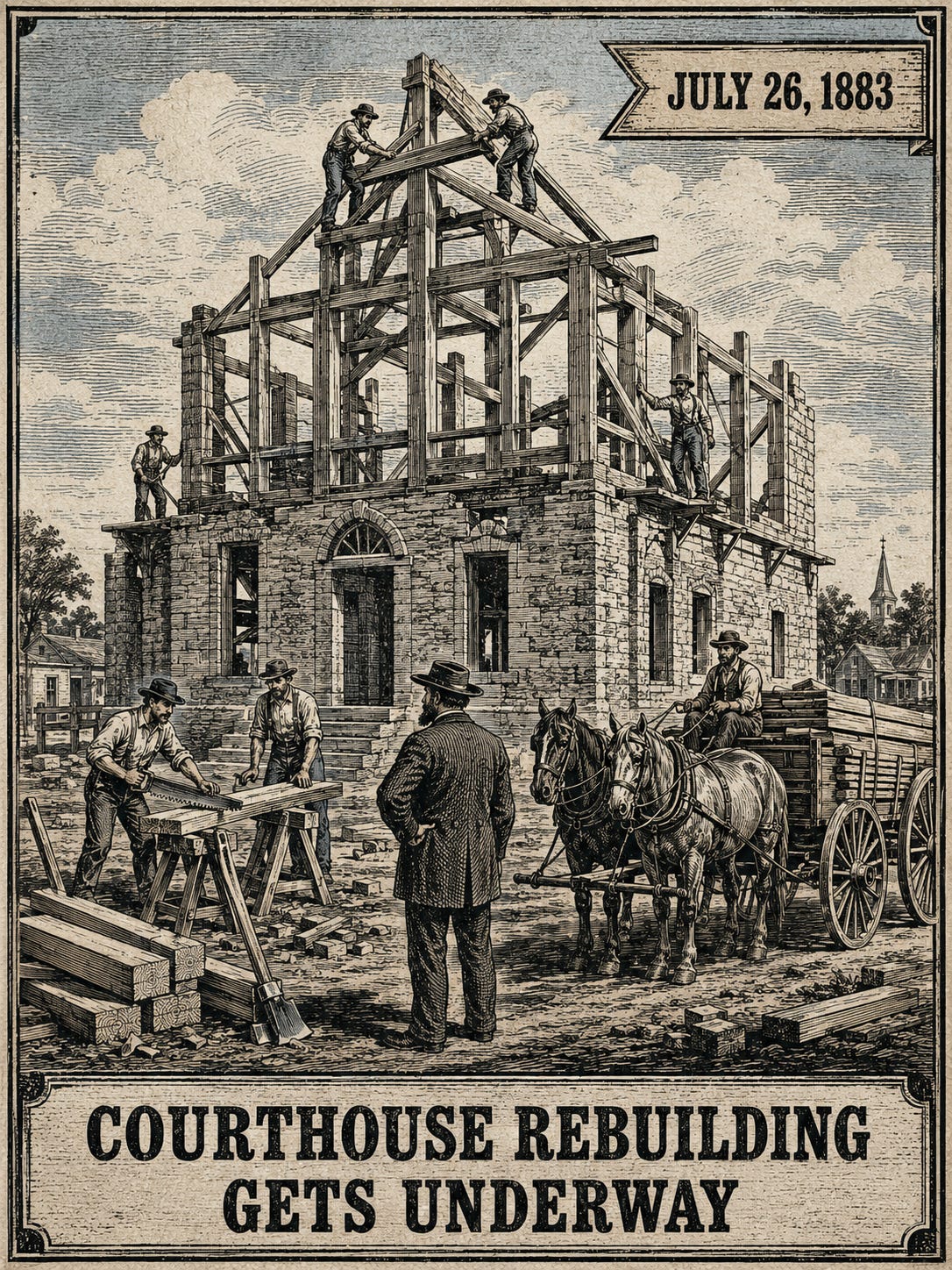
Two small local briefs captured LaFayette’s burned courthouse beginning its return. J. B. Patton was in town to get the work “under full headway,” while William Mize had secured the contract to saw the necessary lumber. The timber would come from lot 82 east of town, land formerly belonging to the A. H. White estate and now owned by Mize. Great public buildings often enter history at dedication, but this one reappears at the practical beginning: a contractor, a timber lot, a saw, and a county trying to reconstruct the center of its civic life.
24 | 1940 | The Courthouse Wasn’t Ready, So the Church Became a Courtroom
A reader wrote in trying to fix the date of a grim local memory. While the courthouse was still under construction, two Black men accused of murder had reportedly been tried inside the Presbyterian church during a February court term, sentenced by Judge Joel K. Branham, and executed on the third Friday in March. The writer wanted the exact year confirmed for the historical record. The letter is remarkable not only for the execution it recalls, but for the improvised geography of justice: a sanctuary temporarily serving as courtroom while a courthouse rose nearby.
25 | 1892 | Timber Car Jumps the Track at Lula Lake
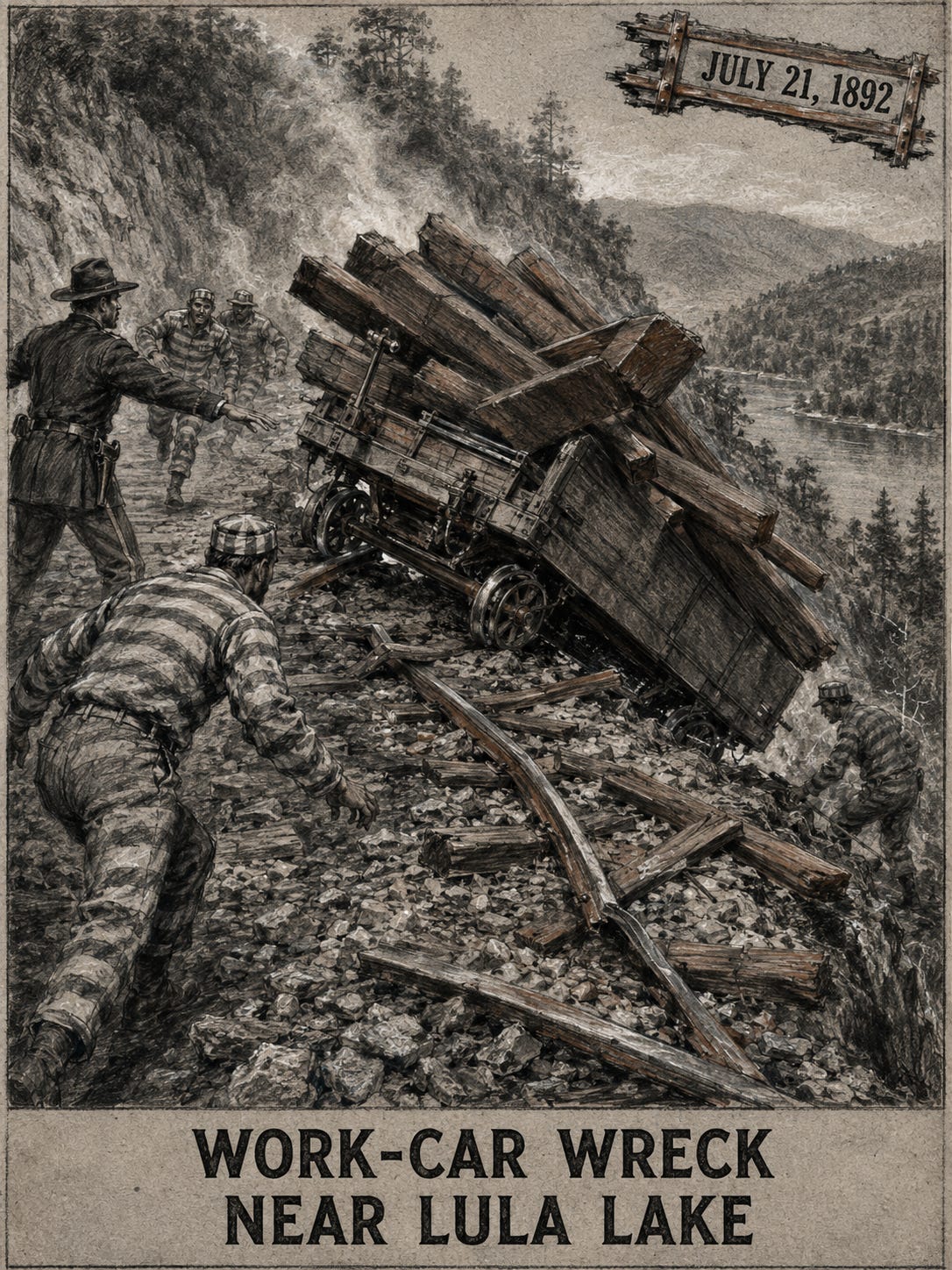
A Chickamauga & Durham Railroad car loaded with trestle timbers derailed near Lula Lake while carrying convict laborers and their guards. Guard William Patterson jumped, was thrown beneath the wheels, and suffered catastrophic injuries. He died soon afterward at the convict camp. An inquest was held, and Captain Parrott arranged a burial case so Patterson’s remains could be sent home near Buchanan. The accident compresses the era’s mountain railroad construction into one violent scene: heavy timber, primitive rolling stock, convict crews, armed guards, and almost no margin for error.
26 | 1907 | A Teenager Drowned While they Watched
King Marsh, a Black teenager about 18 years old, drowned while trying to swim across Warthen’s mill pond in LaFayette. A white boy, Frank Pike, was injured by a submerged snag at the same pond that morning, but survived. The account’s most disturbing sentence concerns Marsh: as he struggled and disappeared, no one standing on the bank made an effort to save him. It is impossible to reconstruct every motive from the brief report, but the racial setting and the recorded inaction leave a brutal question hanging over an otherwise ordinary summer swimming place.
27 | 1921 | The Road-Bond Campaign Had a Special Message for Drivers: Vote
Winning the county’s good-roads bond election required more than a simple majority. Two-thirds of ballots cast had to support it, and those supporters also had to represent a majority of registered voters. That made every stay-at-home voter a quiet threat to the measure. The Chamber of Commerce responded with a direct appeal to automobile owners: if better roads mattered to them, they needed to turn out. The campaign captures the moment cars were changing public priorities—and drivers were being organized as a political constituency before paved roads could be taken for granted.
28 | 1917 | Ten Floats, a Greasy Pole, and a 10-1 Army Defeat
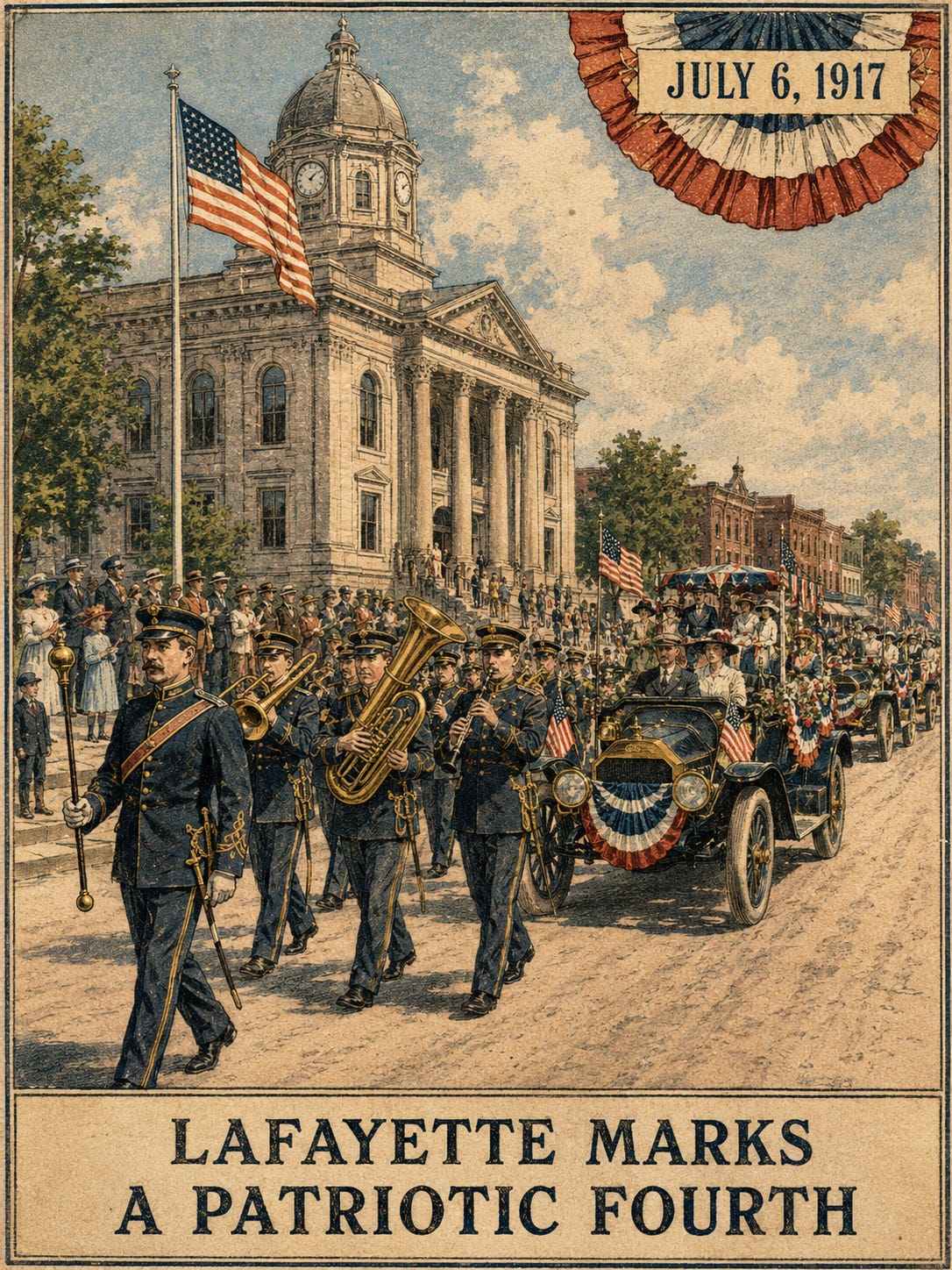
LaFayette celebrated the Fourth with an automobile parade led by the Third Tennessee regimental band, ten decorated floats, a courthouse flag-raising, patriotic recitations, and greasy-pole climbing. Then came baseball against a visiting 6th Infantry Regiment team. The home club won both games, including a 10-1 morning thumping that was not especially diplomatic for a patriotic celebration. The program blended the old county-fair spirit with the new age of automobiles and wartime mobilization—a community cheering the flag, enjoying a holiday, and still taking the score very seriously.
29 | 1920 | LaFayette Wanted a “Standard” School—and a Bond Issue to Match
At a mass meeting called by the city board of education, State School Superintendent M. L. Brittain and Summerville attorney Wesley Shropshire made the case for a modern school. Shropshire pointed to new facilities already built in Summerville, Trion, Menlo, and Lyerly. The crowd reportedly responded with a unanimous vote to endorse the proposal and work for it. The meeting turned educational ambition into a public campaign: LaFayette did not simply need classrooms, supporters argued, but a school worthy of the standards and civic competition of the new decade.
30 | 1954 | Segregation Politics on One Side, Little League Joy on the Other
Unsigned editorial notes surveyed the campaign season, including appeals built around segregation, then pivoted to the success of the local Little League program. That jarring combination is revealing. Public life arrived as a bundle: bitter racial politics, candidate maneuvering, children playing baseball, and civic pride sharing the same editorial space. The commentary did not prove segregation was the campaign’s only issue, but it showed that it was already part of the political sales pitch. Little League, meanwhile, offered the happier local story—a new institution that had quickly captured families’ enthusiasm.
31 | 1963 | John Temple Graves Takes Aim at Kennedy’s Civil-Rights Bill
Columnist John Temple Graves attacked President John F. Kennedy’s civil-rights legislative package, placing a forceful argument against federal action before local readers during one of the defining political fights of the era. This was commentary, not a neutral explanation of the bill, and its value lies in that distinction. It shows how national civil-rights proposals were translated into opposition for a North Georgia audience—what fears were emphasized, what government power was challenged, and how resistance was given an articulate editorial voice beyond the speeches of elected officials.
32 | 1884 | LaFayette, “Nestled Among the Grand Old Hills”
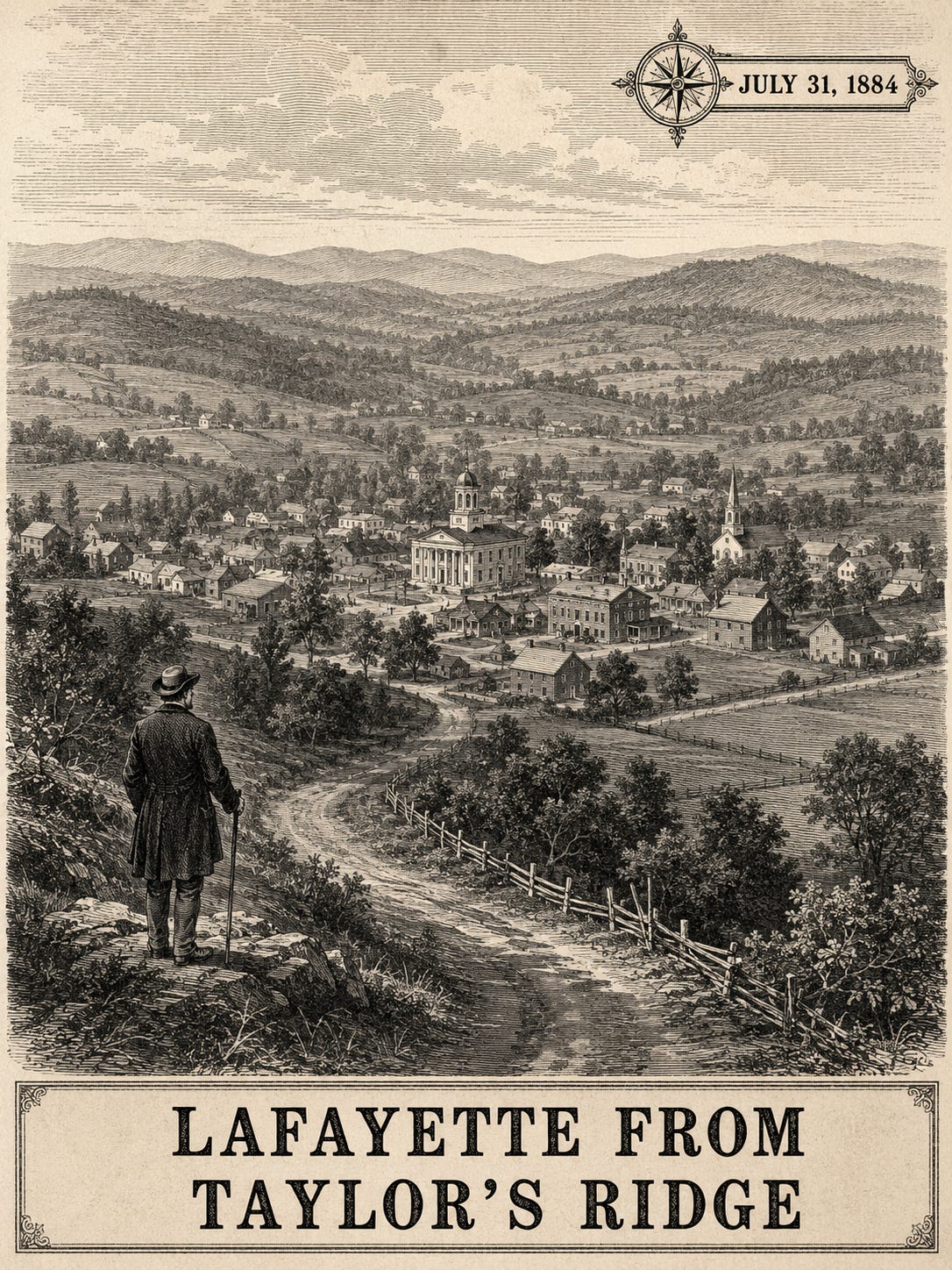
E. W. Ballenger began a travel letter with the view from Taylor’s Ridge: LaFayette lying “becomingly nestled” among Walker County’s hills. Then the trip unspooled past Armuchee farms and razorback hogs, through the twisting uncertainty of Snake Creek Gap and Sugar Valley, toward a Methodist district conference in Calhoun. The route is the attraction. Long before windshield photography and scenic pull-offs, Ballenger turned a workmanlike conference journey into a moving landscape portrait—affectionate toward the town, amused by the livestock, and fully alert to every ridge and gap between home and destination.
33 | 1893 | A Picnic, a Falling Oak, and a Fatal Dose of Uncertainty
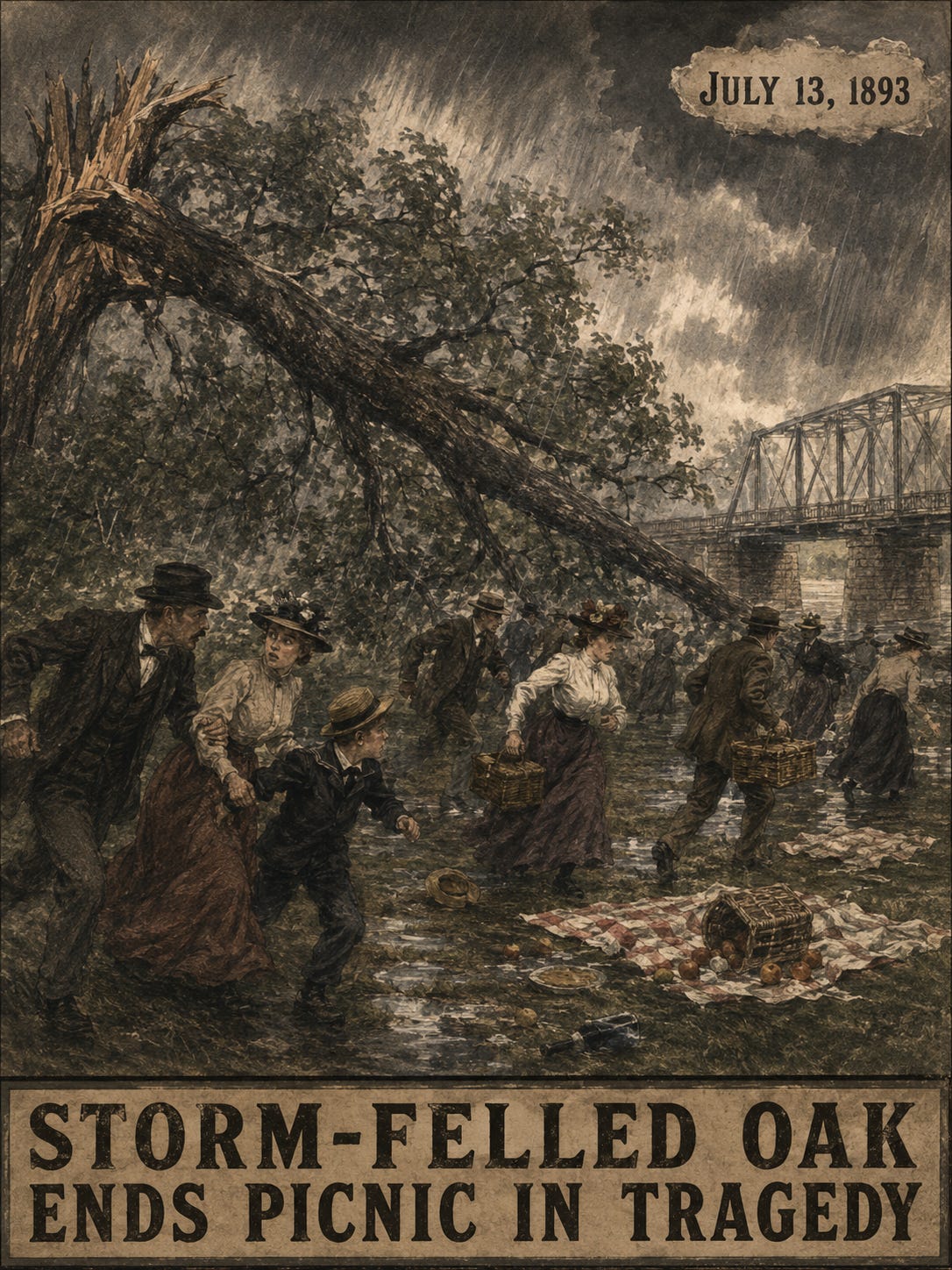
A Chattanooga picnic party traveled to Chickamauga, where a storm toppled an oak near a bridge. The tree killed former alderman John D. Crimmins and badly injured Chattanooga police chief Dock Mitchell. Mitchell was carried home and later died after receiving morphine; a coroner’s jury attributed his death to the resulting stupor. The account therefore records two linked tragedies and a period medical judgment that cannot be treated as a modern clinical conclusion. A summer picnic became a disaster in seconds, followed by an inquest trying to decide where injury ended and treatment began.
34 | 1913 | Five Men Tunnel Out of Jail Just in Time for the Fourth
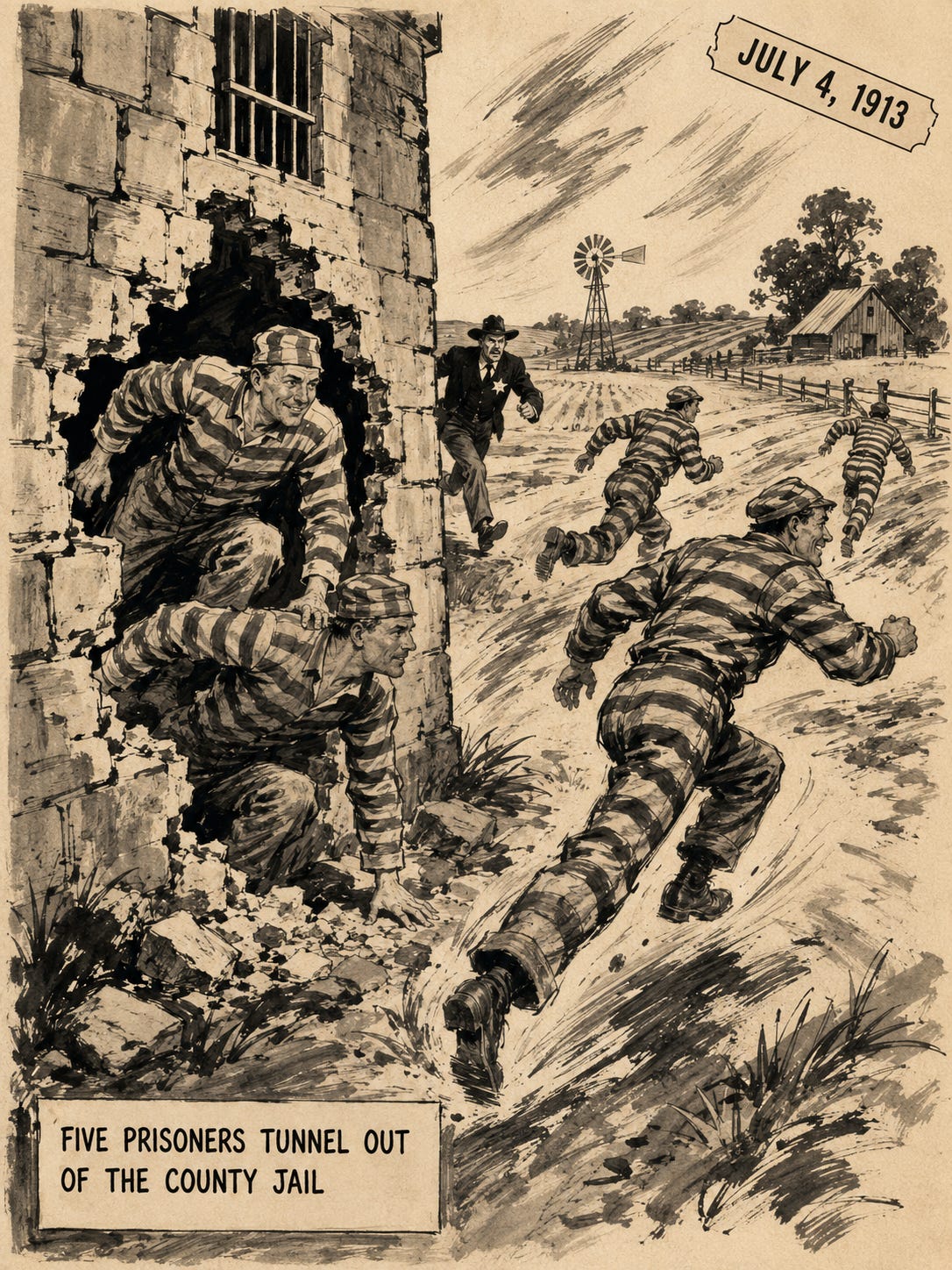
On the eve of Independence Day, five white prisoners made the holiday theme uncomfortably literal by breaking through the Walker County jail wall and fleeing across the Fariss farm. Sheriff Catron quickly recaptured four. The fifth man, who had already posted a $400 bond, was apparently not worth the chase. Charges among the escapees included whiskey selling, larceny, and burglary. It was not a masterfully quiet escape, but it had timing, a tunnel, a farmyard pursuit, and an oddly anticlimactic ending for the one fugitive the law decided it did not urgently need.
35 | 1916 | The Fish Fry That Turned Into a Flood Rescue
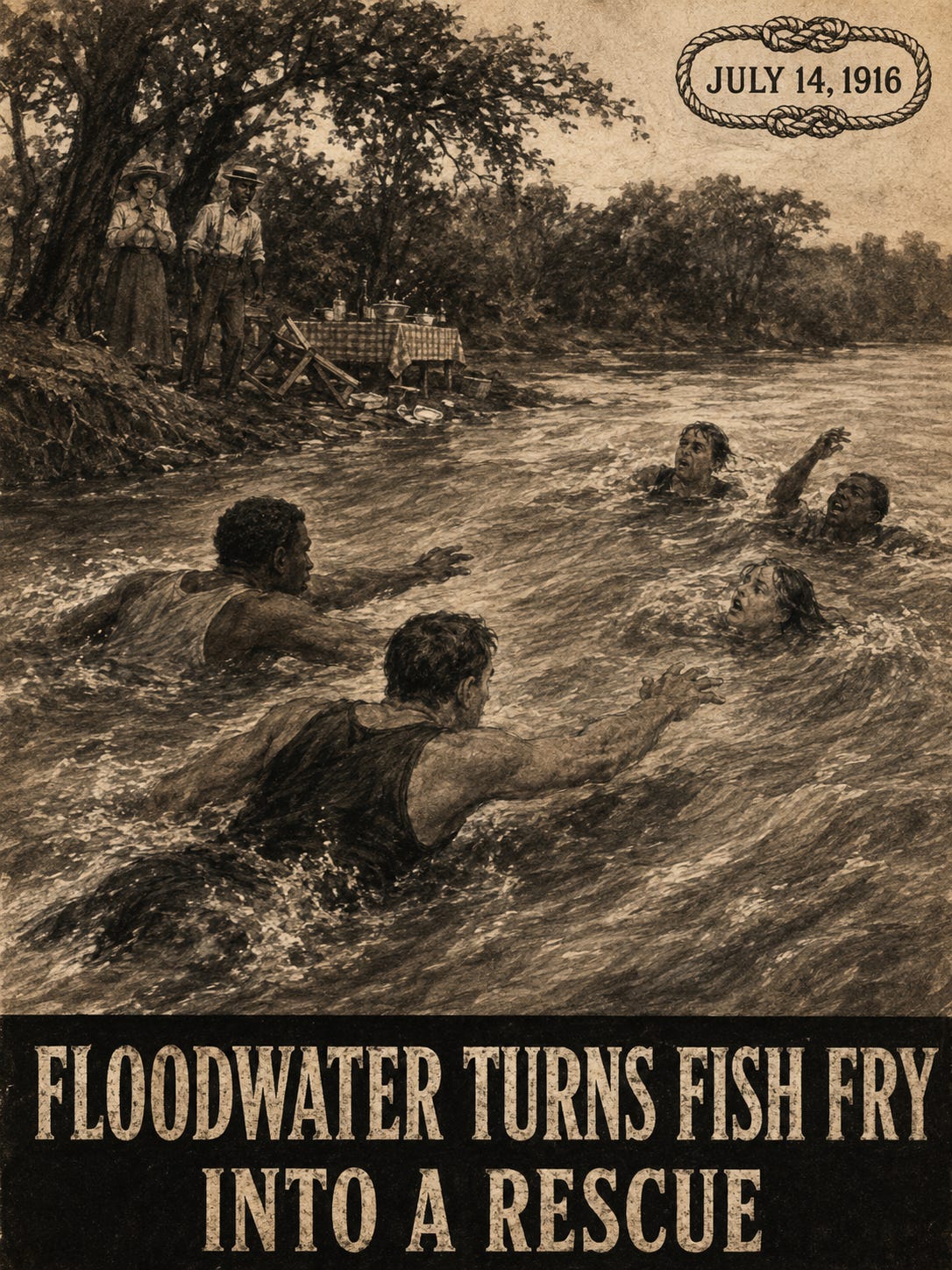
A Fourth of July fish fry at Dalton Ford went violently wrong when rain-swollen water swept several swimmers into the deep. Allen Blaylock of Chickamauga was nearly drowned. Chris Williams and Jake Brown, identified in the period account as Black, were also caught. Ernest Shaver rescued Williams and Brown, while Joe McCraw pulled Blaylock out in what was described as the last stage of drowning. The outing began with food and community tradition; it ended with multiple people risking themselves in dangerous water to keep three neighbors from being carried away.
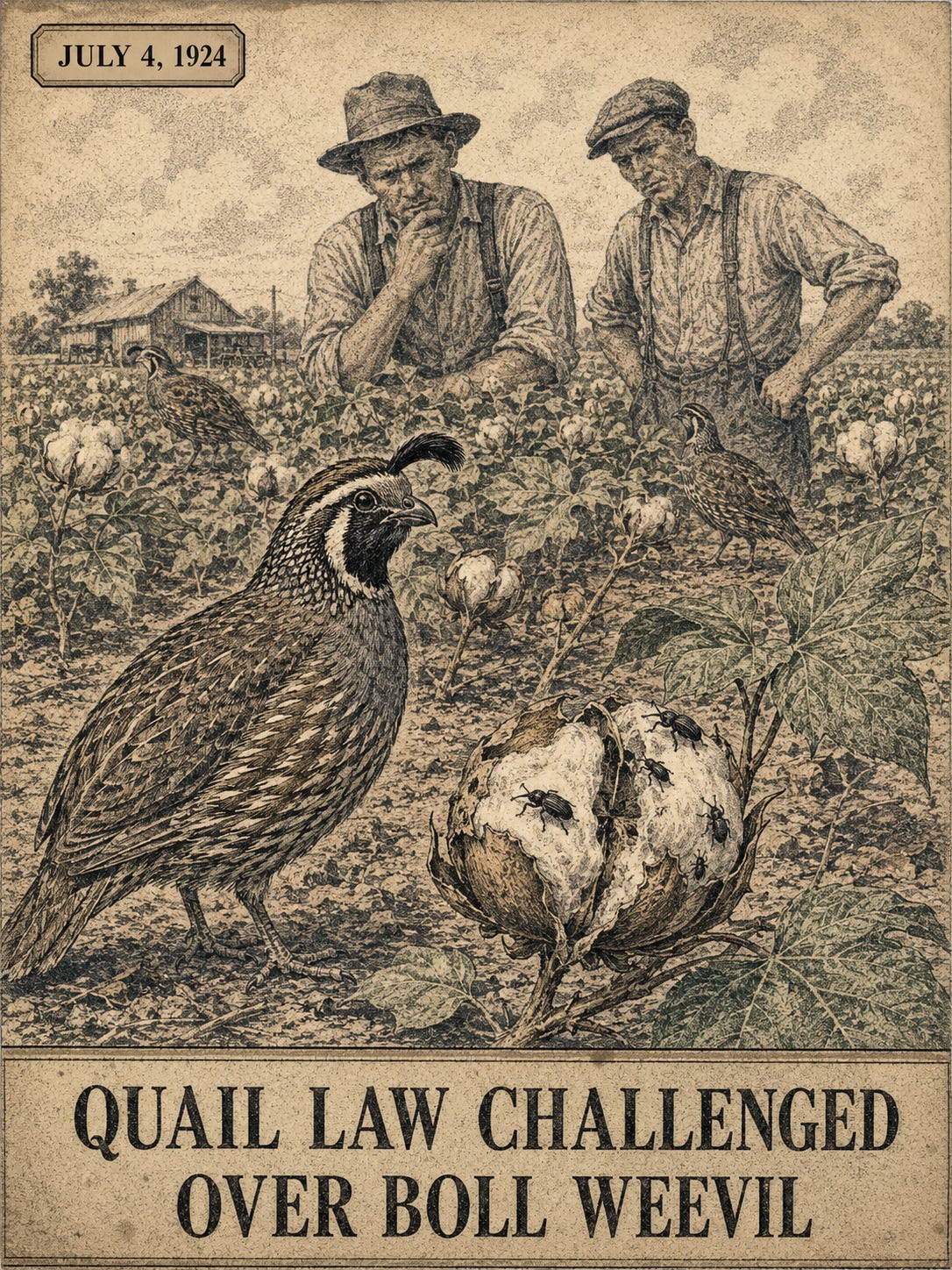
36 | 1924 | Quail Were Protected to Eat Boll Weevils—Then the Survey Arrived
David F. Pope and Freeman C. McClure cited a federal bird survey to challenge a law protecting quail on the theory that the birds helped control boll weevils. Their public notice argued that the evidence undercut the law and called for its repeal. This was advocacy based on their reading of the science, not an official verdict, but the dispute feels strikingly modern: wildlife protection, farm losses, government research, and angry questions about whether a popular policy actually worked. Even the quail had been drafted into the cotton crisis.
37 | 1963 | Naming Streets Also Mapped a Segregated City
LaFayette officials planned names for previously unnamed streets and new names where duplicates caused confusion. Most choices looked like routine mapmaking. Then the report identified Elkins Lane beside a “colored picnic area” and Webb Wheeler Road by the “colored baseball park” and swimming pool. In the same administrative act that clarified addresses, the city recorded its segregated civic geography. Streets were being modernized, but the landmarks used to describe them revealed who public spaces were for—and how racial separation could be embedded in directions as casually as a creek or church.
38 | 1885 | The Arrest Warrant Ended With “He Fired First”
Captain William Strange recognized a Black laborer as a man wanted for burglary in Cedartown and tried to arrest him using a warrant and description. According to the Grayville correspondent, the man resisted, swore he would die before being taken, and reached for a pistol. Strange shot first; the wounded man died about five hours later. The community account called the killing justified, but the only surviving narrative came from the side that defended Strange. That imbalance matters. The item records a fatal citizen’s arrest and the speed with which local opinion supplied its verdict.
39 | 1928 | The Highway Board Took a Ride Before Paving the Road
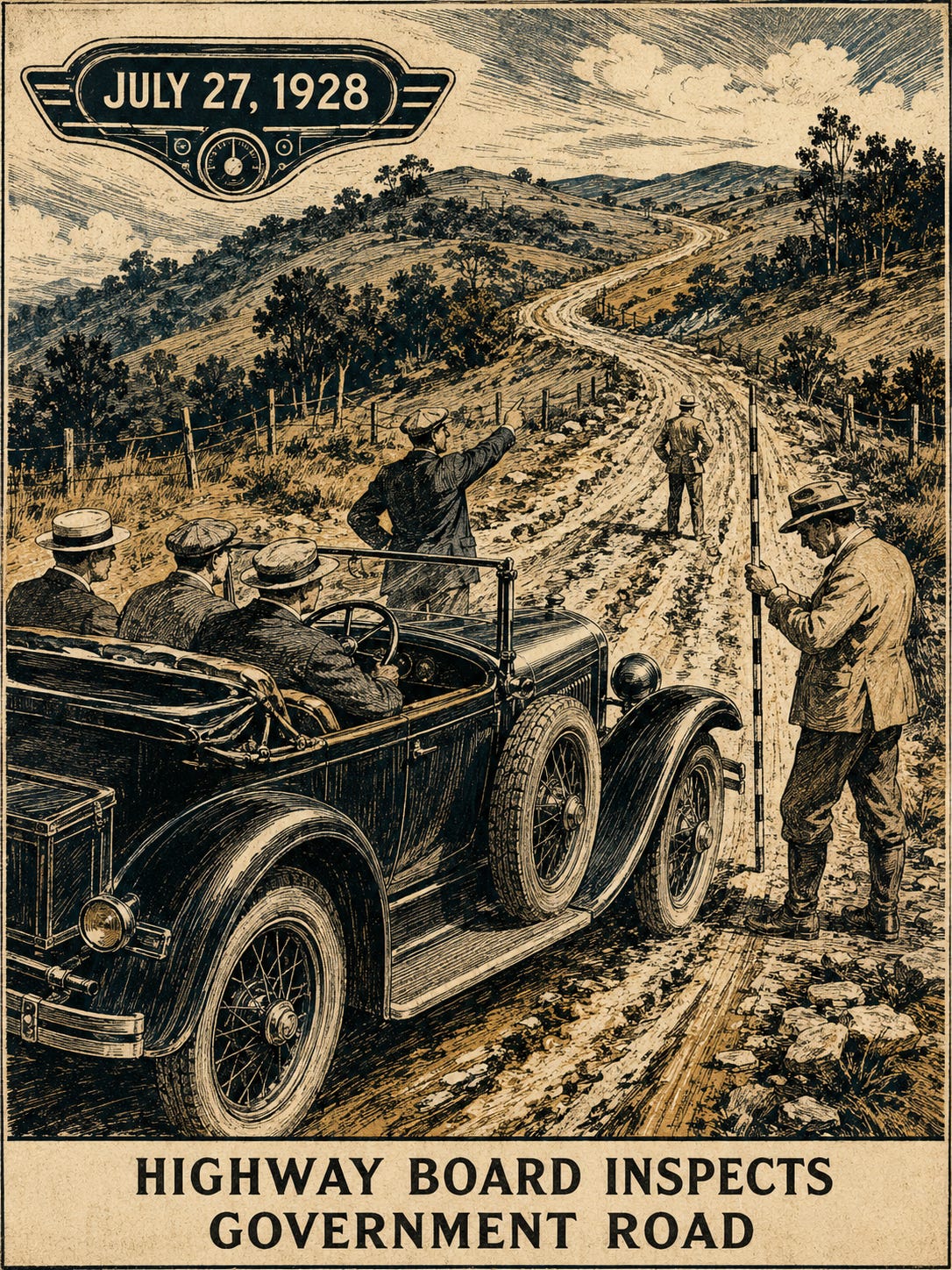
State highway commissioners John N. Holder, John R. Phillips, and Stanley Bennett joined the state engineer, Congressman Malcolm Tarver, and Senator Walter George for an inspection trip along the road from LaFayette toward Lee and Gordon’s Mill. Their goal was to gather information for a state takeover and paving project backed by a federal appropriation. It was a high-powered passenger list for a country road, but that was the point: before asphalt could arrive, decision-makers needed to feel the route, see the country it served, and decide that the “Gov. Road” belonged in the modern highway network.
40 | 1932 | The Depression Was Grim, but at Least the Conventions Were a Circus
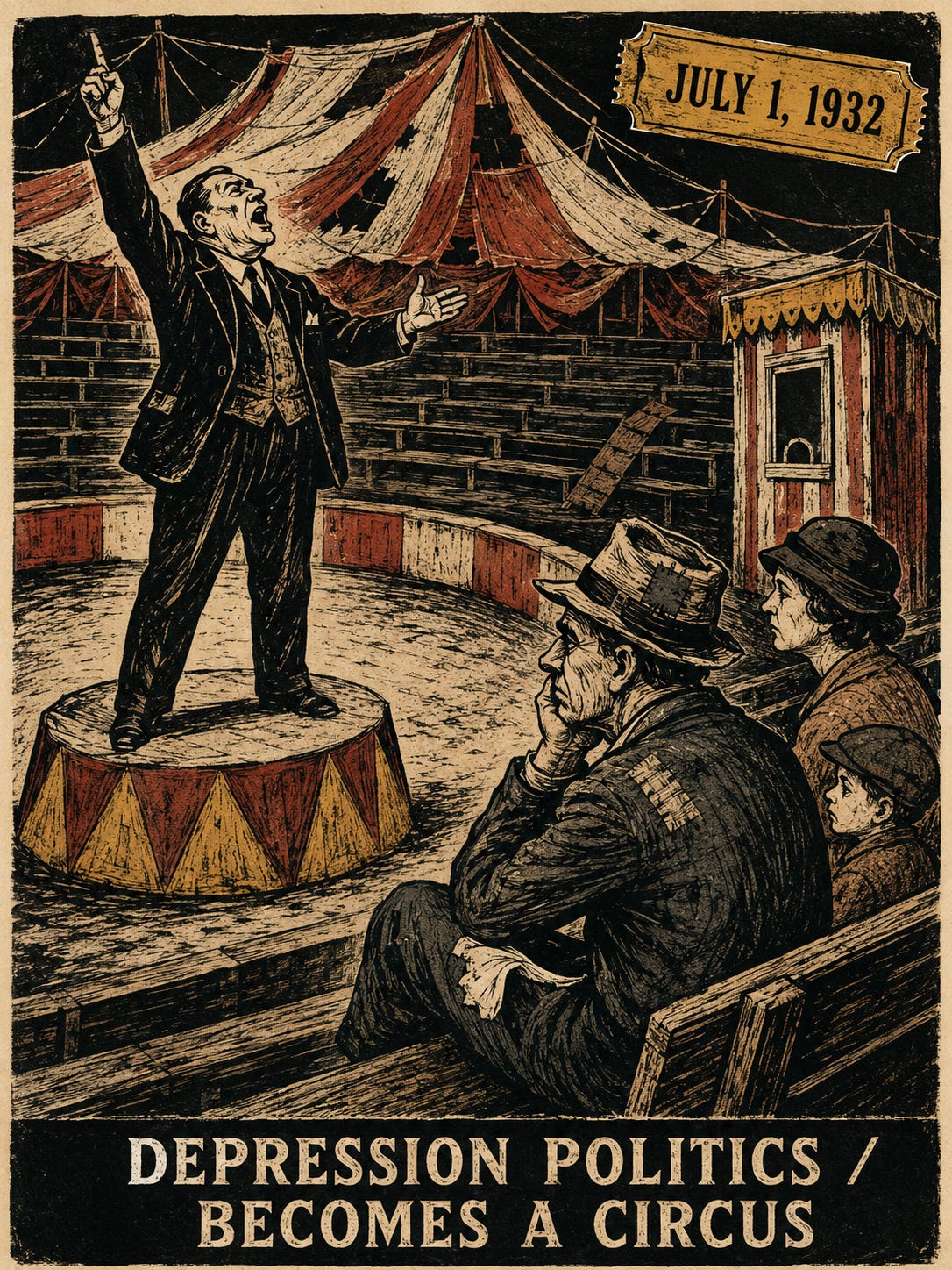
A wry editorial column acknowledged the obvious—“the country is in a depression”—then compared the season’s political conventions to the grand circuses of earlier days. Other quips poked at tax-cut promises and Prohibition candidates. The humor did not erase hardship; it made hardship survivable enough to discuss. In a year of bank failures, unemployment, and political desperation, the columnist reached for the oldest local coping mechanism available: look at the parade of politicians, squint a little, and charge them admission as clowns.
41 | 1934 | A Half-Finished Bridge Added 20 Miles to the Morning Commute
Chattanooga tore down the old Burnt Mill bridge in south St. Elmo using Civil Works Administration labor, then let its replacement stall. Walker County residents from Chattanooga Valley who depended on the crossing were forced into detours of 10 to 20 miles. A local correspondent appealed to his congressman, who pressed officials in Washington and Tennessee; within roughly six weeks, the bridge was finished. The first-person account is relief-program bureaucracy from the road level: one unfinished project, countless wasted miles, and a federal intervention that finally connected a Georgia community to its Tennessee business route again.
42 | 1940 | A Late Movie Sent Every Ticket Dollar to War Relief
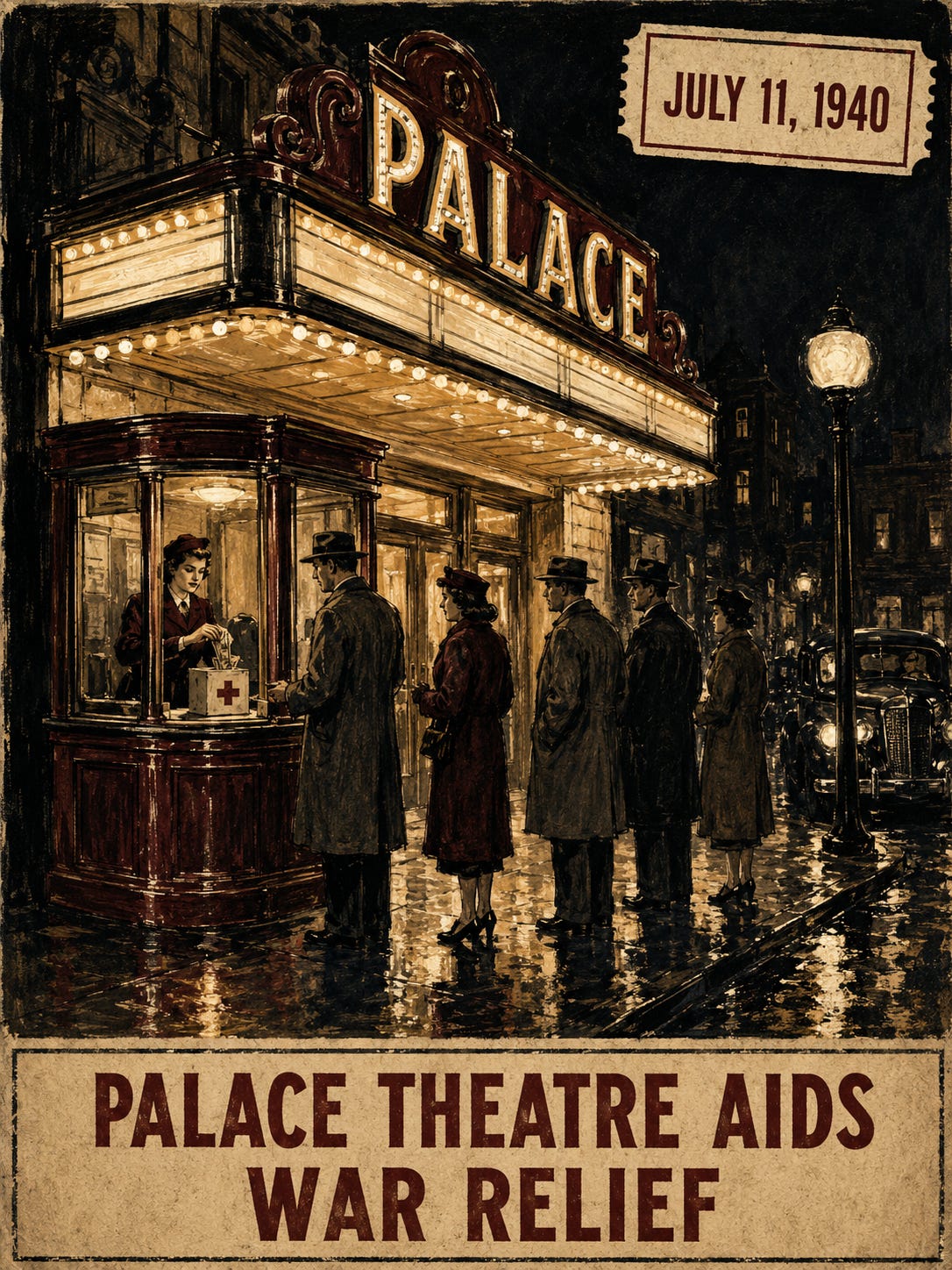
LaFayette’s Palace Theatre scheduled a late showing of The Honeymoon Is Over, starring Stuart Erwin and Marjorie Weaver, and pledged the full gross receipts to the local Red Cross chapter for European war relief. The event was tax-free, allowing every ticket dollar to go to the cause. Before the United States entered the war, residents could sit down for a comedy and still participate in the humanitarian emergency overseas. The marquee offered escape; the box office turned that escape into aid.
43 | 1883 | One Suspected Mad Dog Was Enough to Alarm the Cove
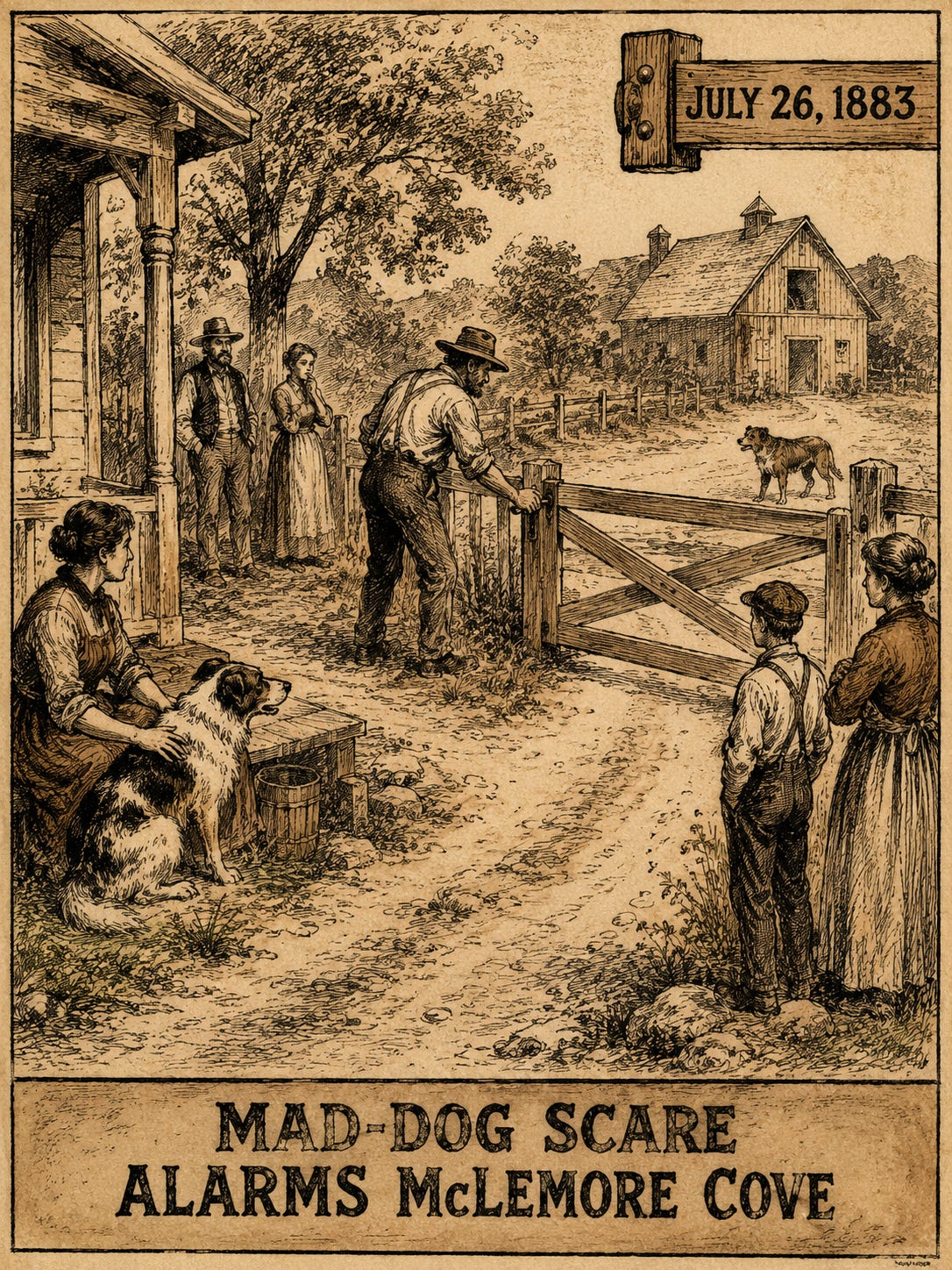
A dog believed to be rabid bit another dog in McLemore Cove, and the brief report said the incident caused considerable alarm. There was no laboratory test, no follow-up outcome, and no elaborate public-health response—just the frightening possibility of hydrophobia moving from one animal to another. In an era before modern vaccination and reliable treatment, that was enough. A small rural notice carries the full weight of a disease whose symptoms were terrifying and whose appearance could turn every loose dog into a neighborhood emergency.
44 | 1911 | The Dog Epidemic Had a Name: “Taxitis”
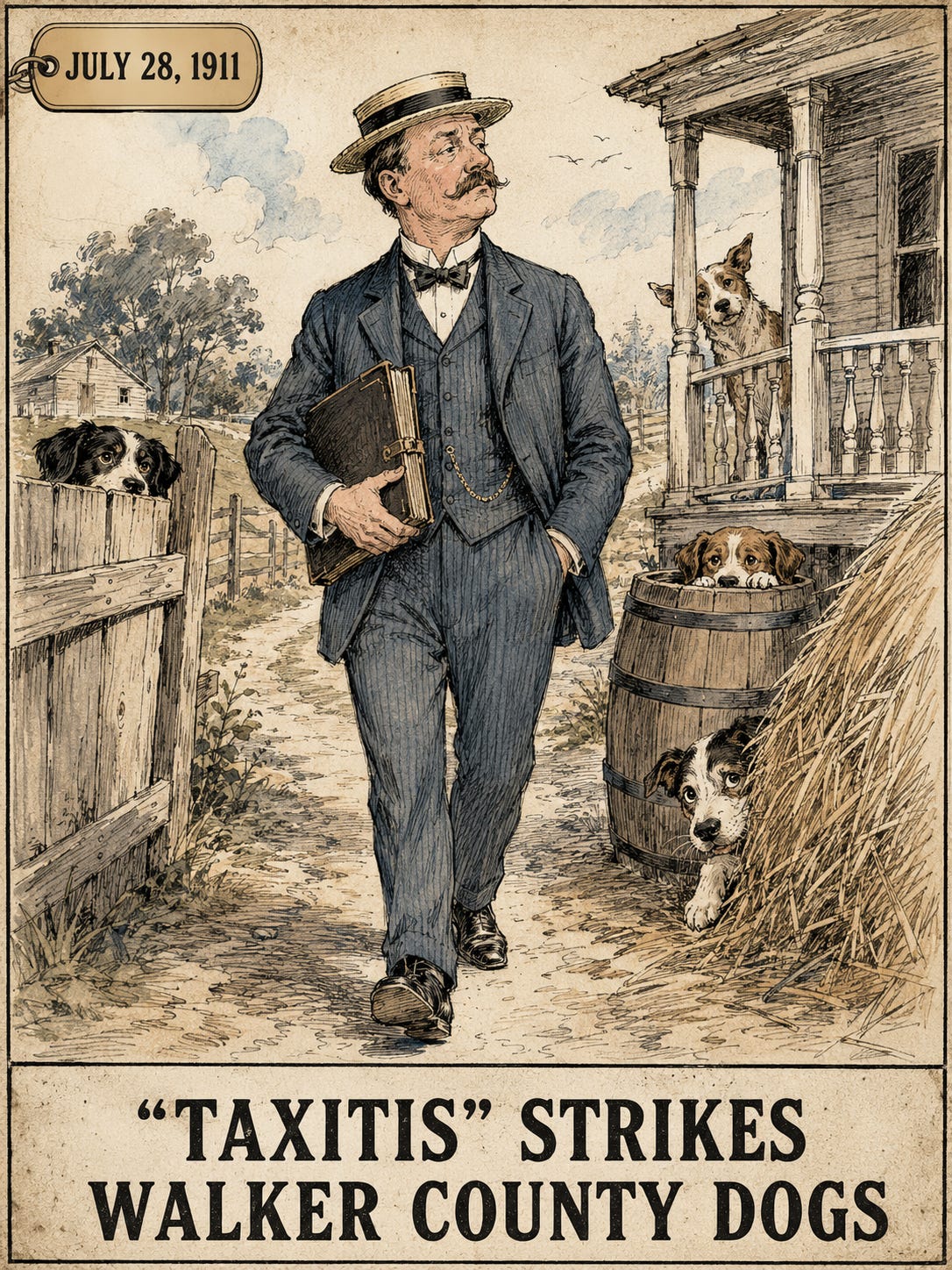
County Tax Receiver C. B. Ezell noticed that “hundreds” of dogs had supposedly disappeared during the previous year. Because dogs were taxable property, the timing inspired a diagnosis more fiscal than veterinary: taxitis. Whether animals truly died, wandered away, or merely vanished from owners’ declarations was left to the reader. The joke works because everyone understood it. When the tax receiver came counting, Walker County’s canine population appeared to suffer a sudden and remarkably convenient collapse.
45 | 1919 | He Survived the War, Then Drowned in the Rhine
R. B. Stegall of Rossville received word that his son Jerry had drowned in the Rhine River on June 22. A Central High graduate, Jerry had enlisted in the Marines in 1918 and remained in Europe with the army of occupation after the Armistice. His family had been expecting him home. Instead, the danger came after the shooting stopped, in a river running through the territory the victorious forces now occupied. The loss captures a truth often missed in neat wartime timelines: service did not become safe on November 11, and homecoming was never guaranteed.
46 | 1909 | A Farmer Asked Who Those “Good Roads” Were Really For
A farmer’s signed letter challenged the enthusiasm for road bonds. Better roads, he argued, would chiefly serve automobile owners out pleasure-driving, while farmers paid the cost and faced frightened livestock on narrow routes. A wagon loaded for market had little room to dodge a noisy motorcar. The objection was not anti-improvement so much as a demand to identify the winner: was the county building roads for the people who worked them every day, or for wealthier motorists racing through? Infrastructure debates have rarely been only about pavement.
47 | 1921 | The Wrecked Car Had a Passenger List—and 12 Gallons of Liquor
D. C. or O. C. Tabb, reported as intoxicated, collided with a loaded truck at a Chattanooga intersection. His wife and two-year-old child were seriously injured. A search of the wrecked car uncovered twelve one-gallon cans that smelled of liquor, and the driver was already under a $500 bond from an earlier charge of transporting alcohol into Walker County. The discovery transformed a terrible family crash into a Prohibition story as well: dangerous driving, suspected bootlegging, and twelve metal cans rattling in the wreckage.
48 | 1932 | The Bank’s Depression-Era Advertisement Had Nerves of Steel
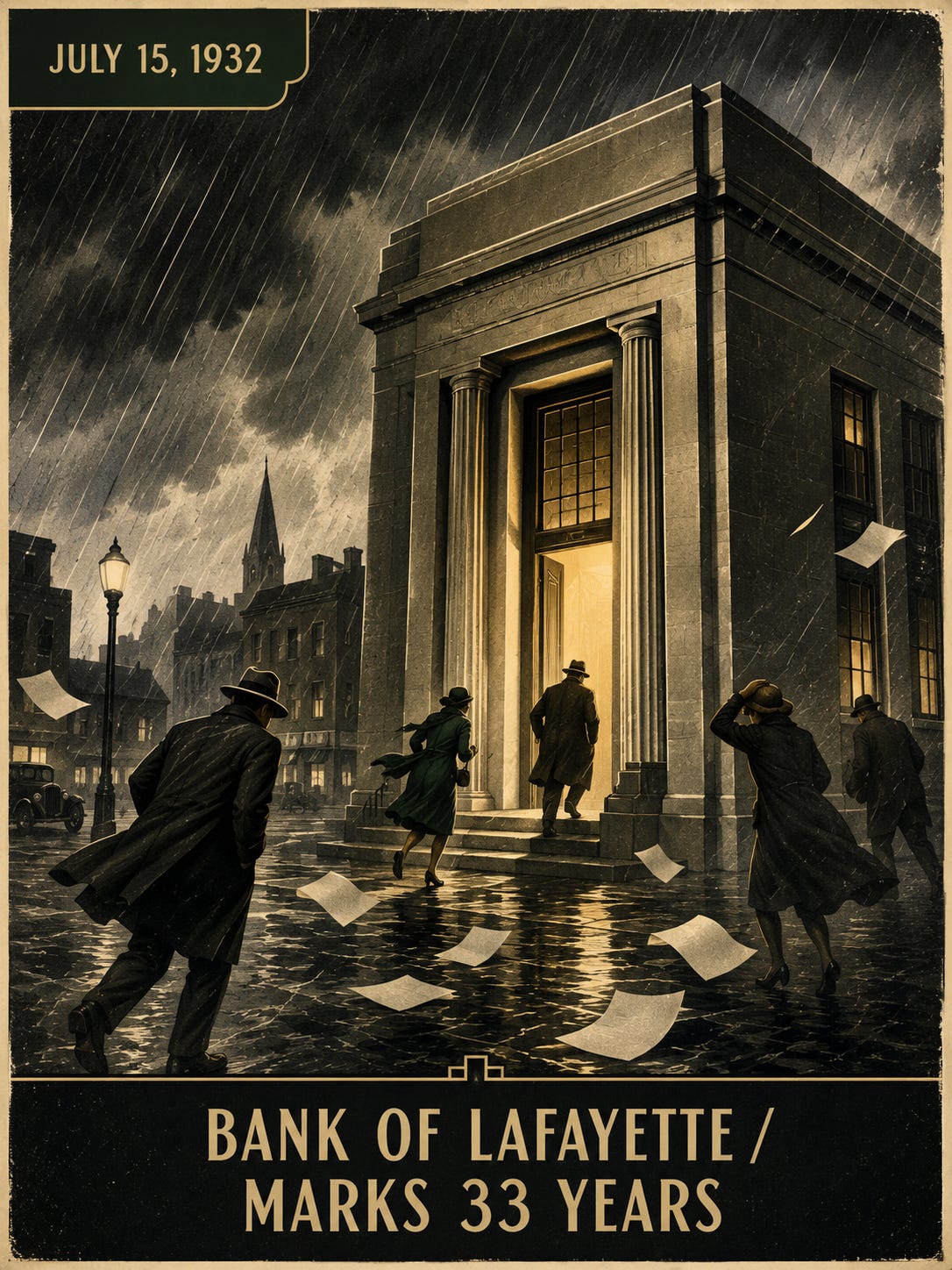
On its 33rd anniversary, the Bank of LaFayette declared that it had weathered “every financial storm, panic and depression” since opening in 1899 and emerged stronger. This was advertising, not an independent audit, but the timing gave the boast urgency. In 1932, depositors across America had reason to fear closed doors and vanished savings. The message was carefully engineered reassurance: the institution had seen trouble before, its principles were safe and sound, and it intended to remain the solid object in an economy that felt anything but solid.
49 | 1939 | “What’s Wrong With Our County?” Asked the Full-Page Ad
A campaign advertisement signed by a Tax Payers’ Committee accused unnamed people of collecting both county wages and Works Progress Administration pay. The charge was not independently established on the page, and the lack of names made the broadside more smoke than courtroom evidence. But as political messaging, it was sharp: use a full page, frame the issue as corruption, and invite every reader to imagine who might be double-dipping. The advertisement shows public relief becoming a local campaign weapon just as clearly as it shows concern about payroll accountability.
50 | 1944 | Home From Guadalcanal After 26 Months Overseas
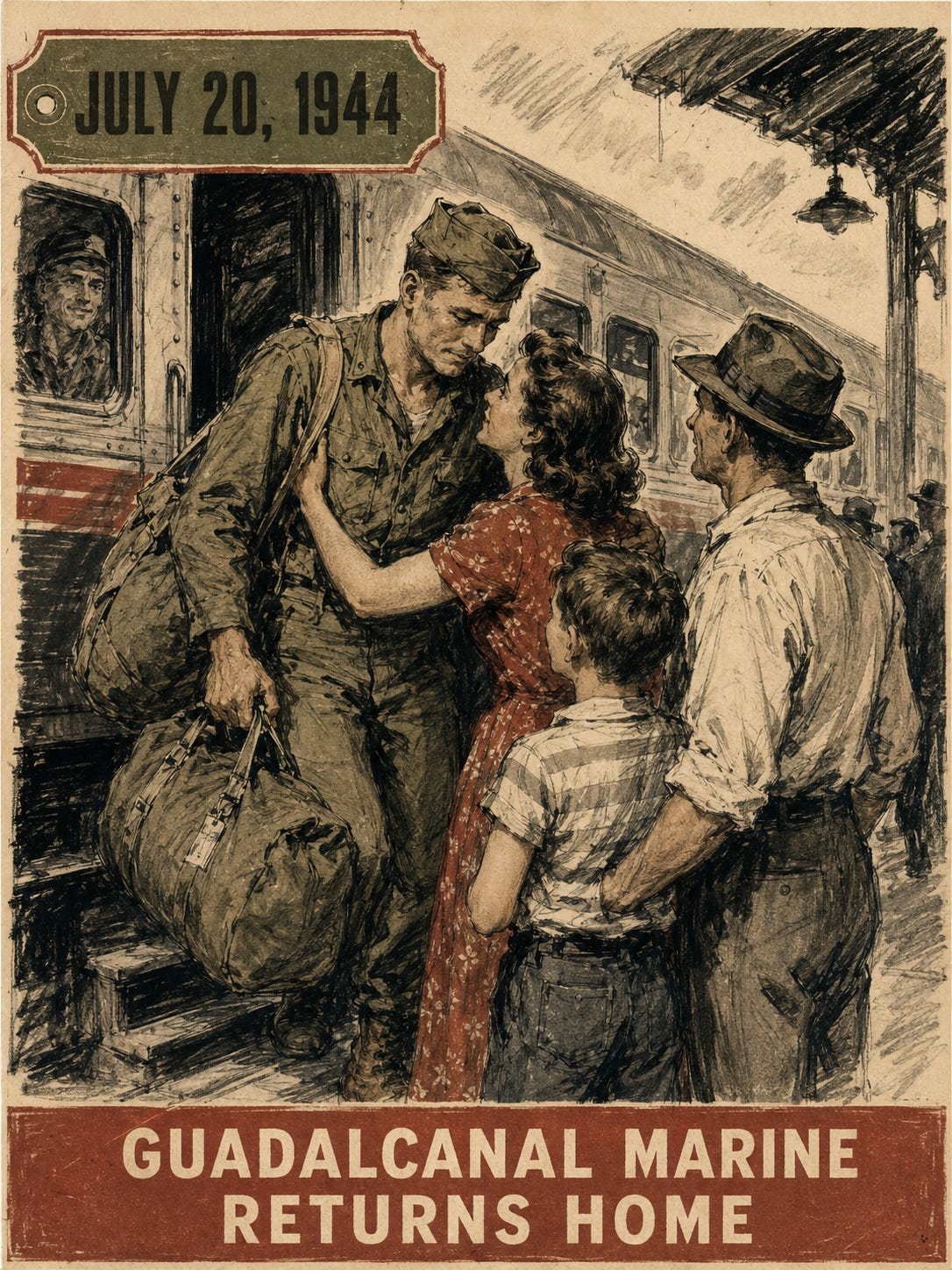
Thomas M. Blackwell, 22, of Chickamauga, returned on furlough with men of the 1st Marine Division after at least 26 months overseas. He had enlisted in 1940 and served with the division that opened the first Allied offensive against Japan at Guadalcanal in August 1942. The unit earned the first Presidential Unit Citation of the war. For Blackwell’s neighbors, the global campaign suddenly had a familiar face: a young local Marine walking back into town after one of the Pacific war’s most famous and punishing battles.
51 | 1949 | The Future Governor Warned Chickamauga About “Isms”
At an American Legion servicemen’s homecoming in Chickamauga, Major General Ernest Vandiver called for renewed devotion to American ideals and warned that foreign “isms” were trying to infiltrate the country. Vandiver, then Georgia’s adjutant general and later its governor, spoke to a crowd already fluent in wartime sacrifice and newly alert to Cold War fears. His wife, a niece of Senator Richard B. Russell, sat on the platform. The event joined veterans’ homecoming, patriotic ceremony, political connections, and anti-communist anxiety in one carefully staged summer address.
Read the opening page and the continuation.
52 | 1888 | Two Ladies, One Runaway Horse, Zero Fines
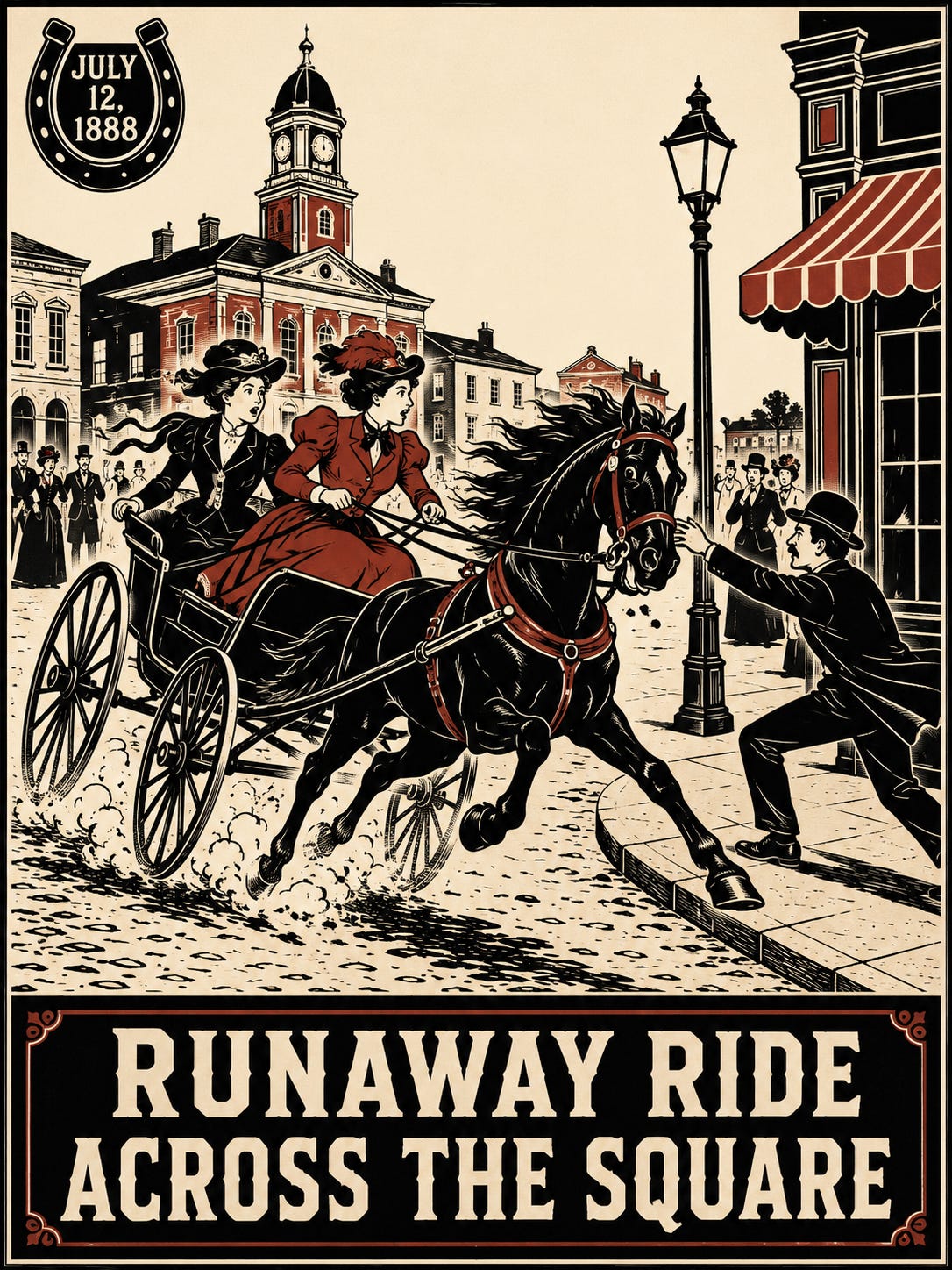
Mrs. Fox and a companion tore across LaFayette’s square with their horse at a run, apparently violating the town ordinance in spectacular fashion. The horse was unmanageable, however, and officials decided the women’s standing—and the circumstances—made punishment unnecessary. Bystanders scrambled to help. Barry Marsh finally caught the bridle after the animal had turned onto the sidewalk in front of the printing office. It was traffic enforcement with a Victorian escape clause: if the vehicle had its own opinions and nearly entered a business, the court could show mercy.
53 | 1895 | Fifty Years of Marriage, Seven Children, and a Very Full Table
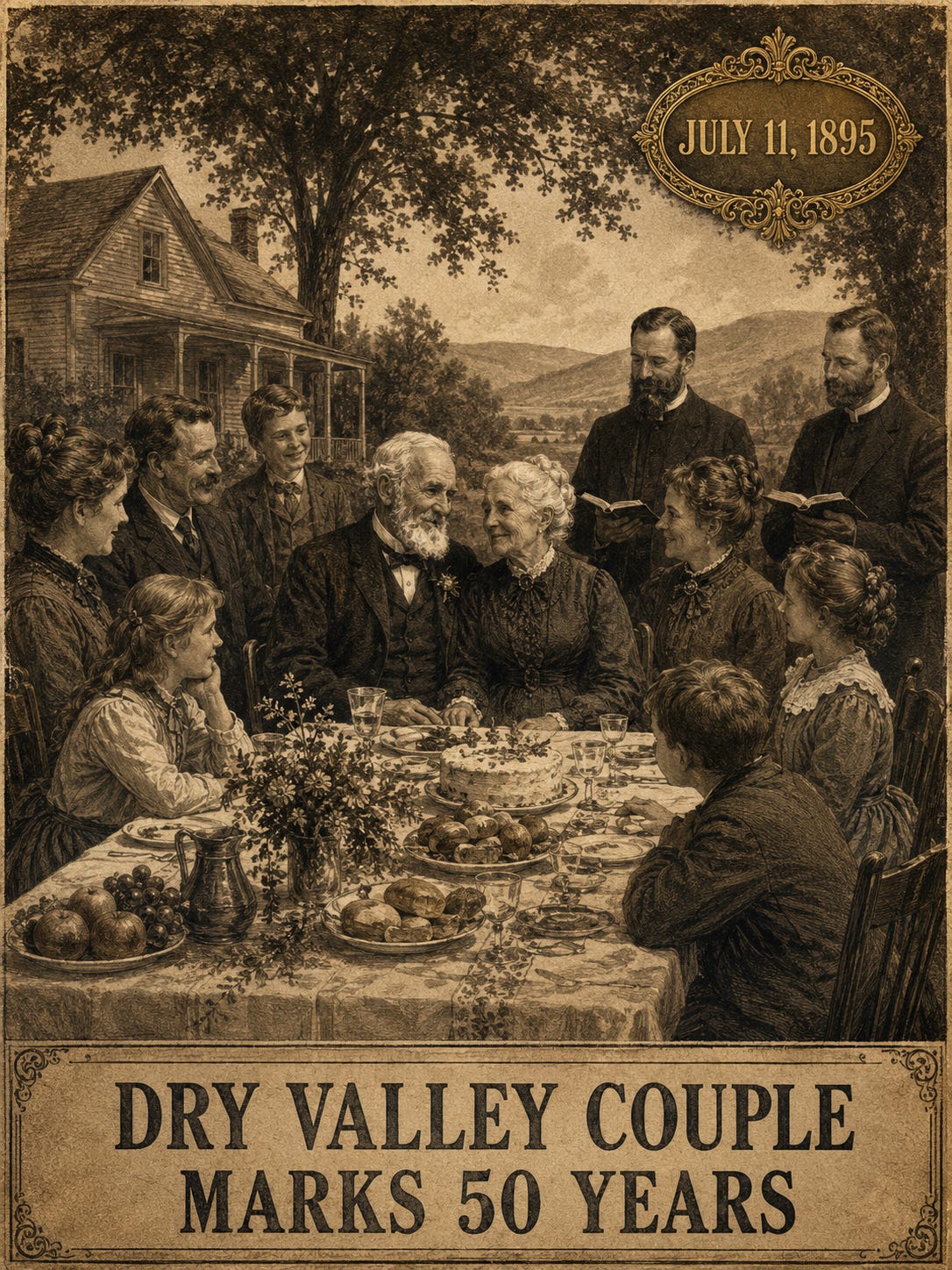
George W. Harpe and Martha Pearce marked the 50th anniversary of their 1845 wedding at their Dry Valley home. Children, grandchildren, and neighbors gathered for scripture, songs, remarks by local ministers, and what was described as a bountiful table. The couple had raised seven children, five still living, and George had belonged to the Baptist church for 48 years. The celebration ended with “We Shall Know Each Other There,” giving the golden wedding both the warmth of a family reunion and the spiritual gravity of lives measured across half a century.
54 | 1923 | Walker County’s New Hobby: Listening to Lawmakers on the Radio

A columnist announced the latest great state pastime: listening to the Georgia legislature over the radio. That tiny joke marks a genuine revolution. Political debate that once required travel, delayed reports, or secondhand retelling could now enter the home as sound. The same collection of quips mentioned a Ku Klux parade, a giveaway car that still drew crowds, and the need for more and better schools. Modern mass politics had arrived in a jumble—legislators on the wireless, spectacle in the streets, and advertising excitement at the curb.
55 | 1899 | The Cow That Derailed a Train
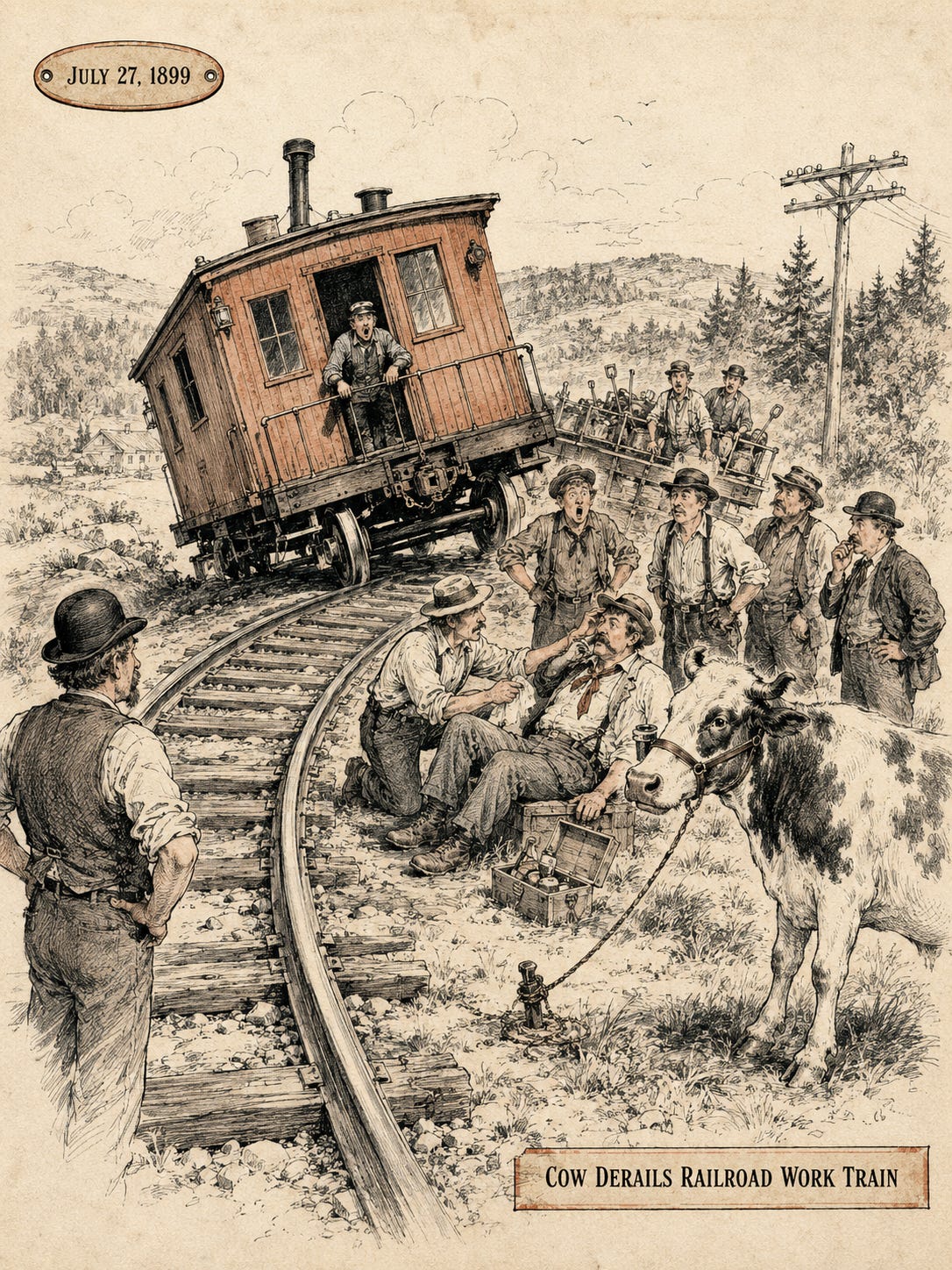
Work-train foreman W. A. Crow had what the local brief called a rough birthday. His Chattanooga, Rome & Southern train was backing below Raccoon when the caboose struck a cow crossing the track “with her head tied down.” The caboose jumped the rails. Crow was cut on the face and head, injured in the chest, and pierced through the arm by a splinter, though he was expected to recover. Every part of the story is alarming, but the restrained conclusion is irresistible: railroad technology met one inconvenient cow, and the cow won the first round.
56 | 1910 | The Mine Owner Changed Workers; the Satirist Kept Score
C. A. Chambers wrote a satirical poem attacking a mine owner’s rotating labor strategy: first convicts, then free Black and white workers, then Italian immigrants. The verse used offensive racial and ethnic language typical of its era, which does not need repetition to understand the point. Beneath the ugliness was a sharp labor criticism: management treated entire groups as interchangeable tools, replacing one workforce with another whenever profit or control demanded it. The poem is not a neutral payroll record, but it preserves resentment over who worked the mines, under what terms, and for whose benefit.
57 | 1917 | One Monday Night to Build a Countywide Red Cross
Residents from every district were invited to the courthouse for a mass meeting to organize a Walker County Red Cross chapter. Chickamauga already had a chapter, and LaFayette volunteers had begun preliminary work, but the goal now was a single countywide organization. With the United States newly at war, the meeting translated distant battlefields into a local institution: people could volunteer, raise supplies, and create a permanent channel for service. The chapter did not begin with an office or professional staff. It began with an open courthouse door and a Monday-night crowd.
58 | 1918 | The Kaiser Became a Movie Monster at Trion Theatre
Trion Theatre promoted The Beast of Berlin as an anti-Kaiser wartime spectacle. The display advertisement promised more than entertainment; it sold righteous anger, patriotic excitement, and a chance to see the enemy transformed into a screen villain. This is valuable precisely because it was marketing. World War I propaganda did not stay in official posters and speeches. It entered the movie listings, where war could be packaged as an evening attraction and a ticket purchase could feel like a patriotic gesture.
59 | 1924 | Six Charter Changes, Including a Stronger Mayor
City officials and the Chamber of Commerce pushed six amendments to LaFayette’s charter. Among the proposals were giving the mayor veto power, changing terms of office and election procedures, making the recorder the city’s trial judge, and creating a fee schedule. Charter reform can sound bloodless, but these changes were about who could stop an ordinance, who judged an offense, how long officials served, and how government collected money. The city was rewriting its own operating system—and asking the legislature to install the update.
60 | 1945 | Six Battles, a Silver Star, and a Prison Camp Door Finally Open
Two homecomings shared one update. Sergeant Arthur E. Taylor returned after six major battles with Patton’s Third Army, carrying the Silver Star, Good Conduct Medal, and European campaign ribbons; his brother was still fighting in the Pacific. Private O. B. Hollingsworth, previously missing in Germany, also came home after Allied forces freed him from months in a prison camp. Victory had arrived, but not evenly. One family could celebrate decorations while worrying about another son, and a former prisoner could step home carrying experiences the short announcement could barely begin to hold.
61 | 1954 | A Navy Cross Hero Collapsed at Third Base
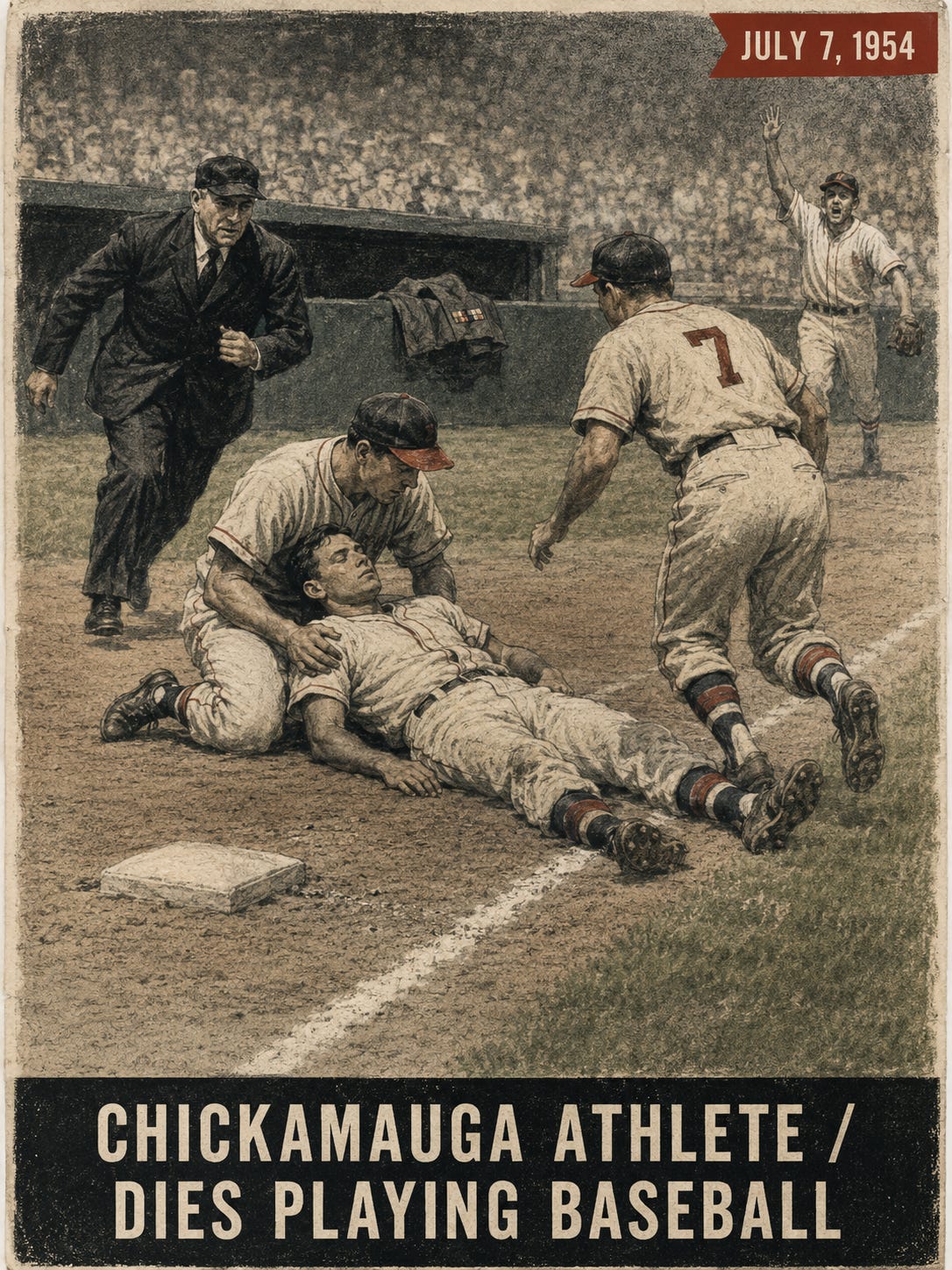
Raymond “Mack” Smith of Chickamauga was only 23 when he collapsed while playing third base for the Hagerstown Packers and died before reaching a hospital. He had been a standout at Gordon Lee High School, served with the Marines in Korea, and received the Navy Cross in 1953 for heroism. That extraordinary military résumé makes the ordinary setting of his death even harder to absorb. He survived war, returned to baseball, and died of a heart attack in the middle of a minor-league game—the bright arc of a young athlete’s second life ending between pitches.
62 | 1963 | At 100, Mrs. Graham’s Family Story Reached Back Before the Civil War

Mrs. J. A. Graham of Rock Spring turned 100 with five living children, 12 grandchildren, 14 great-grandchildren, and four great-great-grandchildren. Her profile reached far beyond birthdays: a family connection to the old stage line between Gordon Springs and Catoosa Springs, memories touching Native removal, East Armuchee’s furnace, LaFayette’s first tanyard, the county almshouse, and a major peach orchard. Her son Ross was identified as Walker County’s first World War I death and the namesake of LaFayette’s American Legion post. One life became a bridge across nearly every layer of local memory.
63 | 1892 | How Deep Was Round Pond? The Legend Said Bottomless
“Round Pond Reminiscences” collected the kind of stories that grow whenever cold water and uncertain depth meet an active imagination. The feature recalled fishing, a rider revived with pond water, and a local legend that two Indigenous men vanished while attempting to measure the bottom. That last tale was folklore, not verified history, and should be read that way. Its value is the legend itself: Round Pond had become mysterious enough for the community to explain its depth with disappearance, danger, and the possibility that some places refused to be measured.
64 | 1904 | The Marshal Nearly Ran From a “Ghost”
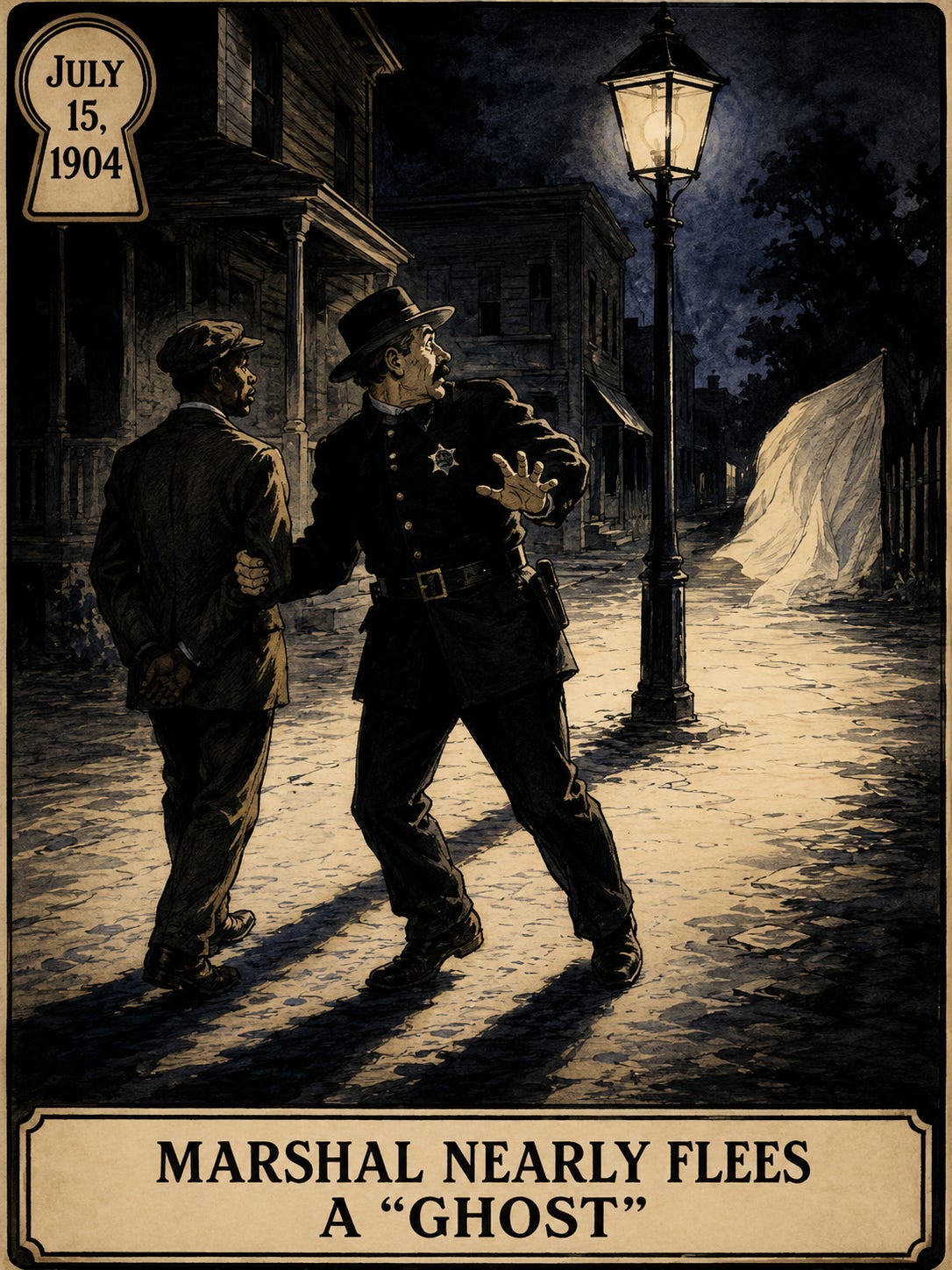
In a humorous curbstone column, LaFayette’s town marshal was transporting a Black detainee when a false alarm made him think a ghost—or something equally alarming—was near. The original joke relied partly on racist period language, but the comic machinery works without repeating it: an officer expected to embody courage suddenly considered retreat, while the person in his custody was along for the confusion. The episode was printed humor rather than a supernatural report. Its real subject was the pleasure of watching local authority lose its nerve for a moment.
65 | 1906 | One Line Names the Principal of a Segregated School
The county school board appointed G. W. Salmon principal of Walker County’s school for Black children. The notice was brief, but its precision gives it power: a name, an office, and a public system openly divided by race. Large historical arguments about segregation often rest on records exactly like this one. No dramatic speech was necessary. The administrative act itself shows the dual system in operation and preserves Salmon’s place within an institution whose educators and pupils too often disappeared from the dominant written record.
66 | 1918 | Walker County’s First Overseas War Death Was an Accident
An unsigned editorial mourned William Latiner Freeman as Walker County’s first death overseas during World War I and warned that more names might follow. Freeman was killed in a motor accident in France, not in combat—a distinction that makes the loss no less connected to service. For families at home, casualty categories could not soften the telegram. The editorial marks the moment a global war claimed its first local life abroad and the community braced itself for a list it feared had only begun.
67 | 1920 | A New Doctor Took Charge of County Health
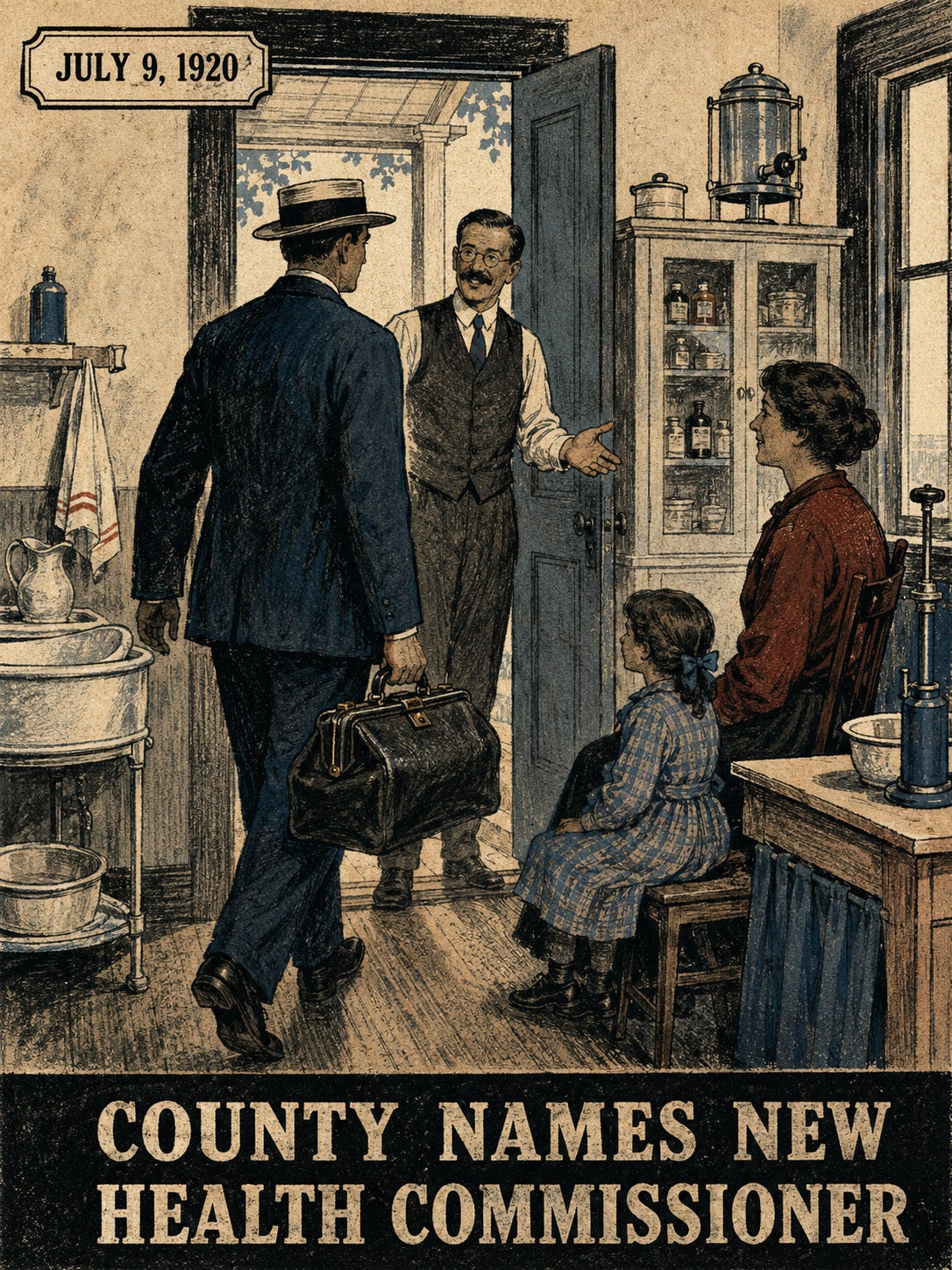
Dr. J. A. Johnston arrived to succeed Dr. H. F. Hope as Walker County health commissioner. The announcement was compact, but the office was not. A county health commissioner stood where medicine met sanitation, contagious disease, schools, and public policy—especially important in the wake of the influenza pandemic. Johnston’s arrival represented a growing belief that health was not only a private matter between patient and physician; it was also a county responsibility requiring an official at the courthouse table.
68 | 1941 | England Was the Buffer Between Walker County and Hitler
An editorial argued that modern aircraft had made a Nazi invasion of the United States a genuine possibility and that Britain was the remaining barrier holding back Hitler’s ambitions. If England fell, the argument went, Germany would eventually turn toward America. Printed months before Pearl Harbor, it shows how rapidly distance was collapsing in the public imagination. Oceans no longer guaranteed safety, and a war that still officially belonged to Europe was presented as a future threat to American towns—including this one.
69 | 1947 | The Tax Receiver Found 2,257 People Missing From the Books
Walker County’s tax receiver reported adding 2,257 residents who had not filed returns. The figure does not prove that all 2,257 had never paid any tax, but it does reveal the size of the administrative sweep. In one update, thousands of previously unfiled names moved onto the county’s books. For government, that promised a broader and more accurate tax base. For the newly listed residents, it meant the county had found them—and would probably be writing again.
70 | 1974 | The Sheriff’s Office Posed With an Eight-Foot Marijuana Plant
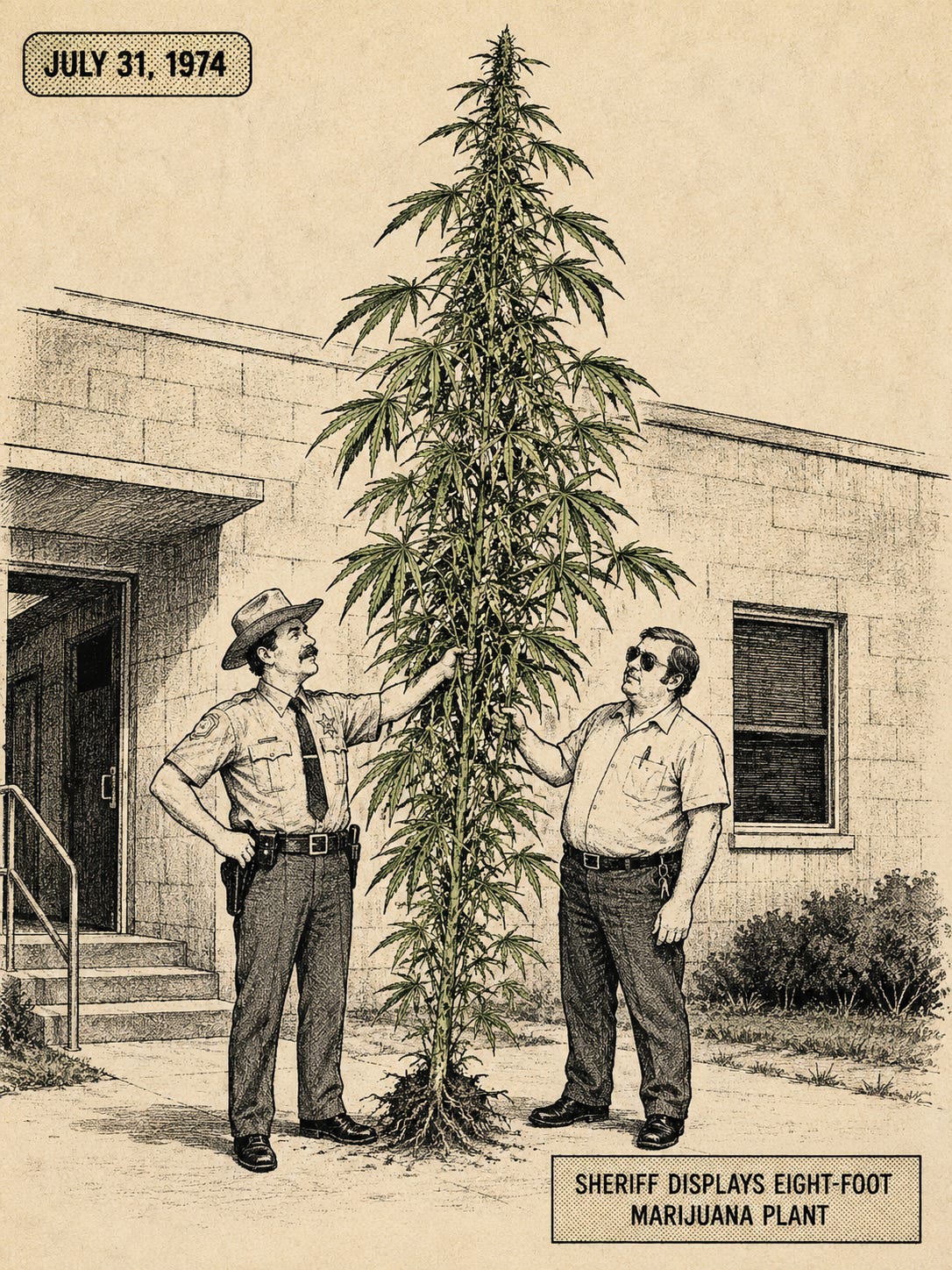
A staff photograph showed officers displaying a marijuana plant found south of LaFayette. At eight feet tall, it was described as possibly the tallest specimen discovered locally—“possibly” doing important work, since no one had produced an official county weed-growth record book. The picture turned law enforcement evidence into roadside-attraction spectacle: stand back, take in the height, and imagine the effort required to get the thing through the door. Whatever its legal significance, the plant understood how to fill a frame.
71 | 1897 | A Note in an Old Book Asked: Where Is William Evatt?
F. W. Copeland acquired a small political-economy book at an estate sale and found a strange 1852 inscription on its flyleaf: William Evatt had died on April 15 and been buried in a “great big hole” called the Sugar Maple. Forty-five years later, no clear location came with the note. Readers were asked whether anyone knew where Evatt had been buried. A discarded book had become a cold case in miniature—one death, one cryptic place-name, and a community invited to recover a grave before memory closed over it completely.
72 | 1905 | The 14-Year-Old Who Saved a Passenger Train
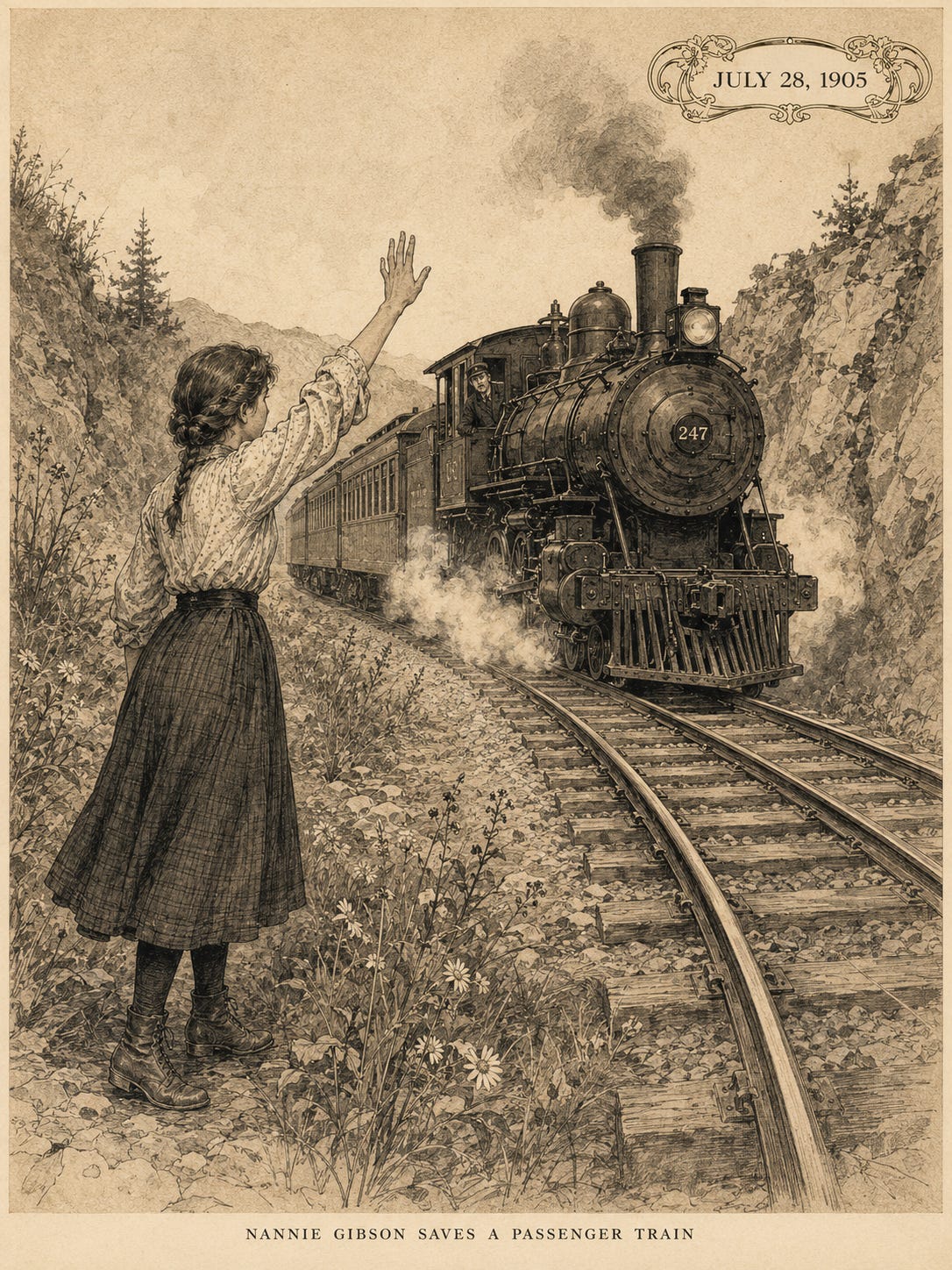
Nannie Gibson, a 14-year-old girl living near Graphite, acted quickly enough near Mud Cut to prevent a passenger-train wreck. Grateful passengers and crew collected about 25 check and asked what else the company could do; the reward was described as help toward her education. The corporation’s gratitude made a strong headline, but Nannie’s judgment made the story. A mountain teenager saw danger, understood it, and did what an entire trainload of people needed before they even knew they needed it.
73 | 1930 | The Still Had 6,000 Gallons of Beer—and an Early-Warning System
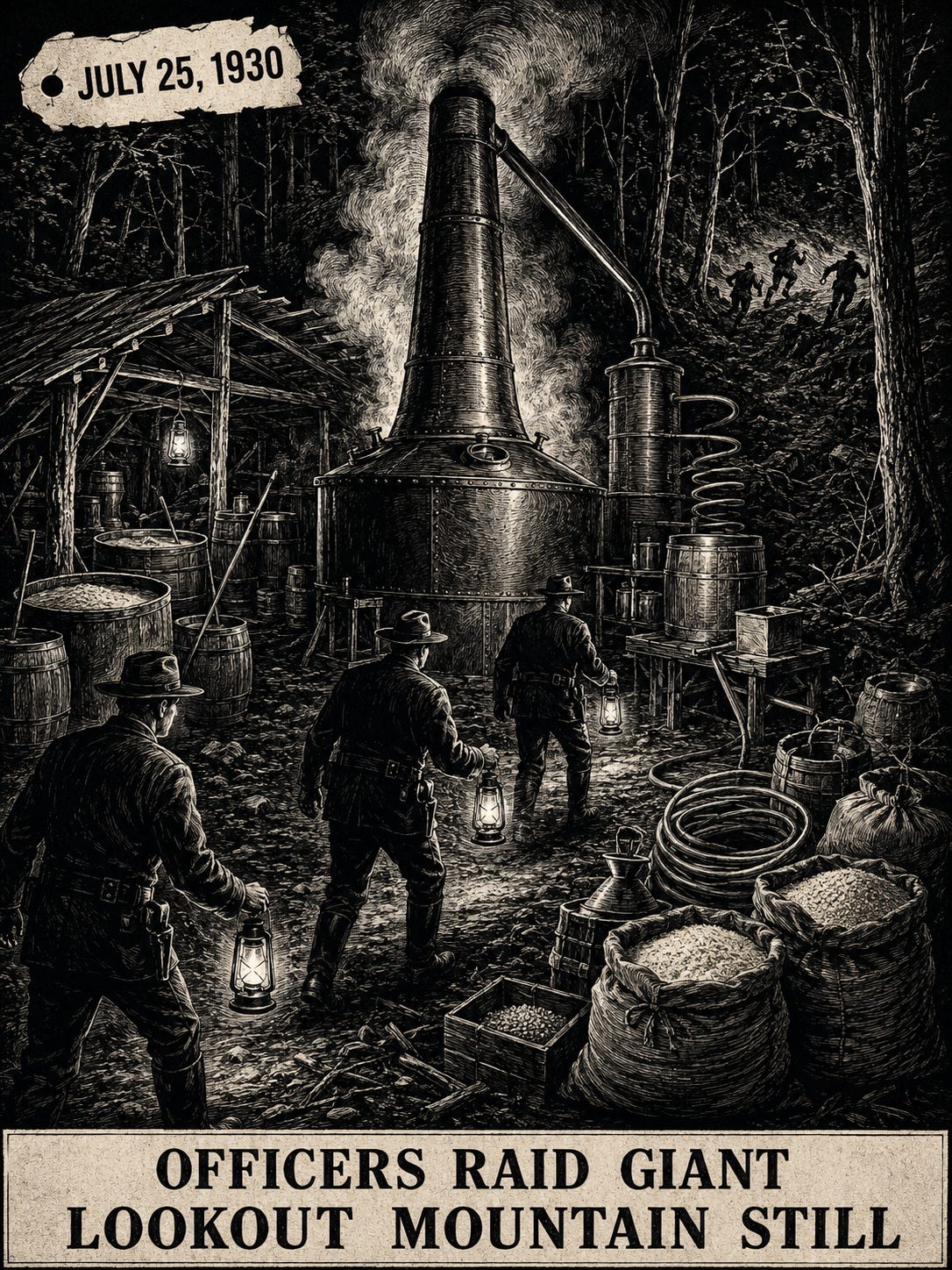
Sheriff Keown and deputies raided what was described as the largest still yet found in Walker County. Hidden on Lookout Mountain north of Cooper Gap Road, the operation included a 200-gallon copper still, 30 gallons of corn whiskey, 6,000 gallons of beer, 900 pounds of sugar, and 700 pounds of meal. Signal shots warned the operators, who escaped. Other raids followed that week, including one arrest near a smaller still where breakfast was cooking. The mountain enterprise was illegal, industrial in scale, and apparently equipped with better alerts than some legitimate businesses.
74 | 1934 | The Anti-Automobile Club Was Recruiting Survivors
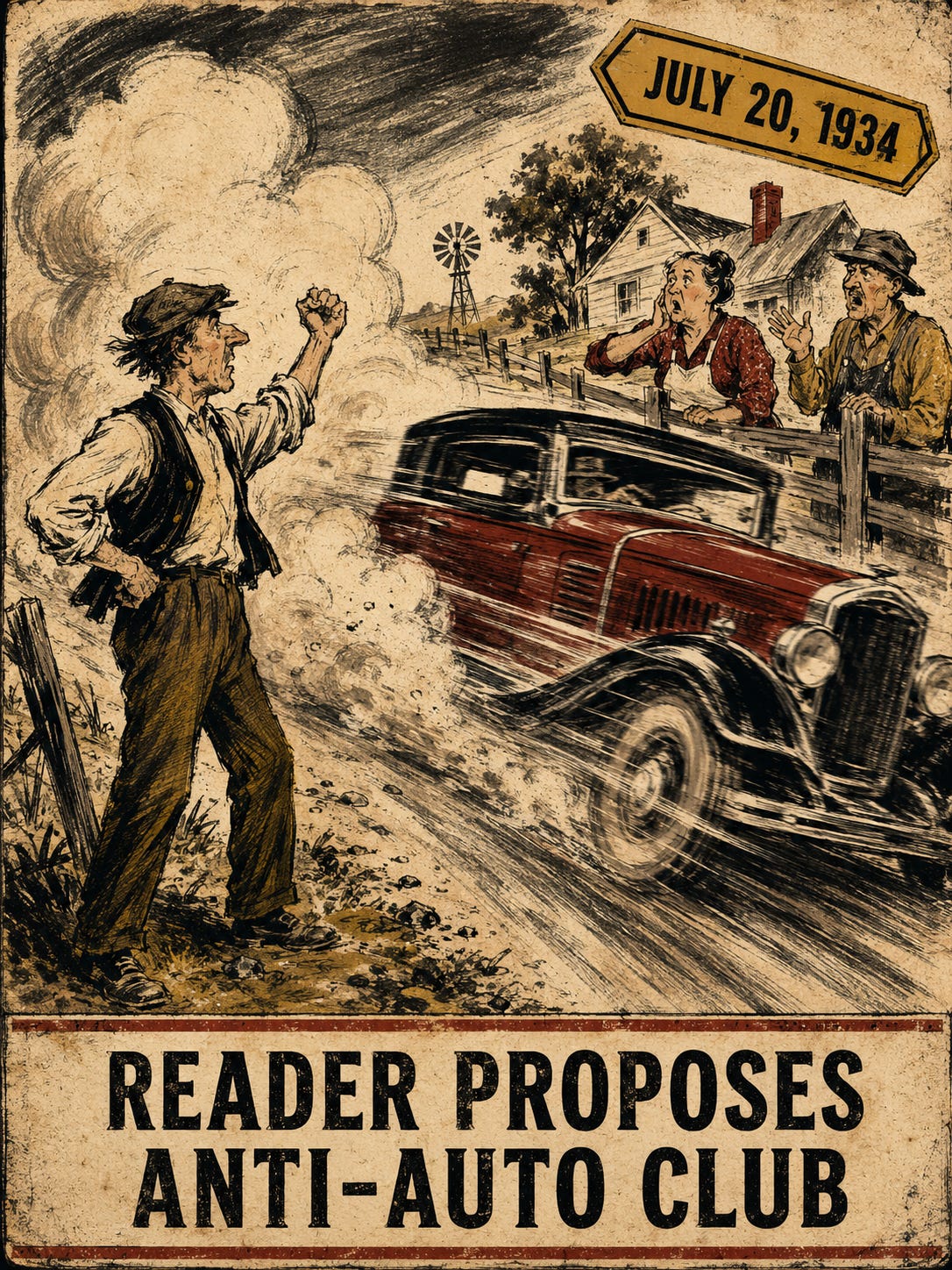
After too many close calls with speeding “joy riders,” a reader proposed an anti-automobile club for the protection of himself and his neighbors. Arresting a reckless driver after someone was dead, he argued, was far too late. The letter sounds comic because history chose the automobile, but the anger was grounded in danger. Roads built for feet, wagons, horses, and livestock had been invaded by machines with speed and mass. The writer was not mourning quaintness; he was demanding the right to reach home before somebody else’s fun ran him down.
75 | 1952 | Even the County Fair Premium Book Was Segregated
The official Walker County Fair premium list placed a separately labeled “Negro Department” beside its 4-H, livestock, and other competition categories. This was not a fiery speech or a legal confrontation. It was segregation as event planning: who entered where, under which heading, and within what administrative boundary. That ordinariness is the point. The fair promoted county pride and community participation while its printed structure told Black residents that participation came through a separate department.
76 | 1961 | Georgia Power Told Chickamauga: Don’t Be “Stampeded”
With Chickamauga preparing to vote on municipal electricity, Georgia Power bought a full-page advertisement urging residents to reject the proposal. Vice president J. M. Williams signed the appeal, whose headline warned citizens not to be “stampeded.” The claims belonged to a corporation defending its market, not to a neutral guide for voters, but the strategy is recognizable: raise doubts about public ownership, question the promised savings, and make urgency itself look suspicious. The referendum was about utility structure; the advertisement turned it into a contest over whom voters trusted to keep the lights on.
77 | 1968 | The NAACP Invited the County to Talk Across the Racial Divide
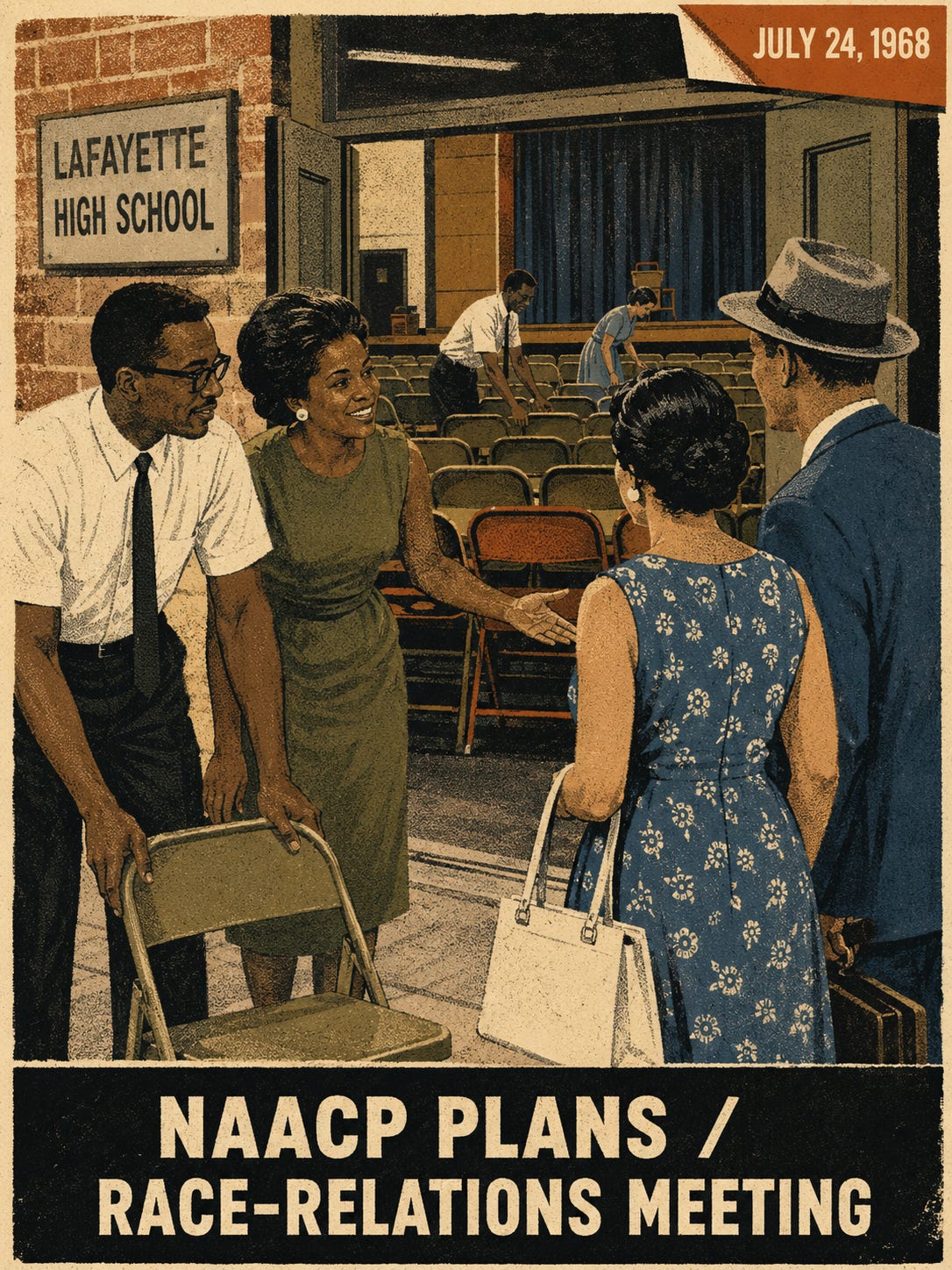
The Walker County NAACP announced a program at LaFayette High School titled “Closer Relations Between Races.” City and county officials, business representatives, and the broader public were invited. The notice was modest, but the choice of venue and audience mattered: a public school, recently part of a segregated system, would host an organized attempt at interracial dialogue. The meeting did not claim to solve the county’s divisions. It created a room in which officials and residents were expected to acknowledge them face to face.
78 | 1971 | An Editorial Claimed the South Had Integrated Better Than the North
Editor E. P. Hall argued that Southern school integration compared favorably with the record of Northern cities. Citing federal figures for 11 Deep South states and pointing to New York, Chicago, Philadelphia, Boston, and Detroit, he supported a national standard of comparison rather than continued focus on the South alone. This was a local argument, not a final verdict on desegregation. Its importance lies in the moment: Southern editors were reframing the civil-rights debate by directing attention northward, even as communities at home were still living through consolidation and the closure of historically Black schools.
79 | 1972 | A $7.5 Million School Budget With Rossville in the Workshop
The Walker County Board of Education adopted a 699,300, much of it aimed at a vocational-education addition to Rossville High School. The numbers show a school system balancing two promises at once: expand practical training and major facilities without presenting taxpayers with a broad operating-tax increase. The budget was not just bookkeeping; it was a map of what education leaders thought students would need next.
80 | 1972 | Vietnam, Busing, Prayer—and the Question of Who Could Win
Rossville vice-mayor and county Republican chairman Charles B. Sherrill entered a congressional race by naming the era’s great arguments: Vietnam, education, tax reform, welfare, busing, and school prayer. Then he said the deciding issue in the primary would be electability. It was a revealing campaign calculation. Voters could care passionately about war, taxes, classrooms, and culture, but a party first had to choose someone capable of winning the seat. The announcement reads like a checklist of 1972 anxieties followed by the oldest political question of all: can this candidate beat the other side?
81 | 1905 | After a Mass Lynching, the Editorial Said: Hunt the Mob
Following the notorious Watkinsville mass lynching, an unsigned editorial backed the Georgia legislature’s denunciation and its demand that the governor hire detectives to identify the killers. It praised that response as the proper spirit and urged Governor Terrell to pursue the mob energetically. The stance did not erase the broader racial attitudes of the era, but it clearly rejected this act of mob murder and called for state power to confront the perpetrators. In a culture where lynchers frequently expected immunity, demanding a manhunt was a meaningful public position.
82 | 1938 | Chattanooga Valley Put a New School Out for Bid
The Chattanooga Valley Consolidated School District invited sealed bids for a new school building and its equipment, with proposals due at the school site on August 8. A legal-style solicitation may look like the least dramatic moment in construction, but it is the point when years of need and planning become a price somebody must promise to meet. The district was not merely repairing classrooms. It was preparing to choose a contractor for an entirely new educational home.
83 | 1944 | LaFayette High’s First Cafeteria Started With a $1,500 Goal
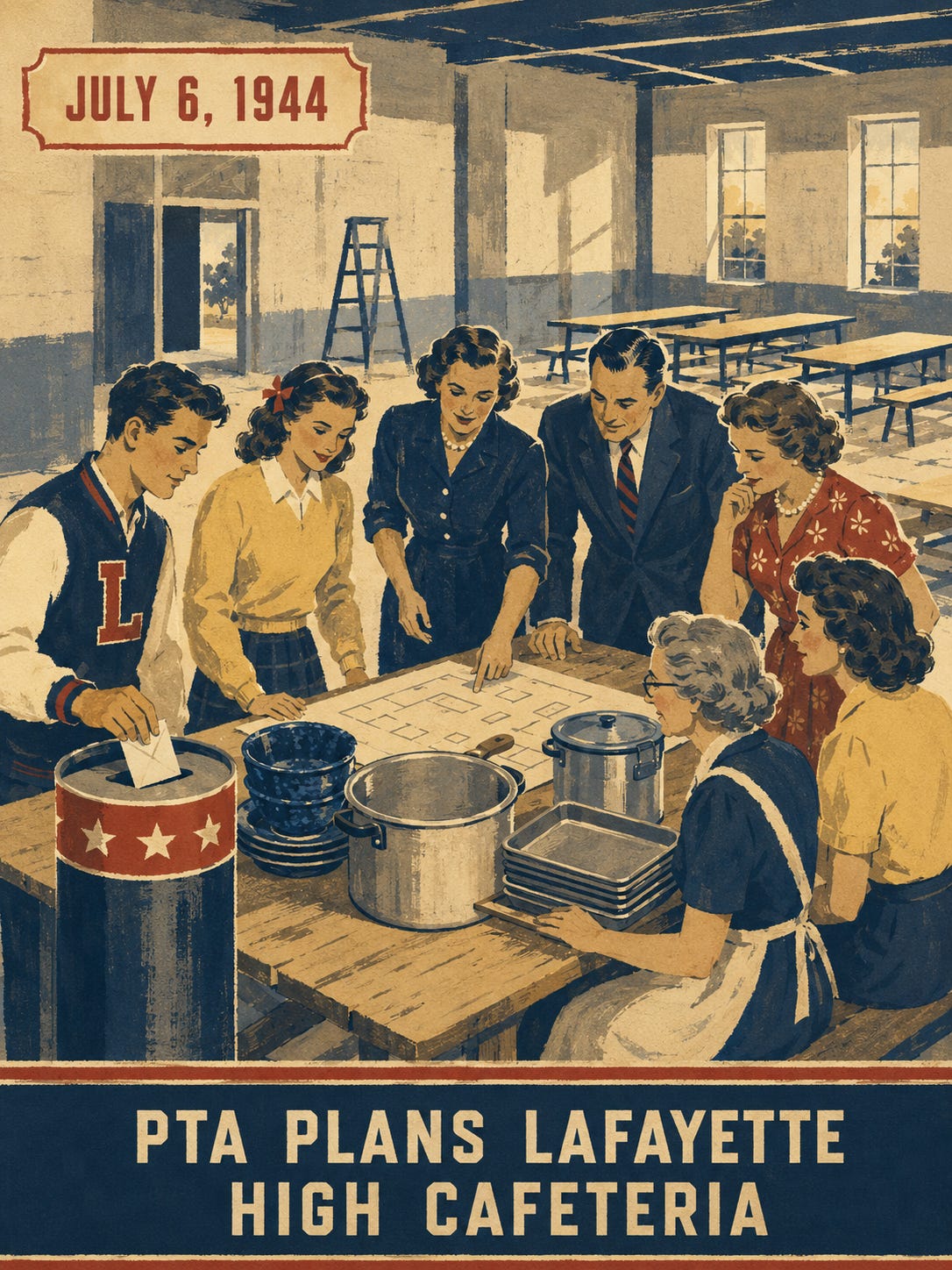
The high school PTA set out to equip LaFayette High’s first cafeteria, estimating an initial cost of 2,500. The changing figure suggests ambition expanding as the plan became real: not just a room where food might be served, but equipment sturdy enough to feed students day after day. A basic feature of modern school life had to be invented locally through donations, persuasion, and a PTA willing to keep revising the target upward.
84 | 1972 | Seventeen Vietnam Veterans Appeared in the Jobless Count
A county employment report counted 760 unemployed residents: 700 white and 60 nonwhite. Among the total were 210 people classified as disadvantaged and 17 Vietnam veterans. Those 17 names were reduced to a statistic, but the timing gave the number weight. Men were returning from a deeply divisive war and discovering that military service did not automatically become civilian work. The report connected the national promise of reintegration to the local reality of an unemployment office.
85 | 1974 | A Former POW Came to LaFayette Asking for Votes
Quincy Collins, a former prisoner of war in Vietnam and Republican candidate for Georgia’s 7th District congressional seat, scheduled campaign appearances before the LaFayette Rotary and Lions clubs. His biography guaranteed attention: captivity had made him a national symbol before he became a politician. The local notice shows how quickly the Vietnam era moved from battlefield and prison camp into electoral life. Voters were invited to consider not only a platform, but a candidate whose service and survival were central to the case he carried into every room.
86 | 1886 | The Convention Was Allegedly Stolen on a Train
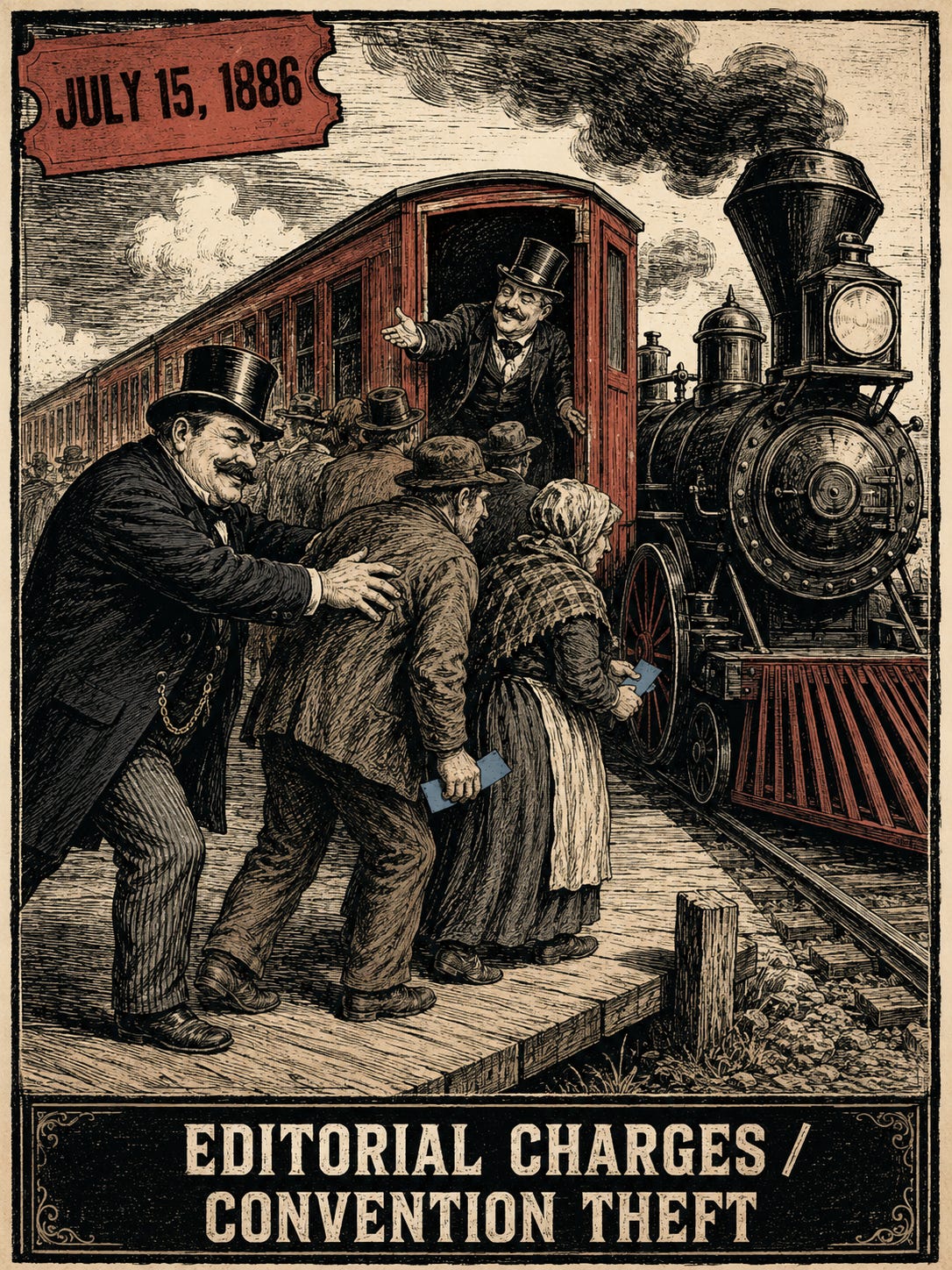
An editorial charged that a Dade County political convention had been rigged with remarkable mobility. According to the accusation, a train stopped at Rising Fawn, loaded up voters, carried them to Trenton, and put them to work voting distinctive blue tickets. The account called it “sharp but effectual practice,” then urged the “Freemen of Walker” to reject the Atlanta Ring and support Bacon. Whether every allegation was true is not established by the editorial. What is undeniable is the campaign tactic: tell Walker voters that the political machine next door had literally put its operation on rails.
87 | 1884 | Someone Burned Mt. Zion Church to Ashes
A correspondent at Cloud Spring reported that Mt. Zion church had been burned to the ground by an unknown arsonist. The writer could scarcely get past the moral horror that someone in the community was “mean enough to burn a church.” No culprit was named. In the same letter came a defiant counterpoint: another new church building nearby was expected to be ready within ten days. One congregation’s meetinghouse had become ashes, but the larger work of building and worship had not stopped.
88 | 1889 | Knife, Axe, Iron Ore: The Hufstedler Yard Fight
After drinking, Taylor Odom and Samuel Thompson went to J. M. Hufstedler’s home. When Hufstedler refused Odom’s invitation to go to the orchard, Odom drew a knife, grabbed him, struck him, and cut his thumb. Mrs. Hufstedler charged in with an axe to defend her husband. Thompson blocked her; she swung at him, and he picked up a piece of iron ore and threatened to strike her in the head. Both men were bound over for riot. Thompson made bond. Odom could not. It reads like frontier melodrama, but it arrived as a court report.
89 | 1937 | The Supreme Court Knocked Down New Deal Programs—and the Editorial Swung Back
An unsigned editorial lamented the Supreme Court’s invalidation of the National Recovery Administration and Agricultural Adjustment Administration, arguing that labor and agriculture had lost vital protections. It criticized both Georgia senators for opposing President Franklin Roosevelt’s court-reorganization plan and predicted voters might remember that choice at election time. This was partisan commentary, not a neutral constitutional lesson. It nevertheless shows a local voice joining one of the decade’s fiercest national arguments: whether the Court was defending the Constitution or blocking democratic recovery during an emergency.
90 | 1944 | He Was Wounded in France; His Wife Had Just Returned From War
Harriette Bohannon of LaFayette learned that her son, Captain Tom Bohannon, had been wounded during the invasion of France and hospitalized in England. His wife, Mary Etta McGhee Bohannon, had only recently returned from her own overseas service as an Army nurse. The couple’s story collapses the usual division between serviceman abroad and wife waiting safely at home. Both had worn uniforms overseas; one had just come back as the other was wounded. War was not a distant chapter in their marriage. It was the shared setting.
91 | 1944 | Georgia Needed 200,000 Harvest Helpers
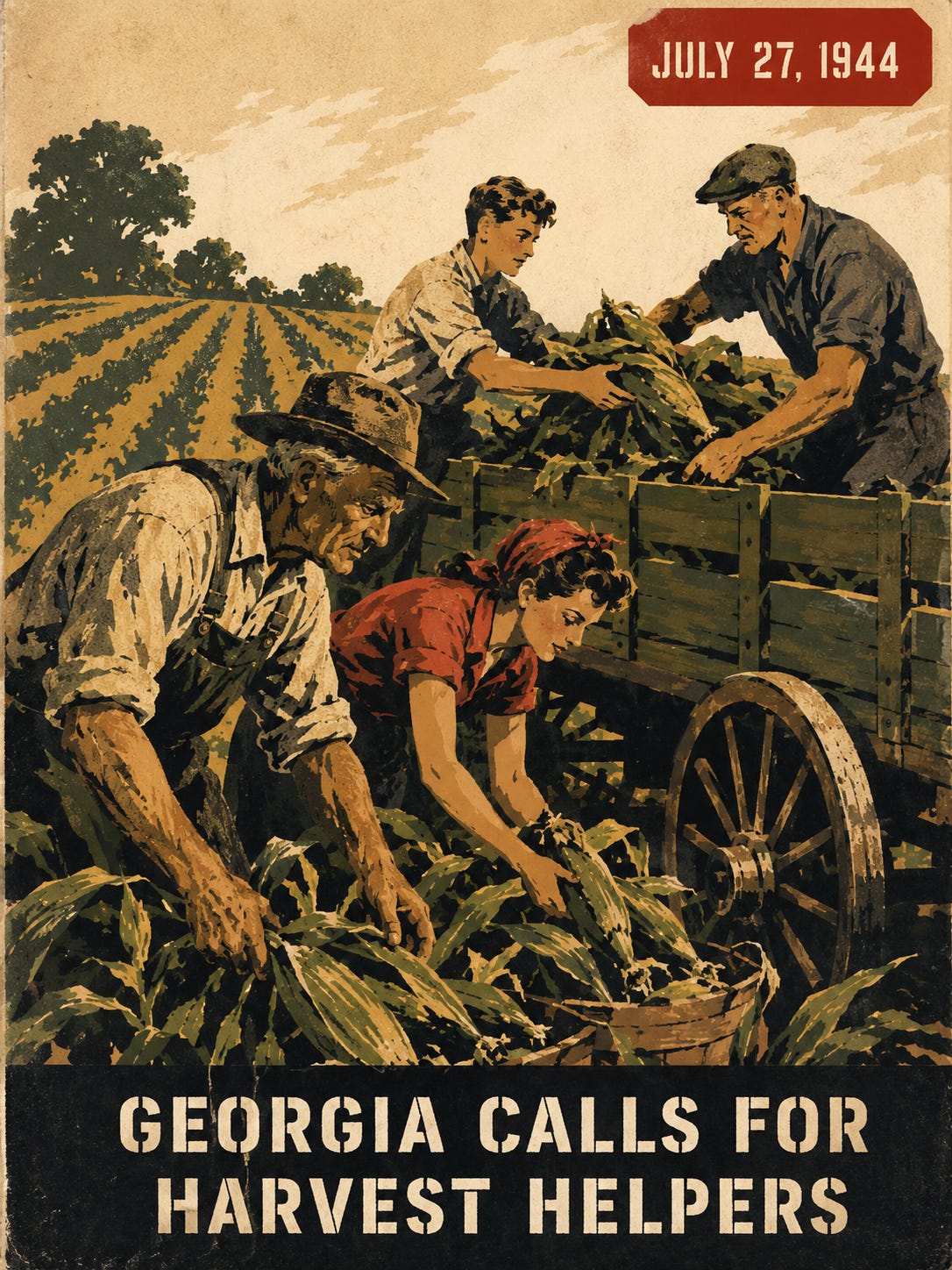
With farmworkers leaving for military service and war plants, Georgia called for 200,000 people to help bring in the harvest—100,000 more than the previous year’s appeal. In 1943, 133,032 residents had answered a similar call. Anyone with spare time was urged to register through the county agent at the courthouse, and prevailing wages were promised. The mobilization made agriculture part of the home front. Winning the war required factories and soldiers, but it also required somebody to leave the store, office, or kitchen long enough to get food out of the field.
92 | 1951 | Uncle Sam Came to Rossville Recruiting Women
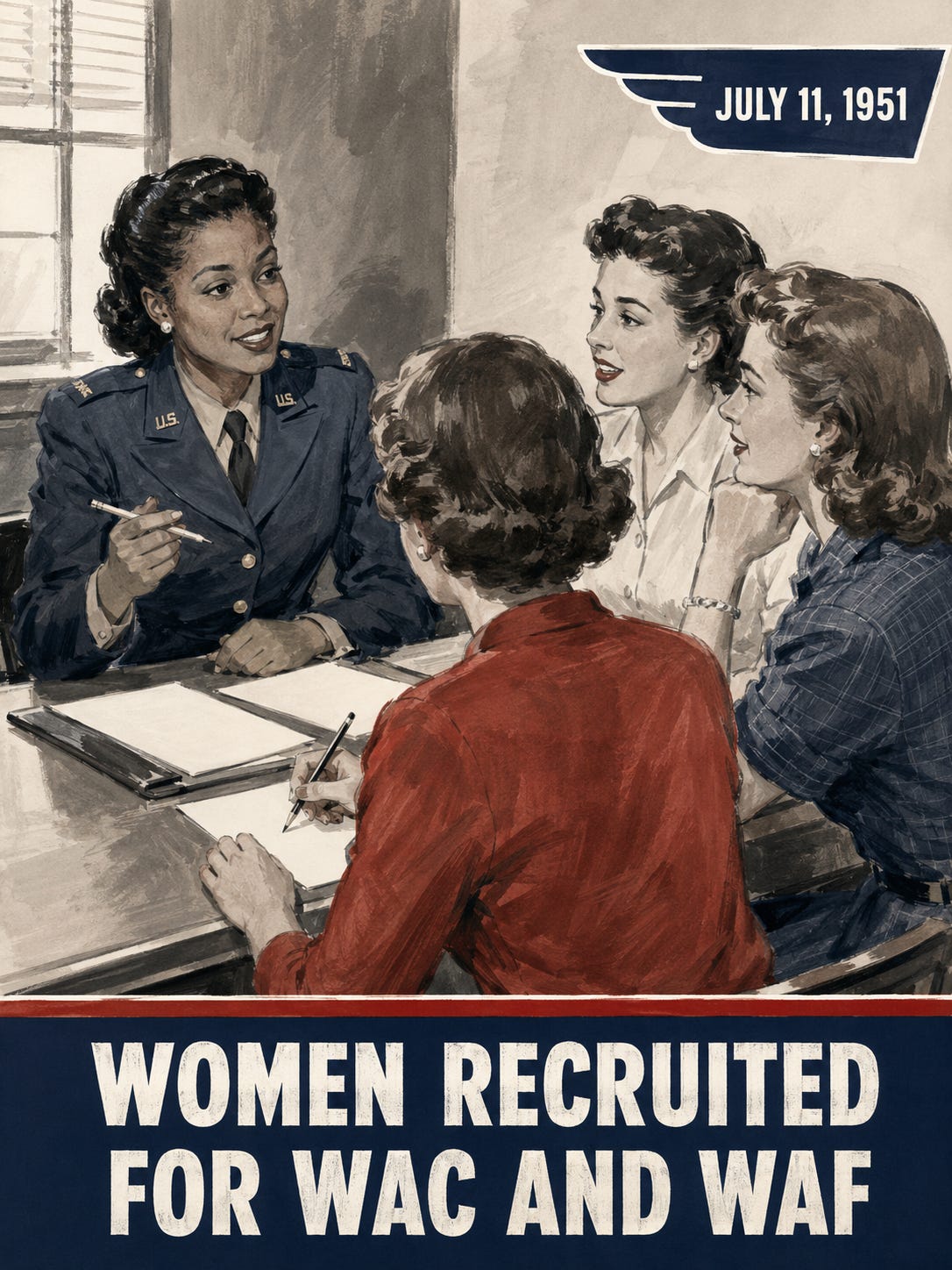
Master Sergeant Thelma Towns planned a day at the Rossville post office recruiting women for the Women’s Army Corps and Women in the Air Force. Applicants could be 18 to 34, with parental consent required for those under 21. The notice put a woman in uniform at the center of military recruitment and asked local women to imagine service as their own next step. In the early Cold War, the armed forces were not only looking for sons. They were opening an official door for daughters and sending a recruiter to town to hold it.
93 | 1967 | Ray Purvis Came Home With a Flying Cross and a Chestful of Ribbons
Captain Ray Purvis of LaFayette received the Distinguished Flying Cross at Fort Eustis, Virginia. He had commanded a helicopter squadron in Vietnam and served in Korea; his other decorations included the Bronze Star and an Air Medal with a valor device and six Oak Leaf Clusters. General Paul L. Freeman congratulated him during a garrison review. The photograph and caption brought a distant air war into a local family frame: Purvis was identified not only by rank and medals, but as a LaFayette son and husband.
94 | 1969 | Linwood’s New Park Carried Lamar Simmons’s Name
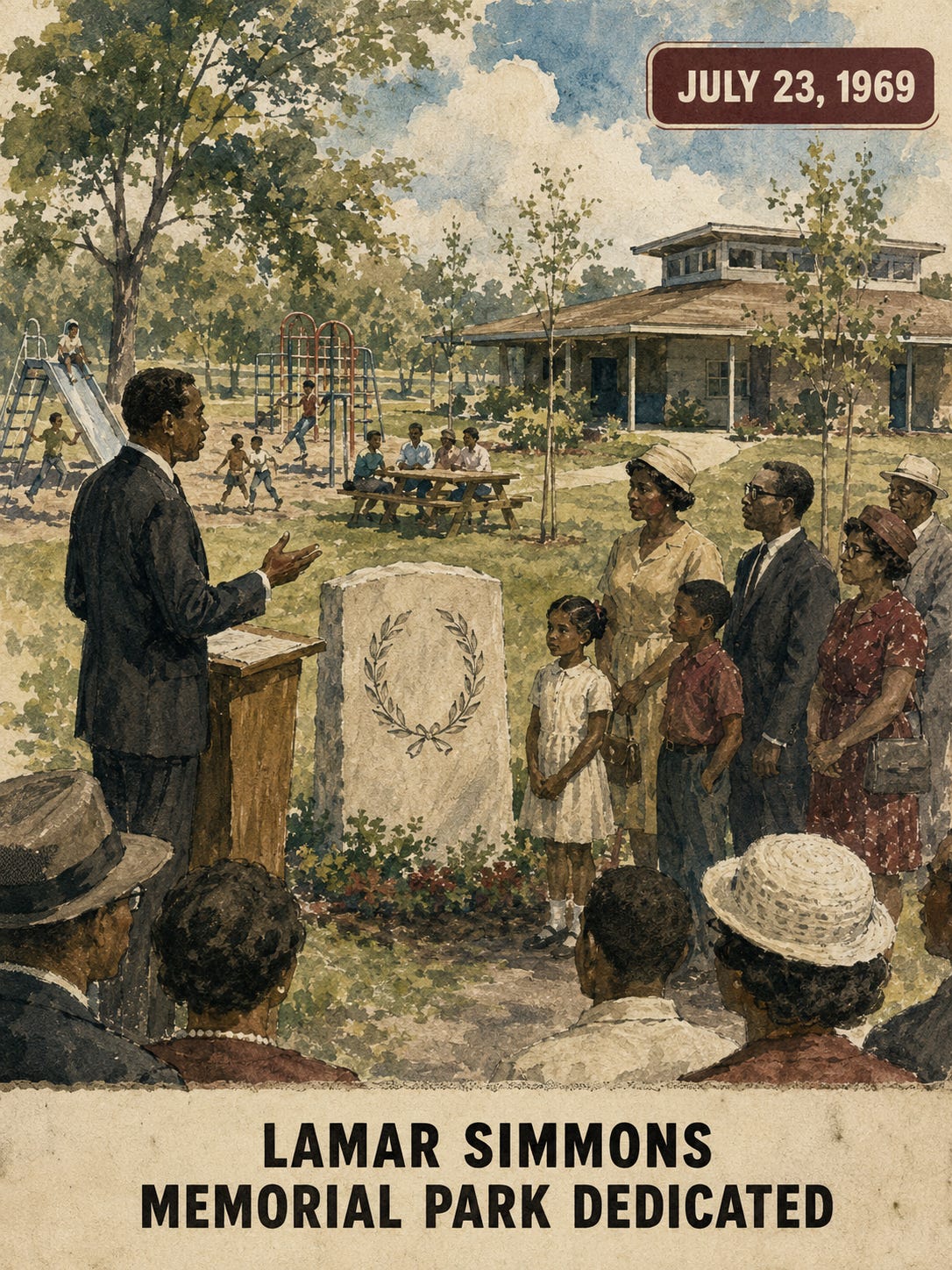
Governor Lester Maddox spoke at the dedication of a four-acre park in LaFayette’s Linwood area. The grounds included a municipal center, playgrounds, and picnic areas, but the name gave the project its deepest meaning: Lamar Simmons Memorial Park honored a local man killed in Vietnam. A place designed for children, families, and public gatherings became a permanent war memorial without becoming a silent monument. Every ball game and picnic would keep Simmons’s name inside the ordinary life he did not return to share.
95 | 1936 | Rural Electricity Promised the First Running Water
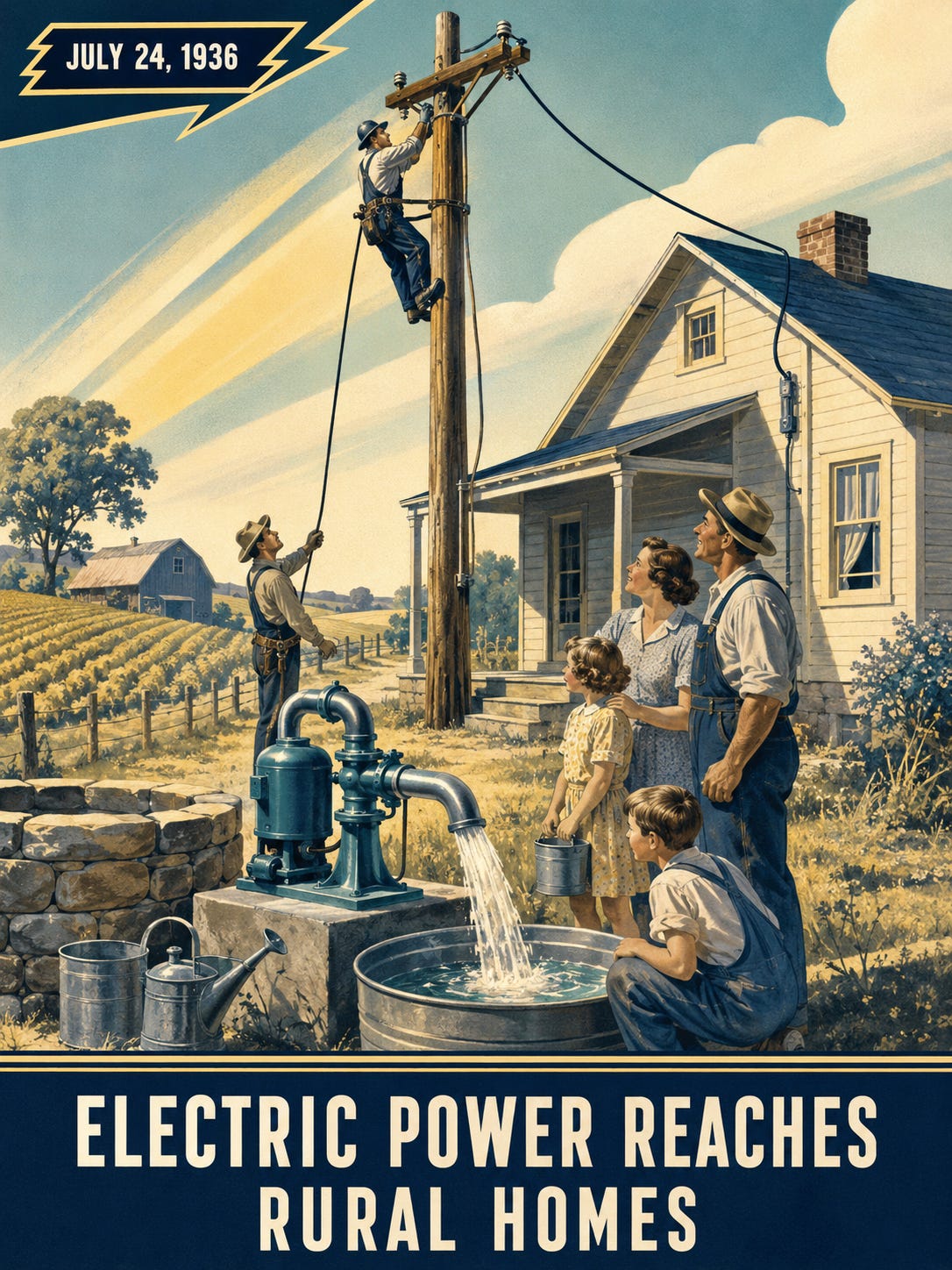
An advertisement-feature promoted a $4 million rural electrification program as the largest Georgia had ever attempted. The promise went beyond lightbulbs. Electric service would allow thousands of farm homes to add pumps, running water, and indoor plumbing “for the very first time.” Because this was promotional material, its grand claims belong to the advertiser. Yet the aspiration was real: electricity would not simply brighten a room. It could eliminate the daily hauling and hand-pumping of water and transform the most repetitive work of rural life.
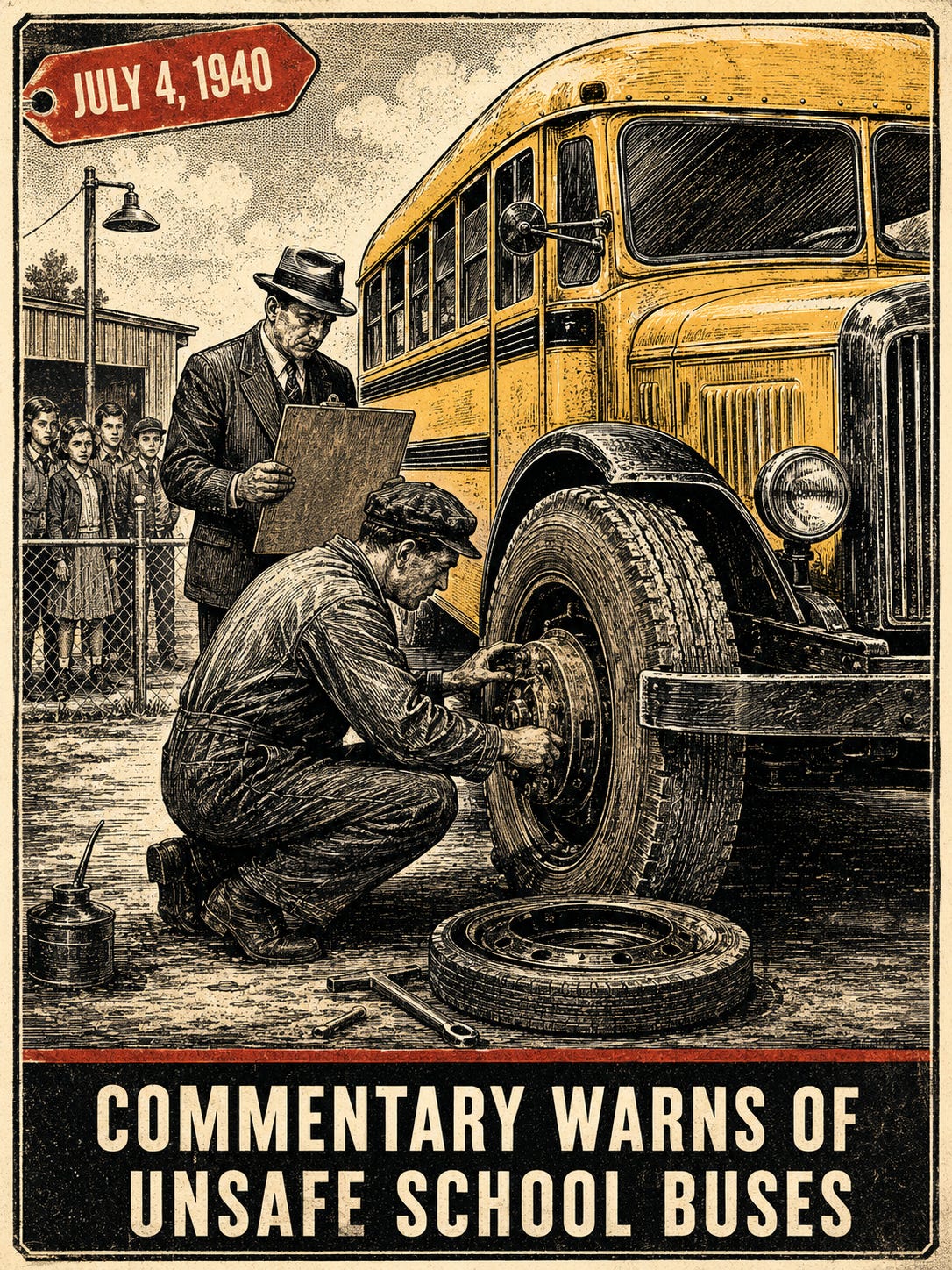
96 | 1940 | Georgia’s School-Bus Oversight Was Reportedly Last in the South
In a piece titled “Unsafe School Buses,” Jim Lindsey reported that Georgia was the only Southern state whose education department lacked control over school transportation. The statement was Lindsey’s assessment, not an unsigned institutional finding, but it raised a concrete safety problem: children could ride buses without consistent statewide supervision over vehicles and operations. The schoolhouse might be public, the route might be public, and the passengers were certainly the public’s responsibility—yet the system connecting all three had fallen into an oversight gap.
97 | 1975 | Three Months After Saigon, an Editorial Rewrote the Verdict
A locally written editorial argued that the fall of Saigon did not prove an American “failure of arms.” U.S. forces, it said, had largely won the military contest before withdrawal, while South Vietnam’s government collapsed because it never secured the support of its own people. The piece acknowledged the cost—ten years and about 55,000 American deaths—while defending the military’s battlefield performance. Whether readers accepted that distinction or not, the essay shows a community beginning the painful work of deciding what the war had meant almost immediately after its end.
98 | 1915 | The Escapee Wrote Thank-You Notes to the Men Who Caught Him
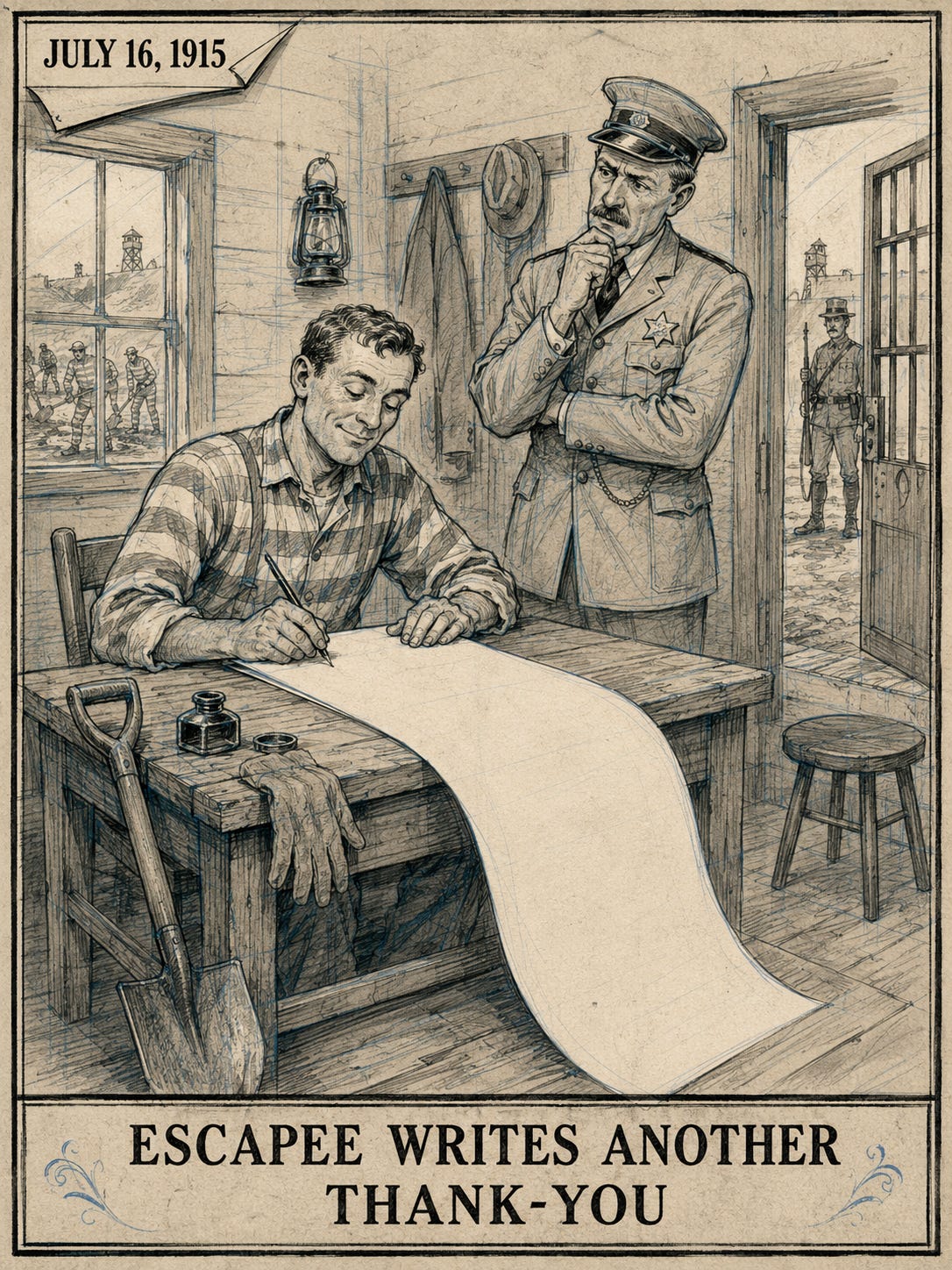
Dave Leonard escaped from a convict road camp and was recaptured two days later near the Withers farm, earning his captors a $25 reward. This was not his first departure. Years earlier, after escaping the county jail, he had written Sheriff Garmany a note thanking him for kind treatment. Now Leonard produced a multi-page letter to Superintendent Mashburn praising his treatment and expressing regret for leaving. Some fugitives curse the jailer; Leonard apparently preferred correspondence, gratitude, and the occasional unauthorized trip.
99 | 1919 | Electricity Would Churn the Butter and Separate the Cream
A Delco-Light advertisement offered farm families a self-contained electric plant capable of running a cream separator, tumbling a churn, and saving time every day. A named dealer served Walker, Dade, and Catoosa counties. Before rural power lines reached every road, buying electricity could mean installing a private generating system at home. The sales pitch wisely avoided abstract talk about current and voltage. It went directly to chores: this machine would take work that wore out arms and hours and hand part of it to a motor.
100 | 1921 | The Generator Promised to Keep the Children Down on the Farm
Another Delco-Light advertisement made a larger promise: electricity would help keep children on the farm. Bright, attractive homes and dependable power, it claimed, could offset the lure of the city. The sales logic revealed a rural anxiety bigger than illumination. Farm families were not only buying lamps and motors; they were being invited to buy a future in which modern comfort stopped the next generation from leaving. A generator could not settle every argument at the supper table, but the advertisement was willing to suggest it might.
101 | 1922 | The Boll Weevil’s Answer Wasn’t More Cotton
An editorial titled “We Can Do It Too” urged local farmers to answer boll-weevil losses with diversification and cooperation. Its model community reduced cotton acreage while expanding corn, peanuts, livestock, dairying, berries, and poultry. The argument was advocacy, not a scientific trial, but its economic logic was plain: a farm built around one crop could be ruined by one pest or one price collapse. Survival required more baskets—and fewer eggs in any single one of them.
102 | 1943 | Georgia Asked Voters to Rewrite the Math of School Consolidation
Governor Ellis Arnall submitted a constitutional amendment changing the vote required to combine school districts. A district already carrying school bonds could consolidate by a simple majority; a debt-free district would still require two-thirds approval. The merged district would inherit each predecessor’s taxing authority. The legal wording was dense because the problem was delicate: communities wanted larger, more efficient schools, but existing debts and tax powers could make a merger politically explosive. The amendment tried to change the arithmetic without pretending the obligations disappeared.
103 | 1956 | At 3:10 P.M., Every Radio and Television Station Would Go Dark
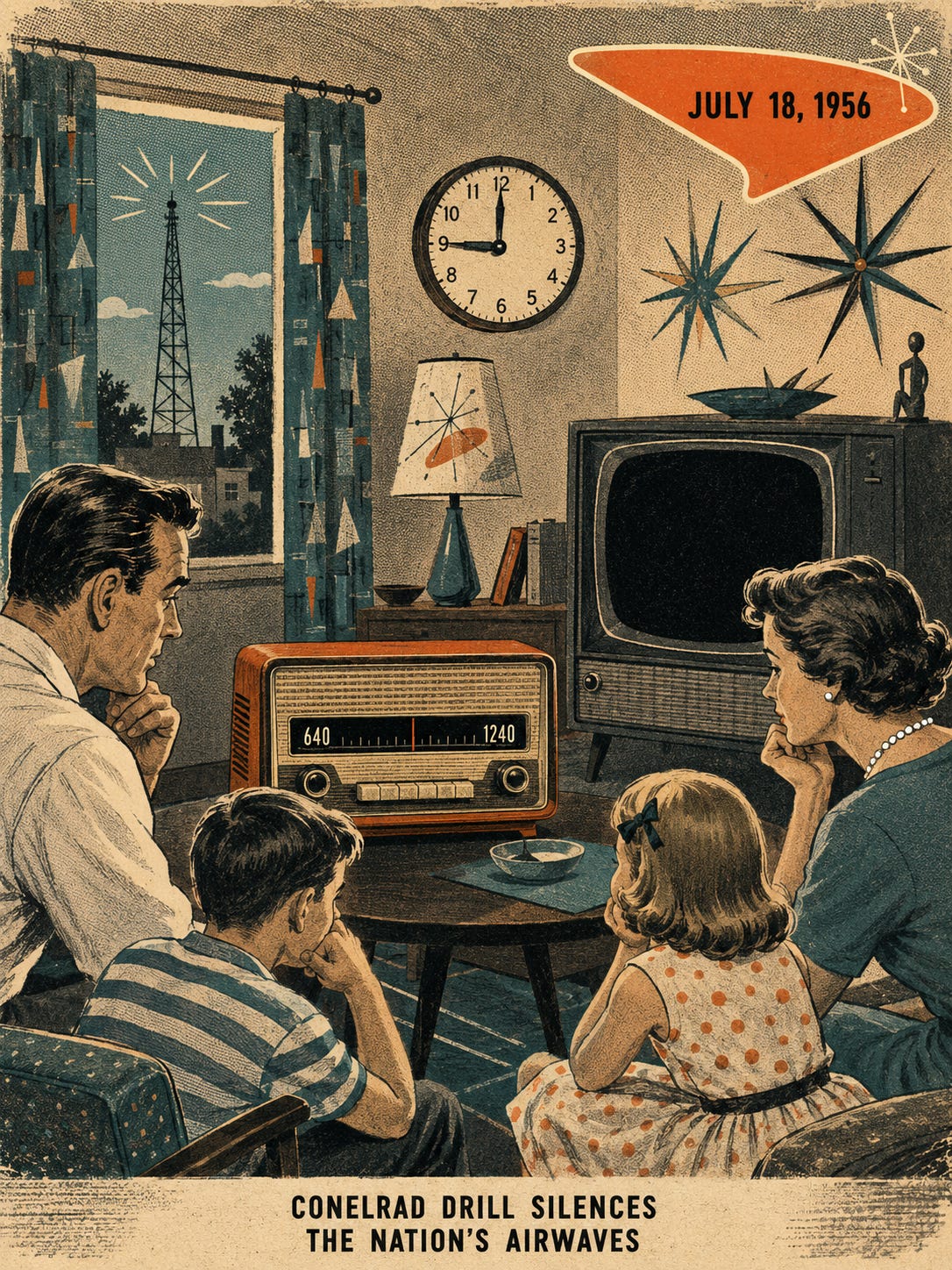
During the nationwide Operation Alert civil-defense drill, every American radio and television station was ordered off the air. Only CONELRAD’s two designated radio frequencies—640 and 1240 kilocycles—would continue broadcasting. Walker County residents were urged to listen and serve as ground observers as the test simulated an attack on dozens of target areas. The instruction was both simple and terrifying: when all familiar voices vanished, turn the dial and wait for the government signal. Nuclear war preparation had entered the living room as a scheduled programming interruption.
104 | 1935 | Lost, Strayed, or Stolen: One Entire Crop
A classified notice reported an entire crop of corn, cotton, and sorghum “lost, strayed or stolen” between July 4 and July 11, last seen on the Blackwell place. The joke borrowed the language of a missing-animal advertisement to announce something every farmer understood: weather, pests, or misfortune had wiped out the field so completely it might as well have wandered off. In one miniature masterpiece of agricultural despair, a ruined harvest became a fugitive and the want ads became the last place anyone had seen it alive.
105 | 1953 | The Farmers Dug 1,280 Feet of Ditch With Dynamite
A “ditching with dynamite” demonstration on Robert Young’s West Armuchee farm was declared a success. Crews blasted 650 feet of drainage ditch there and 1,280 feet across two Young family farms. The method turned a slow excavation job into a sequence of controlled explosions—practical farm improvement with the soundtrack of a quarry. Drainage may be humble infrastructure, but standing water could ruin land. If the fastest path to a productive field involved a long fuse and everyone backing up, these farmers were ready to light it.
106 | 1950 | Nearly 100 Years Old, W. P. Carmon Still Cast His Ballot
W. P. Carmon was photographed voting in the Democratic primary at the LaFayette courthouse just before his 100th birthday. The printed headline called it “An Old Story to Him,” and for once the pun earned its place: after a lifetime spanning the Civil War era, Reconstruction, two world wars, automobiles, radio, and electric light, another election really was old business. The photograph made longevity civic rather than merely biological. Carmon was not only still here; he was still participating.
107 | 1958 | Ninety-Four Decks of Cards, a Dice Rake, and Three Partly Empty Bottles
Rossville officers and constables raided a house on McGregor Road in the Peavine community, arresting W. E. “Ed” Alley and five others. Their inventory had the obsessive specificity of a prop department: poker chips, a dice rake, 94 decks of cards, 19 fifths of stamped whiskey, and three more bottles from which some of the whiskey was already gone. The alleged gambling operation might have disputed the charges, but it could hardly complain that officers failed to count the cards.
108 | 1948 | His Feet Were Light, So He Ran From the Officers
One Saturday court session produced 100, had tried to flee after his arrest. His explanation deserves preservation: “his feet were light and he just wanted to get away.” Another defendant, charged with being drunk on Cove Road, blamed liquor and beer provided by “some sawmill boys.” The docket offered no grand moral, only a parade of bad decisions followed by explanations inventive enough to outlive the fines.
A note on method and limits
The core research covered 398 confirmed July issues in 93 of the 95 years from 1881 through 1975 and indexed 4,125 archived pages. OCR helped locate candidates, but it did not control the facts: the final 100+ item set was checked against the page scans.
The archive has no July issues for 1881 or 1882, an estimated 24 additional single-week gaps, and nine pages explicitly marked as not digitized. Damaged scans and imperfect OCR may also have hidden worthy stories. Historical reports can be wrong, biased, promotional, or incomplete, which is why advertisements are described as claims, editorials as arguments, charges as charges, and folklore as folklore.
This is a curated reading experience, not a complete history of Walker County—and not the last word on any person or event. It is an invitation to explore local history.
I love the old stories. Thanks so much to you and the Cherokee Regional Library System for making more history available! I love this first grouping of stories!!!